
Land Investment Calculator for 2026
Estimate the total upfront cost and first-year carrying costs for buying raw land in a specific state.
Cost Breakdown
Buying raw land is the ultimate gamble. You aren't buying a roof over your head; you are buying potential, dirt, and a whole lot of headaches. If you are looking at plots of undeveloped ground across the United States in 2026, the question isn't just about price per acre. It is about whether that piece of earth will let you build what you want, cost you less than expected, and actually hold its value when you decide to sell.
The market has shifted. Post-pandemic remote work didn't disappear; it stabilized. People moved out of coastal hubs and into places where their dollar stretched further. But now, we are seeing a correction. Interest rates have settled, but they haven't vanished. Insurance costs are skyrocketing in certain zones. And local governments are tightening zoning laws to manage the influx of newcomers. Choosing the right state is no longer just about finding the cheapest zip code. It is about finding a jurisdiction that aligns with your lifestyle, your budget, and your long-term exit strategy.
The Hidden Costs of Rural Living
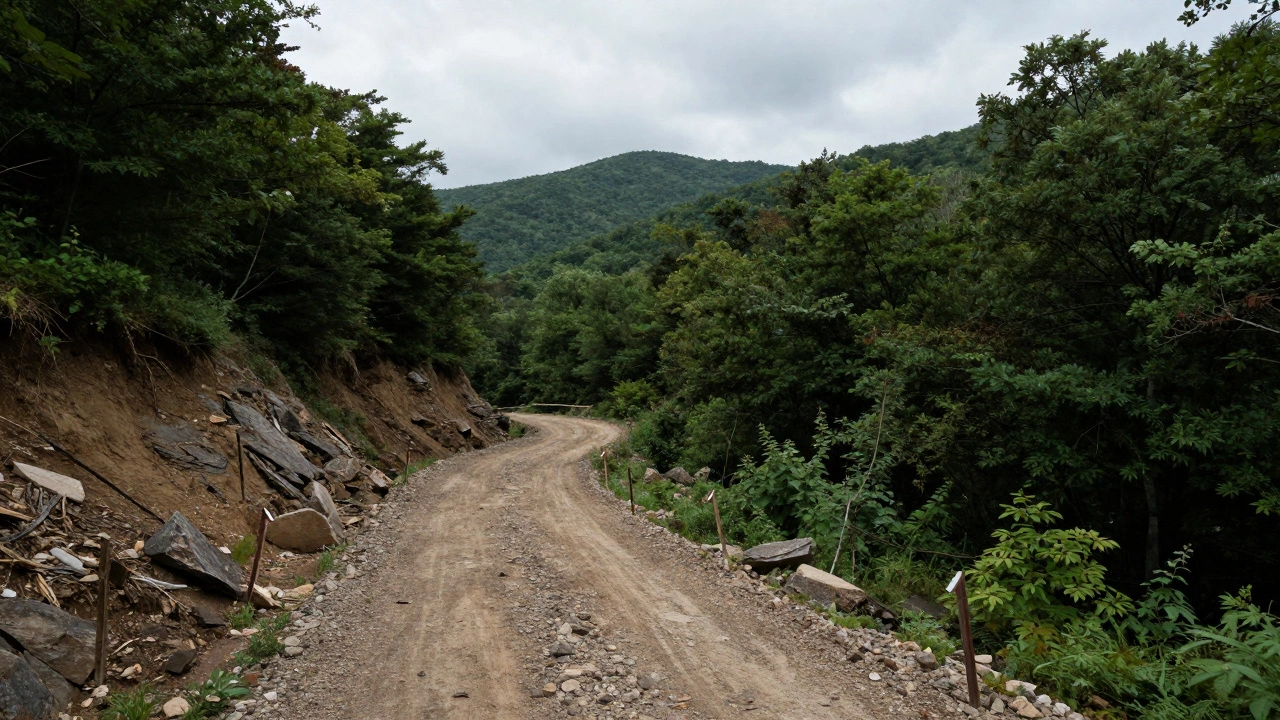
Before you look at a map, you need to understand the economics of empty land. A listing might say $5,000 for five acres in West Virginia. That sounds like a steal compared to $100,000 for the same size in California. But land is not a commodity like gold. Its value is entirely derived from its utility and location.
You need to calculate the carrying costs. This includes property taxes, insurance, and maintenance. In many rural areas, if there is no house on the land, you cannot insure it against fire or liability in the same way. You also need to consider access. Does the road leading to your plot belong to the county, or is it a private easement shared with three other families? If the county doesn't plow the road in winter, who pays for the snow removal?
Then there is the infrastructure gap. Water and electricity are not guaranteed. Drilling a well can cost anywhere from $10,000 to $30,000 depending on the depth and rock composition. Running power lines from the nearest pole can add another $15,000 to $50,000. These are upfront costs that sellers rarely disclose because they don't know them either. You have to dig into the records yourself.
Top Contenders for Affordable Land in 2026
If your primary goal is affordability, several states stand out. However, each comes with distinct trade-offs regarding climate, job markets, and regulatory environments.
| State | Avg Price/Acre (Rural) | Property Tax Rate | Key Advantage | Major Drawback |
|---|---|---|---|---|
| West Virginia | $2,500 - $4,000 | 0.58% | Lowest entry cost; abundant timber rights | Limited high-speed internet; steep terrain |
| Tennessee | $4,500 - $7,000 | 0.71% | No state income tax; strong builder community | Rising prices near Nashville/Chattanooga |
| Arkansas | $3,000 - $5,500 | 0.62% | Agricultural-friendly; flat topography | Flood zones in river valleys |
| North Dakota | $3,500 - $6,000 | 0.92% | Strong energy sector jobs; wide open spaces | Harsh winters; isolation |
| Georgia | $5,000 - $9,000 | 0.89% | Mild climate; proximity to Atlanta jobs | Termite risk; higher humidity/mold issues |
West Virginia remains the king of cheap land. The Appalachian region offers rugged beauty and privacy. However, the terrain is difficult to build on. Excavation costs can double your construction budget. Plus, broadband access is still a patchwork quilt in many counties. If you work remotely, test the speed before you sign.
Tennessee attracts buyers with its lack of state income tax. This makes it financially attractive for retirees and remote workers earning national salaries. The land around Chattanooga and Knoxville is popular, but prices have surged. Look further east toward the Tennessee-North Carolina border for better deals. The soil here is generally good for gardening, and the construction industry is robust, meaning you won't struggle to find contractors.
Arkansas is often overlooked. It sits in the middle of nowhere, which is exactly why it's affordable. The land is flatter than its neighbors, making it easier to build and farm. If you are interested in small-scale agriculture or raising livestock, Arkansas offers favorable regulations. Just check the flood maps carefully, especially near the Mississippi and White Rivers.
Zoning Laws: The Silent Deal-Breaker
You can buy the perfect plot of land, only to discover you can't build a house on it. Zoning laws vary wildly between states and even between towns within the same county. Some areas are zoned strictly for agricultural use, meaning you can park an RV there but cannot install a permanent foundation. Others require minimum lot sizes of 10 or 20 acres for residential permits.
In states like New York, particularly upstate, zoning can be incredibly complex due to environmental protections. Wetlands, protected tree species, and historic districts can all restrict what you can do. In contrast, states like Texas tend to have more lenient building codes, though this varies by municipality. Houston, for example, has no formal zoning, which gives you freedom but also means you could end up next to a factory if you're not careful.
Always request a zoning verification letter from the local planning department. Do not rely on the seller's word. Ask specifically about:
- Minimum square footage requirements for dwellings.
- Setback rules (how far the house must be from property lines).
- Restrictions on accessory dwelling units (ADUs) or tiny homes.
- Prohibitions on short-term rentals like Airbnb.
Climate Risks and Insurance Realities
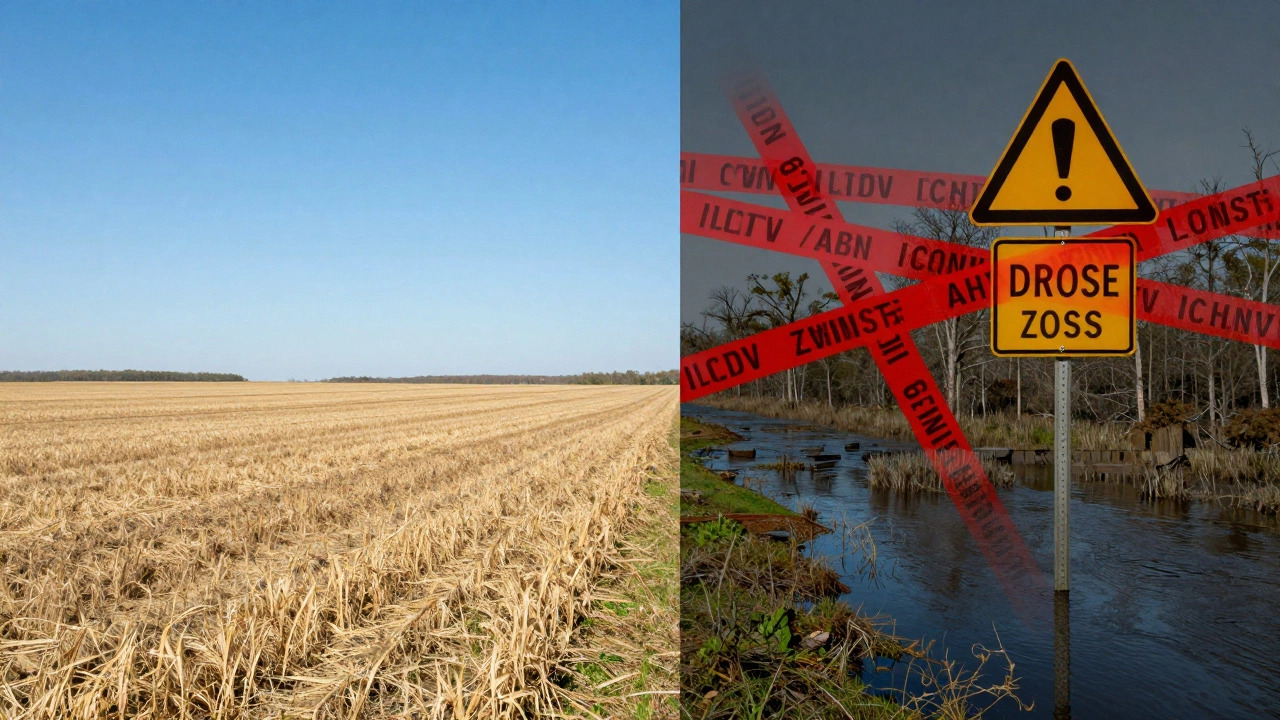
In 2026, climate change is no longer a theoretical concern for real estate investors; it is a financial one. Insurance companies are pulling out of high-risk areas. Florida and Louisiana, once hotspots for vacation home buyers, are becoming prohibitively expensive to insure. Even if you find cheap land, you may not be able to get a mortgage or homeowner's policy.
Consider the National Flood Insurance Program maps. Many rural properties sit in low-lying areas that were never developed because they flooded too often. Just because a previous owner didn't flood doesn't mean you won't. Check the 100-year and 500-year flood plains.
Wildfire risk is another major factor. In California, Oregon, and Colorado, wildland-urban interface (WUI) zones carry massive insurance premiums. Some insurers refuse to cover structures built on raw land in these zones until defensible space is created. This means you might need to clear hundreds of feet of vegetation before you can even start building, adding thousands to your initial costs.
Conversely, states in the Midwest and Northeast offer more predictable weather patterns. While winters can be harsh, the risk of catastrophic events like hurricanes or wildfires is lower. This stability translates to lower insurance premiums and higher resale confidence.
Infrastructure and Internet Access
For most people moving to rural land, internet connectivity is non-negotiable. The federal government has invested billions in broadband expansion, but progress is uneven. Fiber optic networks are expanding rapidly in states like Virginia and Maryland, but rural pockets remain unserved.
Satellite internet, such as Starlink, has changed the game. It provides decent speeds in almost any location. However, it requires a clear view of the sky. Dense forests or mountainous terrain can block signals. Before buying, ask the seller about their current internet provider and speed. Run your own speed tests if possible.
Cellular coverage is another issue. Many rural areas have dead zones. If you plan to work from home or rely on mobile services, check coverage maps from multiple carriers. Verizon, AT&T, and T-Mobile have different strengths in different regions. Don't assume that just because you have signal in the county seat, you'll have it on your parcel.
Tax Implications and Resale Value
Property taxes are a recurring expense that can eat into your budget. States like Hawaii and New Jersey have some of the highest effective property tax rates in the country. On the other hand, states like Alabama and Louisiana have very low rates. However, low taxes often come with lower public services, including poorer road maintenance and slower emergency response times.
When evaluating resale value, think about liquidity. Raw land is illiquid. It can take months or years to sell. Properties located near growing cities, even if currently rural, tend to appreciate faster. For example, land in Missouri near Kansas City or St. Louis is gaining value as urban sprawl expands. Similarly, areas in North Carolina near Research Triangle Park are seeing increased demand.
Avoid buying land in declining towns. If the local population is shrinking and businesses are closing, your land will likely lose value. Look for indicators of growth: new schools, hospital expansions, and commercial development projects.
How to Due Diligence Like a Pro
Don't skip the steps. Here is a checklist for evaluating land before you make an offer:
- Survey the Property: Hire a licensed surveyor to confirm boundaries. Fences and markers are often wrong.
- Check Soil Conditions: A perc test determines if the land can support a septic system. If it fails, you may need to connect to municipal sewer, which might not exist.
- Verify Utilities: Contact local water, electric, and gas providers to get quotes for connection.
- Review Title History: Ensure there are no liens, easements, or disputes over ownership.
- Visit at Different Times: Drive by the property at night, during rain, and on weekends to assess noise, drainage, and traffic.
- Talk to Neighbors: They can tell you about hidden issues like flooding, pests, or neighborhood conflicts.
Final Thoughts on Location Strategy
There is no single "best" state for buying land. The right choice depends on your specific needs. If you want cheap entry and don't mind cold winters, look at the Upper Midwest. If you want mild weather and no income tax, consider Tennessee or Georgia. If you prioritize job opportunities and infrastructure, stick closer to metropolitan areas in states like North Carolina or Texas.
Remember, land is a long-term investment. Prices fluctuate, but the underlying value is driven by location and usability. Do your homework, understand the hidden costs, and choose a place where you can actually live comfortably. The cheapest land is often the most expensive in the long run if it lacks access, utilities, or legal clarity.
What is the cheapest state to buy land in 2026?
West Virginia typically offers the lowest average price per acre for rural land, often ranging between $2,500 and $4,000. Other affordable options include Arkansas, Alabama, and parts of the Dakotas. However, low purchase price does not account for carrying costs like taxes and infrastructure installation.
Can I build a house on any piece of land I buy?
No. Building permissions depend on local zoning laws, soil conditions, and utility access. Some land is zoned only for agricultural or conservation use. You must verify with the local planning department and conduct a percolation test for septic systems before assuming you can build.
Is it better to buy land in a city or rural area?
It depends on your goals. Rural land is cheaper and offers more space and privacy but often lacks utilities and has higher development costs. Urban land is expensive but usually has existing infrastructure, better internet, and higher appreciation potential due to density and demand.
How much should I budget for connecting utilities to raw land?
Budgets vary widely. Connecting electricity can cost $15,000 to $50,000 depending on distance from the grid. Drilling a well ranges from $10,000 to $30,000. Septic system installation can cost $5,000 to $20,000. Always get multiple quotes from local contractors.
Does land value appreciate over time?
Land generally appreciates over the long term, especially if located near growing population centers. However, raw land is illiquid and can stagnate for years. Value increases are driven by development in the surrounding area, improved infrastructure, and changes in zoning that allow for higher-density use.
What are the risks of buying land in flood zones?
Buying land in a flood zone significantly increases insurance costs and may make it difficult to obtain financing. Construction costs rise due to required elevation standards. There is also a higher risk of property damage and depreciation if flooding occurs frequently.