
Cost of Living Calculator
Calculate Your Living Expenses
See if your income covers basic needs in any U.S. city based on real data from the article
When people ask which state has the worst cost of living, they’re not just talking about rent. They’re asking: Where can I barely afford groceries after paying rent? Where does a full-time job at minimum wage still leave you choosing between fixing your car and buying medicine? The answer isn’t a guess-it’s in the numbers, and they’re worse than you think.
Hawaii Isn’t the Only Problem
Most people point to Hawaii. And sure, it’s expensive. Median rent for a one-bedroom? Over $3,200 a month. But Hawaii only has 1.4 million people. The real crisis isn’t in islands-it’s in states with millions of residents and no relief in sight.
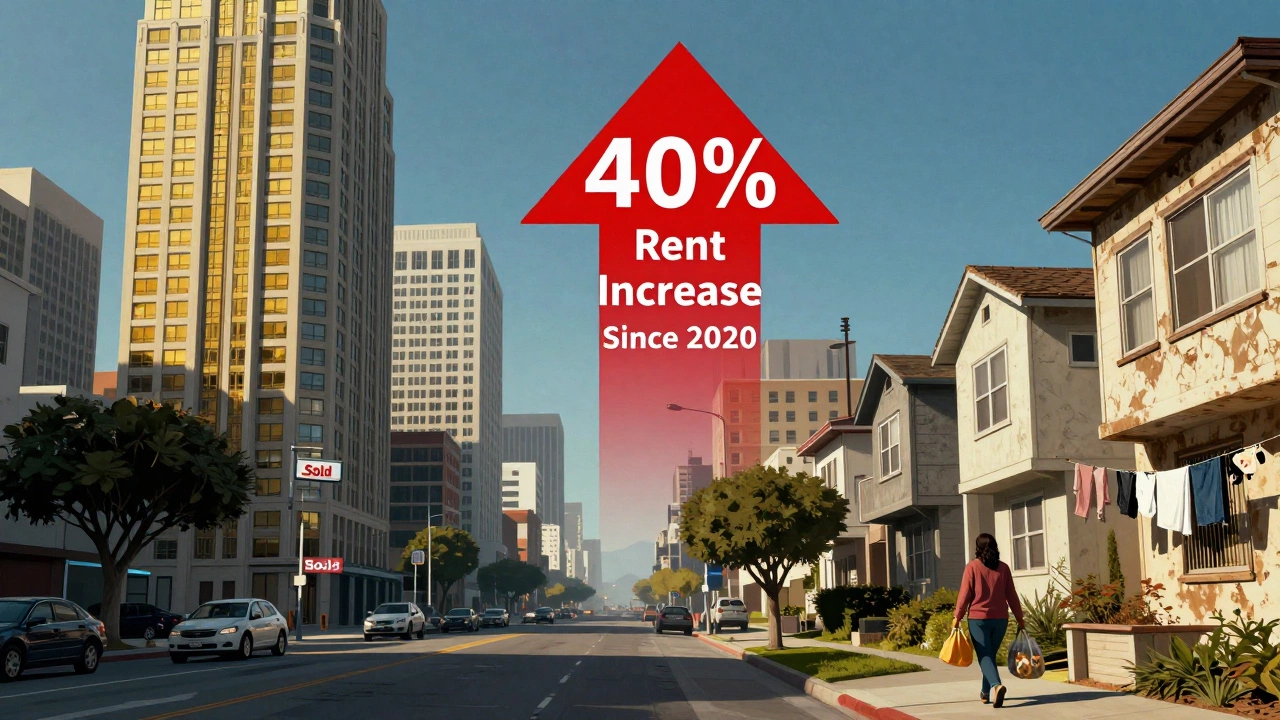
California leads the nation in housing costs. In 2025, the median rent for a one-bedroom apartment in Los Angeles is $2,950. In San Francisco, it’s $3,500. Even in smaller cities like Fresno or Bakersfield, rents have jumped 40% since 2020. That’s not inflation. That’s a system broken by decades of underbuilding. California added only 1.2 million homes between 2010 and 2023, while its population grew by 3.5 million.
But here’s what most reports miss: housing isn’t the only cost. Groceries in California cost 27% more than the national average. Electricity? 58% higher. Gas? 30% more than the U.S. median. When you add it all up, a family of four needs over $7,800 a month just to cover basic needs in Los Angeles. That’s before taxes, childcare, or car payments.
The Hidden Crisis in Washington State
Washington State, especially the Seattle-Tacoma metro, has quietly become one of the most expensive places to live in America. Rent for a one-bedroom in Seattle hit $2,600 in 2025. That’s up from $1,800 in 2020. The median home price? Over $800,000.
What makes it worse is that wages haven’t kept up. The state minimum wage is $16.28 an hour-among the highest in the country. But that’s still only $33,900 a year before taxes. To afford a one-bedroom apartment, you need to earn $38,000. That’s a gap most workers can’t close. And it’s not just renters. First-time homebuyers are getting crushed. A 2024 study by the Urban Land Institute found that 68% of Washington households earning under $100,000 can’t afford a median-priced home.
And it’s spreading. Spokane, once considered affordable, now has rents up 52% since 2020. The state added 140,000 new residents between 2020 and 2024, but only 85,000 new housing units. That’s a 55,000-unit deficit. No wonder people are moving out.
Why New York Is Worse Than You Think
New York City gets all the attention. But the real pain is in upstate New York, where people are stuck. In Buffalo, a one-bedroom apartment averages $1,400 a month. That sounds reasonable-until you realize the median household income is $48,000. That means rent eats up 35% of income, which is already above the recommended 30% threshold.
But the bigger issue? Taxes. New York has the highest state and local tax burden in the country. A single person earning $60,000 pays over $8,500 a year in state and local taxes. Add in property taxes on a modest home-$5,000 to $7,000 a year-and you’re paying more in taxes than most Americans pay in rent.
And healthcare? In New York, a single doctor visit without insurance can cost $300. A prescription for insulin? $120. That’s not the cost of living. That’s the cost of survival.
What About Florida? The Myth of Affordability
People think Florida is cheap. They’re wrong. Miami, Orlando, and Tampa have seen rent increases of 60% since 2020. In Miami, a one-bedroom now costs $2,300. In Orlando, it’s $1,900. The state has no income tax, but that doesn’t help when your rent jumps faster than your paycheck.
And insurance. Florida has the highest home insurance rates in the nation. The average annual premium for homeowners is $5,700. That’s more than the median rent in 30 states. If you own a home in Florida, you’re paying $475 a month just to keep your roof over your head. That’s not affordable housing. That’s a financial trap.
Utilities are worse. Florida’s electricity bills are the third highest in the U.S. because of aging infrastructure and extreme heat. A family using 1,200 kWh a month pays over $200 in summer. That’s $2,400 a year on electricity alone.
The Real Winner: The State No One Talks About
After crunching the data from the U.S. Bureau of Labor Statistics, the Joint Center for Housing Studies, and the Economic Policy Institute, the state with the worst cost of living isn’t California or New York. It’s Oregon.
Portland, the state’s largest city, has seen rent increase 72% since 2020. A one-bedroom now averages $2,400. The median home price? $580,000. But here’s the kicker: Oregon’s median household income is $74,000. That’s higher than many states. Yet, after paying rent, taxes, and utilities, the average family has just $1,100 left for food, transportation, healthcare, and savings.
And Oregon has no sales tax on groceries-but that’s the only relief. The state has the highest property tax growth rate in the country. In Portland, property taxes rose 12% in 2024 alone. Meanwhile, wages grew 3.1%. That’s not a raise. That’s a loss.
Oregon also has the highest rate of housing insecurity in the Pacific Northwest. In 2024, over 11,000 people were homeless on any given night. That’s 1 in every 450 residents. The state built 1,200 affordable housing units in 2023. It needed 12,000.

What You Can Do If You’re Struggling
If you’re living in one of these states and feeling trapped, you’re not alone. And you’re not powerless.
- Look into housing assistance programs. Oregon, California, and Washington all have state-funded rental subsidies. You have to apply, but they exist.
- Consider shared housing. In cities like Portland and Seattle, co-living spaces are growing. You pay less, get utilities included, and sometimes even get a roommate who helps with chores.
- Move to a smaller city nearby. In California, moving from LA to Bakersfield can cut your rent in half. In Washington, Tacoma is cheaper than Seattle. You lose a little convenience, but gain breathing room.
- Check for local nonprofit housing groups. Organizations like Habitat for Humanity and local community land trusts are building affordable homes. They don’t make headlines, but they’re changing lives.
And if you’re thinking of relocating? Don’t just look at rent. Look at the full picture: taxes, utilities, insurance, groceries, transportation. Use the MIT Living Wage Calculator. It’s free. It tells you exactly how much you need to earn to survive in any U.S. city.
Why This Isn’t Just About Money
This isn’t just about affordability. It’s about dignity. It’s about a parent working two jobs and still not being able to afford a doctor’s visit. It’s about a student choosing between textbooks and food. It’s about a senior on a fixed income being forced out of the home they’ve lived in for 40 years because the rent doubled.
The worst cost of living isn’t measured in dollars. It’s measured in stress, in broken families, in lost health, in dreams deferred. The states with the worst numbers are the ones that stopped building homes for regular people. They built luxury condos and ignored the basics.
Until we fix housing policy, wages, and public investment, the list of states with the worst cost of living will only get longer. And the people paying the price? They’re not outliers. They’re the majority.