
Commercial Real Estate Profit Calculator
Input Property Details
Results
Net Operating Income (NOI):
$0
Annual Cash Flow:
$0
Net Yield (%):
0%
Cash-on-Cash Return (%):
0%
Key Takeaways: According to the article, the average net yield for commercial real estate in Australia ranges from 5.8% to 7.5%. Your calculated net yield should be compared to this range to assess your potential profitability.
Why this matters: The article emphasizes that net yield is the real profit metric — what's left after all operating expenses. Many investors mistakenly focus on gross rent, but NOI is what actually pays your bills.
Important note: Your calculated cash-on-cash return is based on your initial cash investment. The article warns that high returns like 10-15% often require adding value through renovations or creative strategies — not just passive rental income.
When you hear someone talk about making money in commercial real estate, it sounds simple: buy a building, rent it out, and watch the cash roll in. But the truth is messier. There’s no single number that says, "This is how much profit you’ll make." Profit depends on where you are, what kind of property you own, how long you hold it, and even who your tenants are. So let’s cut through the noise and look at real numbers from real deals - not theory, not marketing brochures.
What actually counts as "profit" in commercial real estate?
First, you need to stop thinking of profit as just the rent you collect. That’s income. Profit is what’s left after you pay for everything: taxes, insurance, maintenance, management fees, vacancies, and loan payments if you financed the purchase. A lot of new investors forget about these costs and assume their rental income equals profit. It doesn’t.
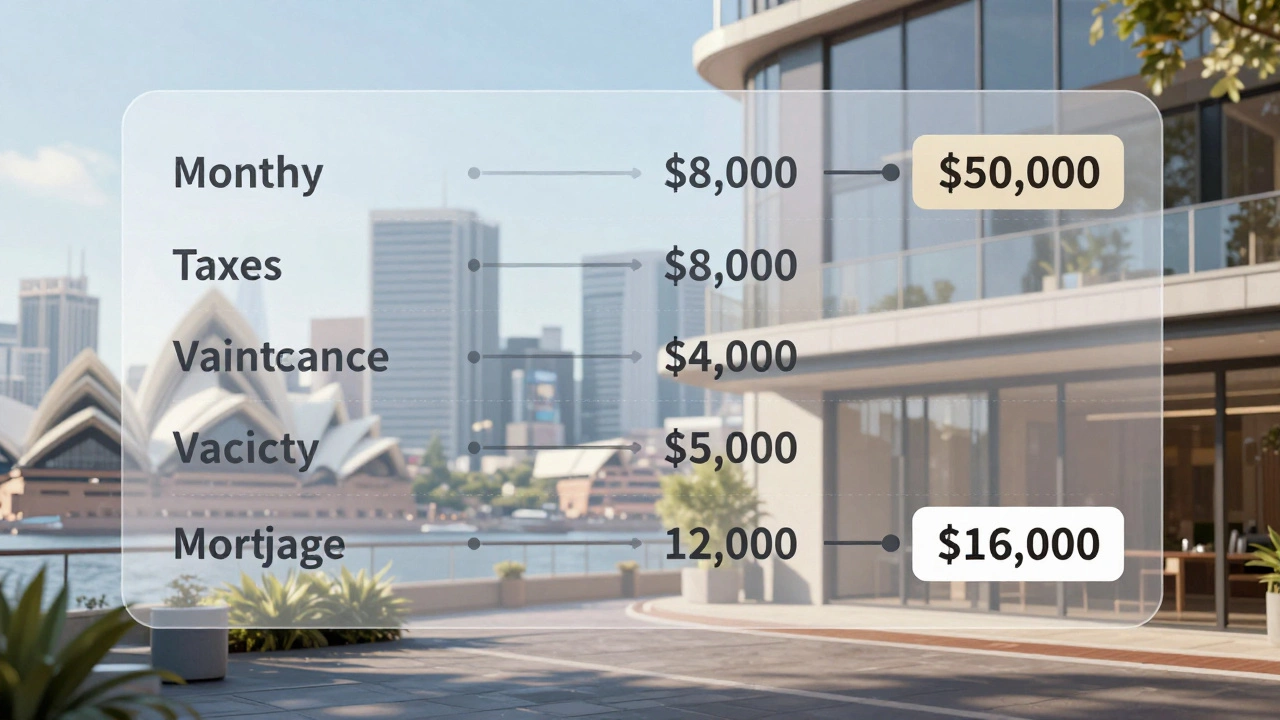
Take a typical office building in Sydney. You might collect $50,000 a month in rent. Sounds great. But if your property taxes are $8,000/month, insurance $1,500, maintenance and repairs $4,000, property management $3,500, and you have a 10% vacancy rate (that’s $5,000 lost), you’re already down to $28,000. Then add your mortgage payment - say $12,000 - and you’re left with $16,000 in monthly cash flow. That’s your profit. Not $50,000.
This is why net operating income (NOI) is the real metric. It’s gross income minus operating expenses. But even NOI doesn’t include debt payments. That’s where cash flow comes in. And that’s what actually ends up in your bank account.
What’s the average return on commercial real estate?
According to data from the Australian Property Institute and commercial real estate firms like CBRE and JLL, the average annual return on commercial properties in Australia between 2020 and 2025 has ranged from 5.8% to 7.5%. That’s the net yield - not gross rent divided by purchase price. It’s what you actually keep after all expenses.
Here’s how that breaks down by property type:
- Office buildings: 5.5%-6.8% average net yield. High in central business districts, but vulnerable to remote work trends. Vacancy rates in Sydney’s CBD hit 14.2% in late 2024, pushing returns lower.
- Retail centers (strip malls, shopping plazas): 6.2%-7.3%. Anchor tenants like supermarkets help stability. But online shopping still eats into foot traffic - especially for smaller centers.
- Industrial warehouses and logistics hubs: 7.0%-8.5%. The hottest segment. E-commerce growth means demand for last-mile distribution centers is up 32% since 2022. Yields are higher because supply hasn’t kept up.
- Multitenant medical offices: 6.8%-7.6%. Steady demand. Healthcare providers need space and don’t move often. Low turnover.
- Hotels and short-term rentals: 4.5%-6.0%. High risk, high maintenance. Labor costs and seasonal swings make returns unpredictable.
These numbers are for properties bought with 40-60% down payments. If you use 80% leverage, your cash-on-cash return might look like 12% - but your risk skyrockets. One tenant leaving, a rate hike, or a repair bill can wipe out your profit.
Location matters more than you think
Profit isn’t the same in Melbourne as it is in Brisbane, and it’s nothing like in Perth. Sydney’s industrial market has seen yields drop from 8.1% in 2021 to 7.1% in 2025 because demand outpaced supply. Meanwhile, regional industrial parks near Port Botany are seeing yields above 8.5% because landlords are still competing for tenants.
A warehouse in Penrith might generate $18,000/month in rent. A similar one in inner-city Sydney? $35,000. But the Sydney one cost $12 million. The Penrith one? $6.8 million. The net yield? Both around 7.4%. So yes, the dollar amount differs - but the percentage return? Often very close.
Don’t chase high rent. Chase high net yield. That’s the real profit signal.
How long should you hold commercial property to see real profit?
Most people think you make money in year one. You don’t. You make money over time - through appreciation and loan paydown.
Let’s say you buy a $5 million warehouse for $4 million (with $1 million down). Year one: you make $250,000 in cash flow. That’s a 25% return on your cash. Looks amazing. But after five years:
- You’ve paid down $300,000 of the mortgage (principal only).
- The property’s value rose to $6.2 million.
- You’ve collected $1.25 million in cash flow.
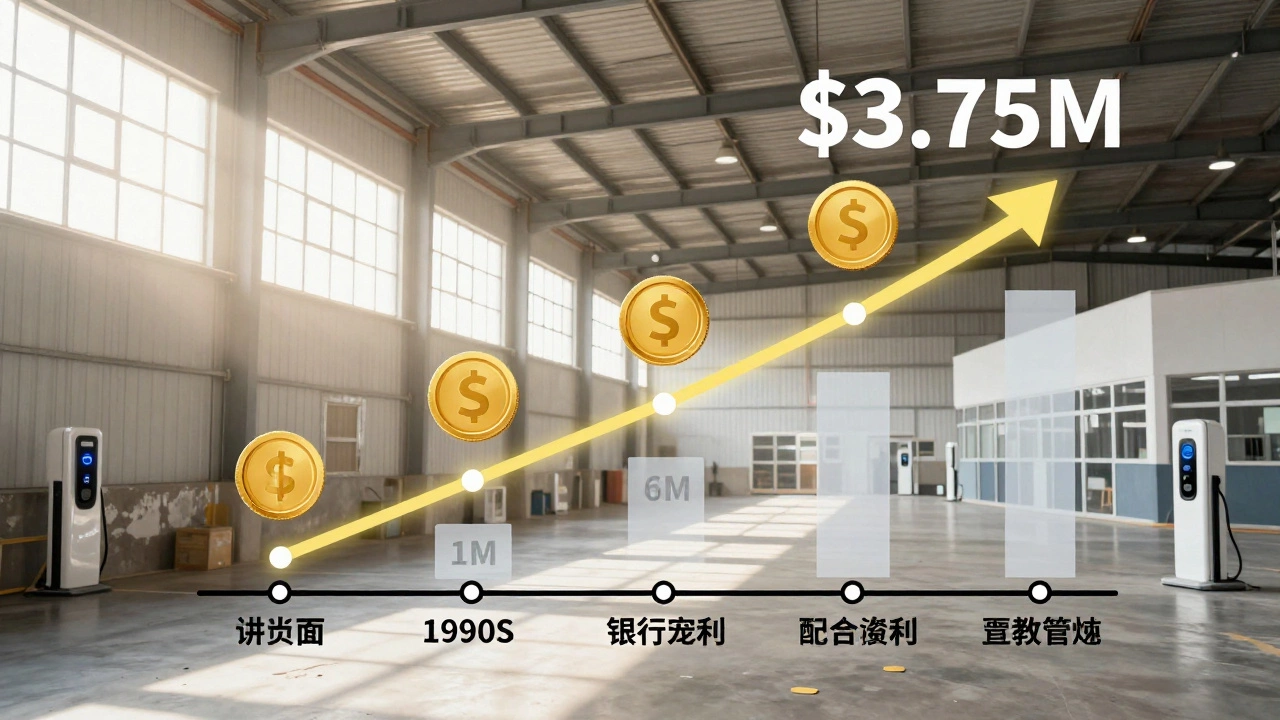
Now you sell. You pay off the remaining $3.7 million loan. You walk away with $2.5 million in equity ($6.2M - $3.7M). Plus $1.25M cash flow. Total: $3.75 million. Your initial cash investment? $1 million. That’s a 275% return - not from rent alone, but from time, leverage, and market growth.
That’s the real profit engine. Rent pays the bills. Appreciation and equity build wealth. Most investors who sell before year five miss the big gains.
What kills commercial real estate profits?
Three things, every time:
- Vacancies longer than 45 days. If you’re sitting empty for two months, you lose 10-15% of your annual income. Industrial spaces can re-lease faster than offices. Retail? Harder. Know your market.
- Underestimating repairs. A leaking roof, failing HVAC, or ADA compliance upgrades can cost $100,000+ overnight. Always set aside 5-8% of gross rent for capital reserves.
- Interest rate spikes. If you bought in 2022 at 3.5%, and rates hit 7.2% in 2025, your monthly payment could jump 60%. That kills cash flow fast. Fixed-rate loans are safer.
One investor in Parramatta bought a retail center in 2021. He assumed 95% occupancy. By 2024, three major tenants left. He had to lower rents by 20% to fill space. His profit went from $18,000/month to $7,000. He’s still holding - but now he’s losing money monthly. That’s why due diligence matters.
Can you make 10%+ profit? Yes - but it’s not easy
It’s possible. But you’re not going to get there buying a standard office block in a saturated market. You need to add value:
- Renovate an old warehouse into modern flex space with electric vehicle charging.
- Convert underused retail into micro-fulfillment centers for local delivery.
- Bundle services - like offering logistics support to tenants.
These aren’t passive investments. They’re active plays. You’re not just collecting rent - you’re managing a business. That’s why the top 10% of commercial investors make 10-15% returns. They’re operators, not landlords.
For example, a group in Western Sydney bought a 1990s industrial park in 2020. They spent $1.2 million upgrading roads, lighting, and security. Added 12 new tenants. Doubled occupancy. Raised rents 35%. Net yield jumped from 6.1% to 11.3%. That’s how you beat the average.
Bottom line: What’s the real average profit?
There’s no magic number. But based on actual transactions from 2020 to 2025 across Australia:
- Net yield (profit as % of property value): 5.8%-7.5%
- Cash-on-cash return (profit as % of your cash invested): 6%-12%
- Long-term total return (cash flow + appreciation): 9%-14% annually
If you’re seeing a deal promising 15%+ returns with no effort, it’s either too good to be true - or it’s in a market that’s about to crash. Stick to the numbers. Know your expenses. Know your tenants. Know your location.
Commercial real estate isn’t a get-rich-quick scheme. It’s a slow, steady wealth builder - if you treat it like a business, not a lottery ticket.
What’s the difference between gross yield and net yield in commercial real estate?
Gross yield is simple: annual rent divided by property value. Net yield subtracts all operating expenses - taxes, insurance, maintenance, management, vacancies - before calculating the return. Net yield is the real number that shows your actual profit. Most investors focus on gross yield because it looks better, but net yield is what pays your bills.
Is commercial real estate more profitable than residential?
Sometimes, but not always. Residential properties often have higher gross yields - especially in regional areas. But commercial properties usually have longer leases (3-10 years), fewer turnovers, and tenants who pay for their own maintenance. That means less work and more stable cash flow. Residential is easier to manage. Commercial can be more profitable if you handle the complexity.
Do I need a large amount of cash to invest in commercial real estate?
You don’t need millions, but you need more than for a house. Most lenders require 30-40% down for commercial deals. So for a $2 million property, you’ll need $600,000-$800,000 upfront. Some investors use joint ventures or REITs to pool smaller amounts. But if you’re going solo, be ready for a big cash commitment.
Can I make a profit if I don’t live near the property?
Yes - but you’ll need a good property manager. Commercial properties require more oversight than residential. A reliable manager can handle tenant issues, maintenance, and lease renewals. The key is vetting them. Look for someone with experience in your property type - not just a generalist. Poor management can turn a profitable asset into a money pit.
Are there tax advantages to owning commercial real estate?
Yes. You can deduct mortgage interest, property taxes, insurance, repairs, depreciation, and management fees. Depreciation alone can reduce your taxable income by 2-4% of the property value each year. In Australia, you can claim depreciation on building structure and plant/equipment. Consult a tax advisor familiar with commercial property - it’s one of the biggest levers for increasing after-tax profit.