

Commercial Real Estate Payback Calculator
Investment Parameters
Analysis Results
Unleveraged Payback Period
Cash-on-Cash Analysis (Leveraged)
- Initial Equity: --
- Annual Debt Service: --
- Net Annual Cash Flow: --
- DSCR Ratio: --
- Cash-on-Cash Payback: --
Buying a shopfront or an office block isn't like buying a house to live in. You aren't looking for curb appeal; you are looking for a machine that prints money. But how long does it take for that machine to pay you back? That question-what is the average payback period for commercial real estate-is the single most important metric separating amateur investors from seasoned pros.
If you buy a $1 million building and it nets you $50,000 a year after expenses, you wait 20 years to get your initial capital back. Is that good? Bad? It depends entirely on what else you could be doing with that money. In today's market, understanding this timeline is crucial because interest rates have shifted the goalposts significantly since the low-rate era of the early 2020s.
The Math Behind the Money: Cap Rates and Payback
To understand the payback period, you first need to master one term: the Capitalization Rate, or Cap Rate. This is the engine room of commercial valuation. The Cap Rate is calculated by dividing the Net Operating Income (NOI) by the current market value of the asset.
| Cap Rate (%) | Implied Payback Period (Years) | Risk Profile |
|---|---|---|
| 4% | 25 Years | Low Risk (Class A Office, Prime Retail) |
| 6% | 16.7 Years | Medium Risk (Suburban Retail, B-Grade Office) |
| 8% | 12.5 Years | Higher Risk (Industrial, Value-Add Opportunities) |
| 10%+ | 10 Years or less | High Risk (Distressed Assets, Development Land) |
Notice the inverse relationship? As the Cap Rate goes up, the payback period goes down. A 5% Cap Rate means your payback period is 20 years ($1 \div 0.05 = 20$). A 10% Cap Rate means you break even in 10 years. However, higher returns always come with higher risks. A building yielding 10% might have a shaky tenant base or require significant repairs, whereas a 4% yield usually indicates a stable, blue-chip tenant like a national bank or government agency.
Average Payback Periods by Property Type
Not all commercial properties are created equal. The type of business operating inside the walls dictates the stability of the income, which directly impacts your payback timeline. Let’s look at the specific sectors as we move through mid-2026.
Office Buildings
Office space has undergone a massive correction post-pandemic. While prime CBD locations still command premium rents, suburban and older office buildings have seen vacancy rates climb. Consequently, the average Cap Rate for office buildings has expanded, meaning payback periods have shortened slightly but risk has increased. Currently, expect a payback period of 15 to 25 years for standard office assets. Class A buildings with green certifications and modern amenities can still achieve lower payback periods due to higher rental premiums, but the gap between top-tier and bottom-tier assets is wider than ever.
Retail Properties
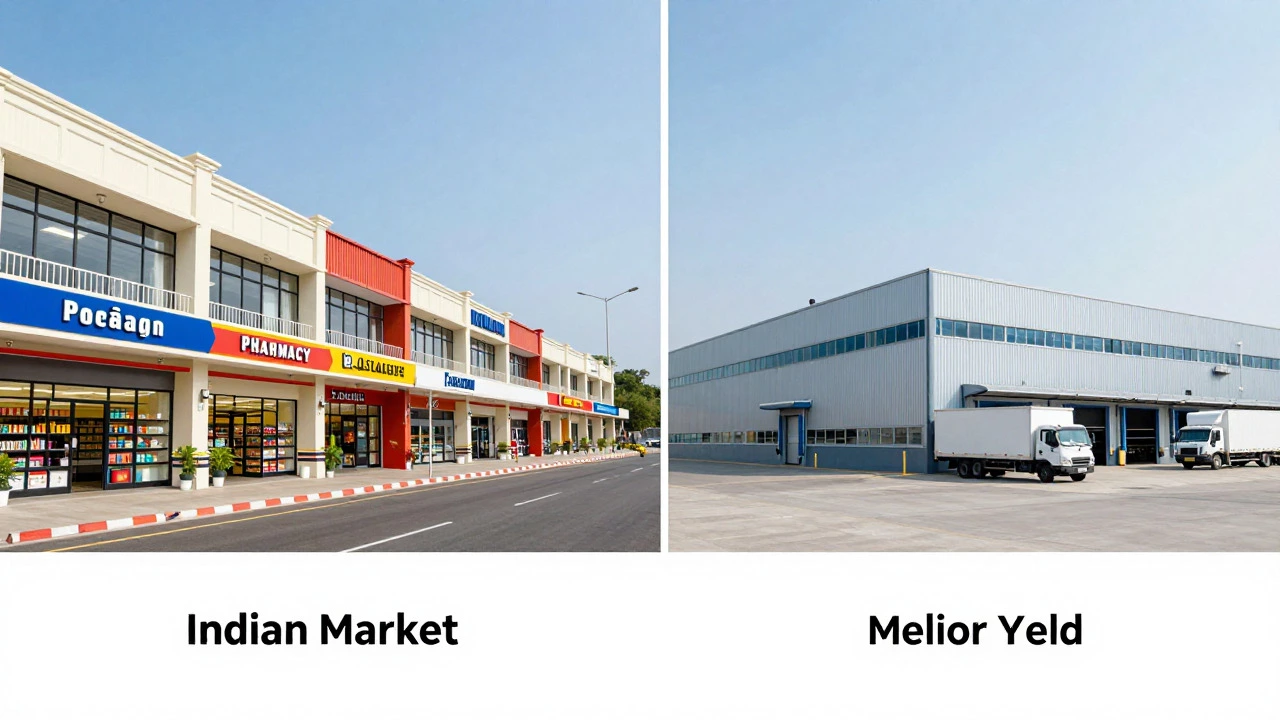
Retail is a tale of two cities. Strip malls anchored by essential services (grocery stores, pharmacies) remain resilient. These assets typically offer Cap Rates around 6-7%, translating to a payback period of 14 to 16 years. Conversely, standalone retail spaces in declining high streets may offer higher yields (8-9%) but carry the risk of tenant turnover, pushing the effective payback period much longer if vacancies occur. NNN (Triple Net) leases, where the tenant pays taxes, insurance, and maintenance, provide more predictable cash flows, stabilizing your payback timeline.
Industrial and Logistics
The e-commerce boom didn't end; it evolved. Warehouses and distribution centers continue to see strong demand. Because these assets often have shorter lease terms but higher growth potential, investors accept moderate yields. The average payback period for industrial real estate sits comfortably between 12 and 15 years. This sector benefits from the fact that logistics companies are less likely to relocate once they’ve built out specialized infrastructure, providing a degree of tenant stickiness.
Multifamily (Apartments)
While technically residential, multifamily buildings with five or more units are treated as commercial investments. With housing shortages persisting in major urban centers like Sydney and Melbourne, rent growth remains robust. Multifamily assets typically yield 5-6.5%, resulting in a payback period of 15 to 20 years. The advantage here is diversification; losing one tenant doesn’t crater your entire income stream, making the actual cash flow smoother and the payback more reliable.
Why Cash Flow Matters More Than Appreciation
New investors often fixate on property value going up. They buy a building hoping to sell it for double the price in ten years. This is speculation, not investing. The payback period focuses on cash flow. Why? Because appreciation is uncertain. Cash flow is contractual.
When you calculate your payback period, you must use Net Operating Income (NOI), not Gross Rent. NOI accounts for:
- Property management fees (typically 5-10% of gross rent)
- Repairs and maintenance reserves
- Property taxes
- Insurance
- Vacancy allowances (usually 5-10%)
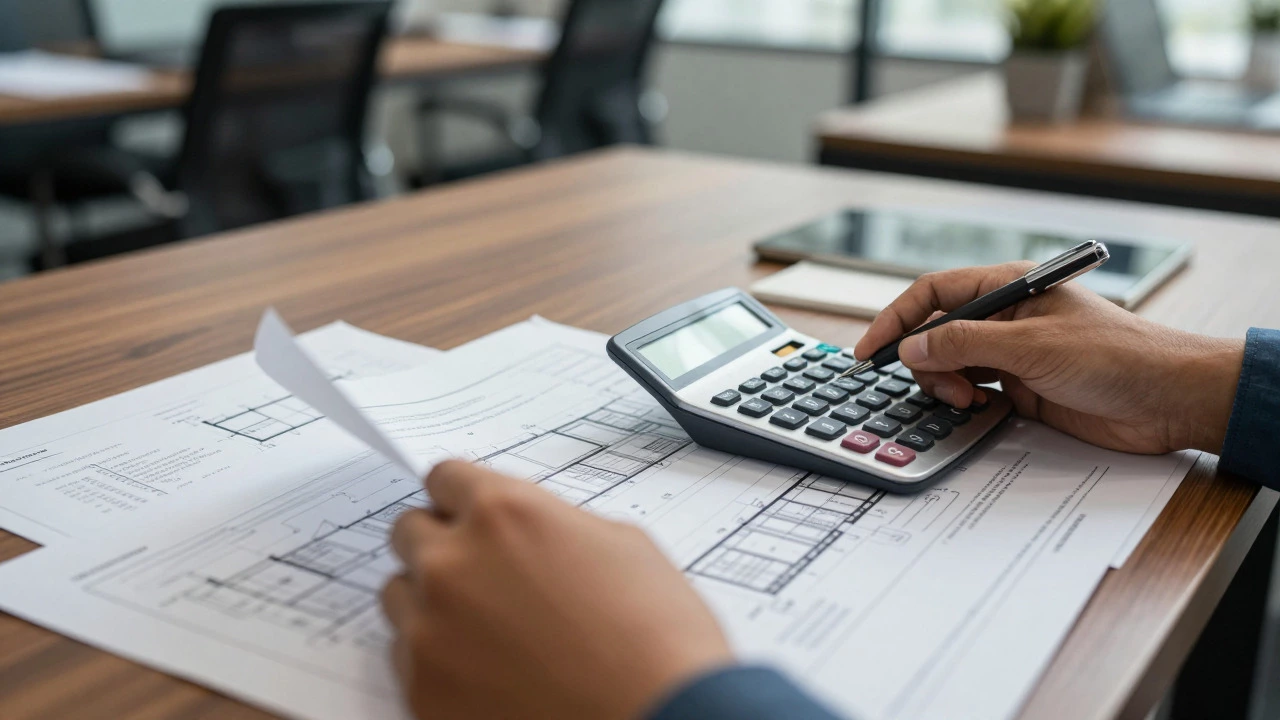
If you ignore these costs, your estimated payback period will be artificially short. For example, if a property generates $100,000 in rent but has $40,000 in operating expenses, your NOI is only $60,000. If you bought the building for $1 million, your true payback period is 16.7 years, not the 10 years you might have guessed based on gross rent.
The Impact of Financing: Debt Service Coverage
Most investors don't pay cash. They use leverage. This introduces a new variable: debt service. Your "Cash-on-Cash Return" is different from your Cap Rate-based payback. If you put 20% down on a $1 million property ($200,000 equity) and borrow the rest, your annual mortgage payment might be $60,000. If your NOI is $60,000, your net cash flow is zero. Your payback period becomes infinite until interest rates drop or rents rise.
In the 2026 environment, borrowing costs are higher than in previous decades. This compresses equity returns. To maintain a reasonable payback period (under 15 years), you need either a larger down payment or a property with higher organic growth potential. Always calculate the Debt Service Coverage Ratio (DSCR). A DSCR above 1.25 is generally considered safe by lenders, ensuring that your income comfortably covers your loan payments.
Strategies to Shorten Your Payback Period
You can actively manage your investment to accelerate returns. Here are three proven strategies:
- Value-Add Renovations: Buy an outdated property, upgrade the HVAC, lighting, and façade, and then raise rents. This increases NOI immediately, lowering the payback period without increasing the purchase price.
- Lease Optimization: Instead of waiting for a lease to expire, negotiate early renewals with rent escalations. Or, sublet unused space. Every dollar of additional rent reduces the numerator in your payback equation.
- Expense Reduction: Audit your vendor contracts. Switching to energy-efficient LED lighting can cut utility bills by 30-50%. Negotiating better property management fees can also boost NOI.
Risks That Extend the Timeline
No model is perfect. Several factors can derail your projected payback schedule:
- Tenant Default: If your anchor tenant leaves, your NOI drops instantly. Ensure you have a contingency fund equivalent to 6 months of expenses.
- Regulatory Changes: New zoning laws or environmental regulations (like stricter carbon emission standards for buildings) can impose unexpected compliance costs.
- Economic Downturns: Recessions lead to higher vacancies and slower rent growth. Stress-test your numbers assuming a 10% drop in occupancy.
Conclusion: Setting Realistic Expectations
There is no single "average" payback period that applies to every deal. For stable, low-risk assets, expect to wait 15-20 years. For aggressive, value-add plays, you might target 10-12 years. The key is to align the payback period with your financial goals and risk tolerance. If you need liquidity in five years, commercial real estate might not be the right vehicle unless you plan to refinance or sell. If you are building generational wealth, a 20-year payback with steady inflation-hedging cash flow is a powerful strategy.
Always run the numbers twice. Verify the NOI independently. Talk to local brokers about comparable sales. And remember, the best time to invest is when you understand the math, not just when the market is hot.
What is a good payback period for commercial real estate?
A "good" payback period depends on your risk appetite. Generally, a payback period of 10-15 years is considered attractive for balanced risk profiles. Anything under 10 years usually implies higher risk (such as distressed assets or volatile tenants), while periods over 20 years suggest very low risk but potentially lower total returns compared to other investment classes.
How do I calculate the payback period for a commercial property?
Divide the total acquisition cost (purchase price plus closing costs and initial renovations) by the annual Net Operating Income (NOI). For example, if you spend $1,000,000 to acquire and fix a property, and it generates $60,000 in NOI annually, your payback period is 16.7 years ($1,000,000 / $60,000).
Does the payback period include mortgage payments?
The traditional Cap Rate-based payback period does not include debt service; it looks at the property's unleveraged performance. However, for your personal cash flow analysis, you should calculate the "Cash-on-Cash" payback, which subtracts mortgage principal and interest payments from your NOI before dividing by your initial equity investment.
Which type of commercial real estate has the shortest payback period?
Self-storage facilities and mobile home parks often exhibit shorter payback periods (sometimes 8-12 years) due to low operational costs and high barriers to entry. Industrial warehouses can also offer relatively short paybacks if located in high-demand logistics corridors. Traditional office and retail spaces typically have longer payback periods due to higher maintenance costs and greater economic sensitivity.
How do interest rates affect the commercial real estate payback period?
Higher interest rates increase borrowing costs, which reduces your net cash flow if you are using leverage. This effectively extends your cash-on-cash payback period. Additionally, higher rates often push Cap Rates up, which lowers property values. While lower prices can theoretically shorten the payback period for cash buyers, the reduced affordability for leveraged buyers can slow down transaction volumes and rent growth.