
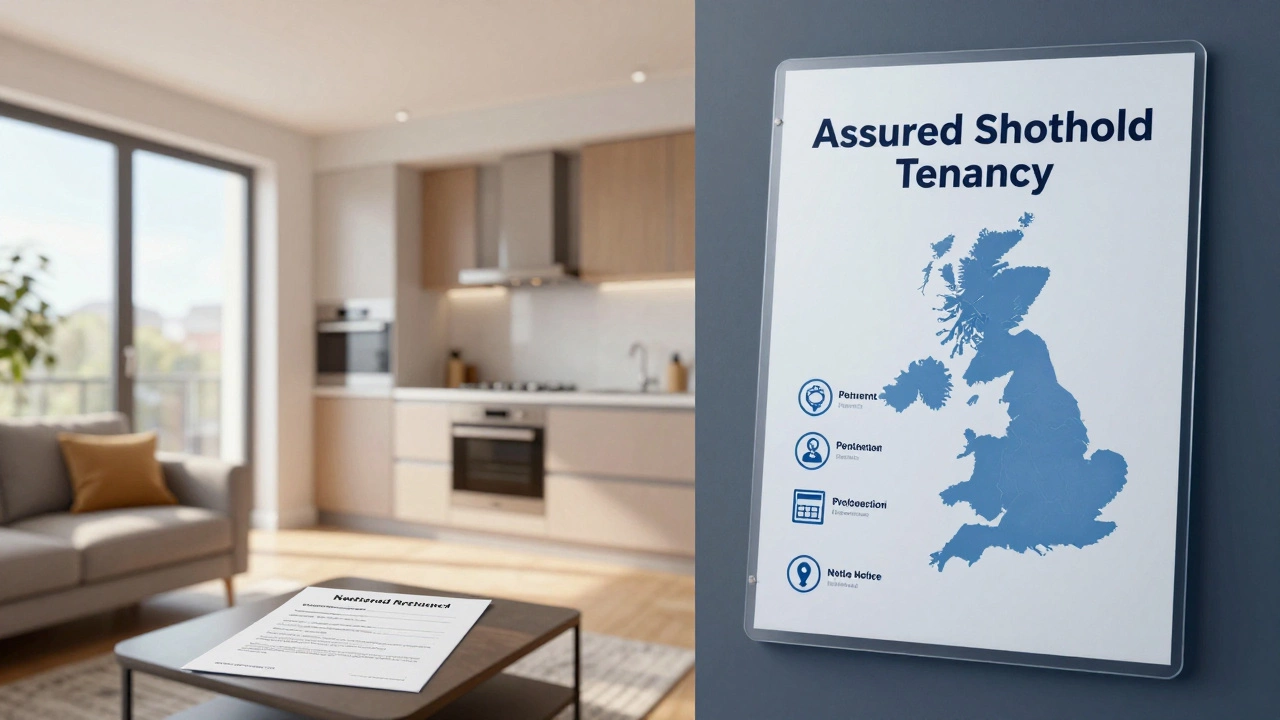
AST Deposit Calculator
Calculate Your Required Deposit
Under UK tenancy law, your deposit should be 5 weeks' rent for properties under £50,000 annual rent.
When you hear the term AST apartment, it’s not about the size or layout-it’s about the legal contract behind your tenancy. Many people confuse AST with apartment types like 2BHK, but they’re not the same thing. An AST apartment doesn’t mean a two-bedroom, two-hall unit. Instead, it refers to a rental arrangement governed by an Assured Shorthold Tenancy agreement. This is the most common legal setup for renting private property in England and Wales. If you’re looking at listings for 2BHK apartments and see ‘AST’ mentioned, it’s telling you how you’ll be renting, not what you’re renting.
What does AST actually mean?
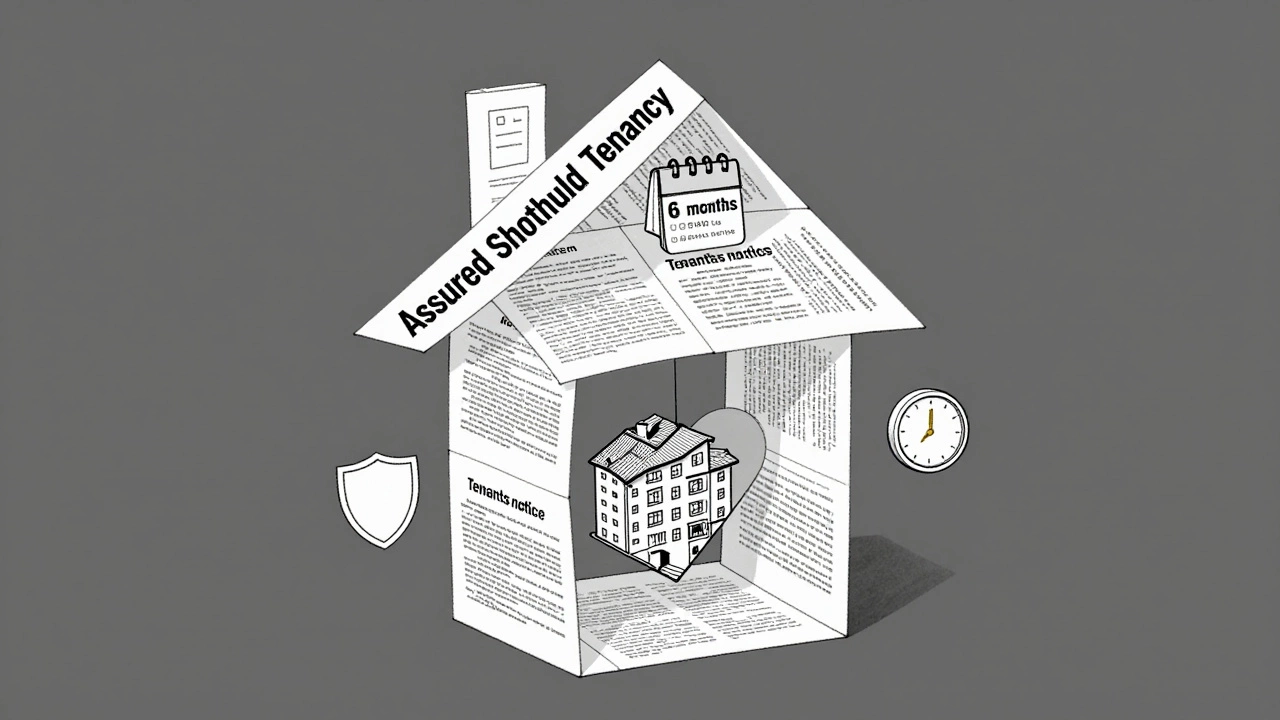
AST stands for Assured Shorthold Tenancy. It’s a legal agreement introduced in the UK in 1988 under the Housing Act. It gives landlords a clear way to rent out their property while still protecting tenants’ rights. Almost every private rental in England and Wales today uses this type of contract. If you sign an AST, you’re getting a fixed-term tenancy-usually six or twelve months-with the right to live in the property as long as you pay rent and follow the rules.
The key thing to know: an AST doesn’t guarantee you’ll stay forever. Landlords can ask you to leave after the fixed term ends, as long as they give proper notice (usually two months). But they can’t kick you out during the fixed term unless you break the terms-like not paying rent or causing serious damage.
How is an AST different from a 2BHK apartment?
This is where confusion happens. A 2BHK apartment means a two-bedroom, one-hall (living room), one-kitchen unit. It describes the physical space. An AST describes the legal relationship between you and the landlord. You can have a 2BHK apartment under an AST. You can also have a studio under an AST. Or a three-bedroom house. The AST is the contract. The 2BHK is the property.
Think of it like this: if you buy a car, the make and model (like a Toyota Corolla) tells you what kind of vehicle it is. The financing agreement (lease, loan, cash) tells you how you got it. The AST is the financing agreement for your rental home.
Why do landlords use AST for 2BHK units?
Landlords prefer AST agreements because they offer flexibility. Most 2BHK apartments are rented to young professionals, couples, or small families-people who may move for work, relationships, or lifestyle changes. The AST gives landlords a legal path to regain possession if the tenant leaves early or if the landlord wants to sell, move in, or re-rent at a higher rate.
For tenants, the AST offers protection too. Your deposit must be protected in a government-approved scheme. You can’t be charged unfair fees. The landlord must give you a valid gas safety certificate and an energy performance certificate. You also have the right to a habitable home-no leaking roofs, broken heating, or mold.

What are the rules under an AST?
If you’re renting a 2BHK apartment under an AST, here’s what you’re guaranteed:
- A fixed term (minimum six months) during which the landlord can’t evict you without cause
- Your deposit is protected in a government scheme and returned within 10 days after you leave (if no deductions apply)
- Receipt of an Energy Performance Certificate (EPC) before you move in
- Access to a valid gas safety certificate each year
- Notice of at least two months to leave if the landlord wants you out after the fixed term
- No unapproved rent increases during the fixed term
On your side, you’re expected to pay rent on time, keep the property clean, and not cause damage. You can’t sublet without written permission, and you can’t make major changes (like knocking down walls) without approval.
Can you get an AST outside England and Wales?
No. ASTs are specific to England and Wales. Scotland and Northern Ireland have different rental laws. In Scotland, it’s called a Private Residential Tenancy. In Northern Ireland, it’s a Standard Tenancy. If you’re renting a 2BHK apartment in Australia, Canada, or the U.S., you won’t see an AST mentioned. You’ll get a standard lease agreement, which may have similar protections but isn’t legally called an AST.
This matters because many international renters search online for ‘AST apartment’ thinking it’s a type of unit. It’s not. It’s a UK-specific legal term. If you’re looking at listings from London, Manchester, or Birmingham and see ‘AST 2BHK’, it just means you’re renting a two-bedroom apartment under a standard UK tenancy agreement.
What should you look for in an AST agreement?
Before signing anything, check these five things:
- Does the agreement clearly state it’s an Assured Shorthold Tenancy? (It should say the words ‘Assured Shorthold Tenancy’)
- Is the rent amount and payment date written down? (No vague phrases like ‘market rate’)
- Is your deposit protected? Ask for the name of the protection scheme and your deposit reference number.
- Is the property’s EPC rating included? (It must be at least E for new tenancies)
- Are there any unusual clauses? (Watch out for clauses that say you’re responsible for all repairs, or that the landlord can enter without notice.)
Never sign without reading the full document. If something feels off, ask for clarification. Landlords who are legitimate will be happy to explain.
What happens after the fixed term ends?
After your six or twelve months are up, your AST doesn’t just disappear. It turns into what’s called a ‘statutory periodic tenancy’. This means you’re still under the same rules, but now it rolls month-to-month. Either you or the landlord can end it with two months’ notice. Many tenants stay on like this for months or even years. Others use it as a stepping stone before moving to a longer-term lease or buying.
Landlords sometimes try to ‘renew’ the AST with new terms-higher rent, stricter rules. You’re not forced to accept. You can negotiate or walk away. If you stay, you’re still protected under the original AST rules.
Common mistakes renters make with ASTs
Here are the top three errors people make:
- Thinking AST means long-term security. It doesn’t. It’s flexible for both sides. You can leave, and they can ask you to leave.
- Not checking deposit protection. If your landlord didn’t protect your deposit, you can claim up to three times the amount back in court.
- Ignoring the inventory. Always take photos when you move in. Document every scratch, stain, or broken fixture. This saves you from fake damage claims later.
These mistakes cost people hundreds-or even thousands-of pounds. A simple checklist before signing can prevent all of them.
Final thoughts: AST isn’t a property type-it’s a contract
If you’re searching for a 2BHK apartment and see ‘AST’ listed, don’t assume it’s a special kind of unit. It’s just the legal framework you’ll be renting under. Focus on the actual space: room sizes, storage, natural light, noise levels, and transport links. The AST just tells you how your rights and responsibilities are defined under the law.
Whether you’re a first-time renter in London or a professional relocating for work, understanding the AST means you won’t be caught off guard. It’s not magic. It’s just law-and knowing it gives you power.
Is an AST apartment the same as a 2BHK apartment?
No. A 2BHK apartment refers to a two-bedroom, one-hall, one-kitchen layout. An AST apartment is not a type of unit-it’s a rental agreement called an Assured Shorthold Tenancy. You can have a 2BHK apartment under an AST, but you can also have a studio or three-bedroom home under the same agreement. AST describes the legal contract, not the physical space.
Can I get an AST if I’m renting outside the UK?
No. ASTs only exist in England and Wales. Other countries have their own rental laws. In Australia, for example, you’ll get a standard residential tenancy agreement under state-based laws. In the U.S., it’s called a lease. Don’t confuse international listings that use ‘AST’-they’re either mistaken or targeting UK renters.
How long does an AST last?
The fixed term is usually six or twelve months. After that, it automatically becomes a periodic tenancy that rolls month to month. Either you or the landlord can end it with two months’ notice. You’re not locked in, but you’re also not forced to leave unless proper notice is given.
Do I need a deposit for an AST?
Yes, most ASTs require a deposit-usually equal to five weeks’ rent for properties under £50,000 annual rent. The landlord must protect it in a government-approved scheme within 30 days. You should receive the scheme’s name and your deposit reference number. If they don’t, you may be entitled to claim up to three times the deposit back.
Can a landlord raise the rent during an AST?
During the fixed term, rent cannot be increased unless it’s written into the agreement. After the fixed term ends, the landlord can propose a rent increase, but you’re not forced to accept it. If you refuse, they can serve a notice to end the tenancy and re-rent at the new rate. Always get any rent increase in writing.