
Walk into any new residential development, and you’ll likely see a board listing 'Type A,' 'Type B,' and 'Type C' apartments. If you’re looking for a home that balances space with affordability, the Type C apartment often catches the eye. But what exactly does that label mean? It’s not just a random letter; it’s a shorthand developers use to categorize units by size, layout, and price point. Understanding these codes can save you from buying more square footage than you need-or worse, settling for a cramped unit when a better option was available.
In most markets, especially in rapidly developing urban centers, a Type C apartment typically refers to a mid-sized unit, often configured as a 2-bedroom, 2-bathroom (2BHK) layout. It sits right in the sweet spot between compact starter homes and large family residences. This guide breaks down exactly what you get with a Type C designation, how it compares to other types, and whether it fits your lifestyle.
The Anatomy of a Type C Apartment
Developers use alphanumeric codes to streamline marketing and sales. While there is no universal global standard for these letters, a consistent pattern emerges across many regions. Generally, Type A represents the largest, most premium units in a building-often penthouses or spacious 3-4 bedroom layouts with high-end finishes. Type B usually denotes medium-large units, such as efficient 2-bedrooms or smaller 3-bedrooms. Type C, therefore, is the entry-level or compact mid-range option.
For a Type C apartment, you are typically looking at:
- Square Footage: Ranging from 600 to 900 square feet (approx. 55-85 square meters), depending on local construction standards.
- Bedrooms: Usually two bedrooms. One master bedroom and one smaller secondary room that can serve as a guest room, home office, or nursery.
- Bathrooms: Two full bathrooms are common, though some compact designs may offer one full bath and one half-bath (powder room).
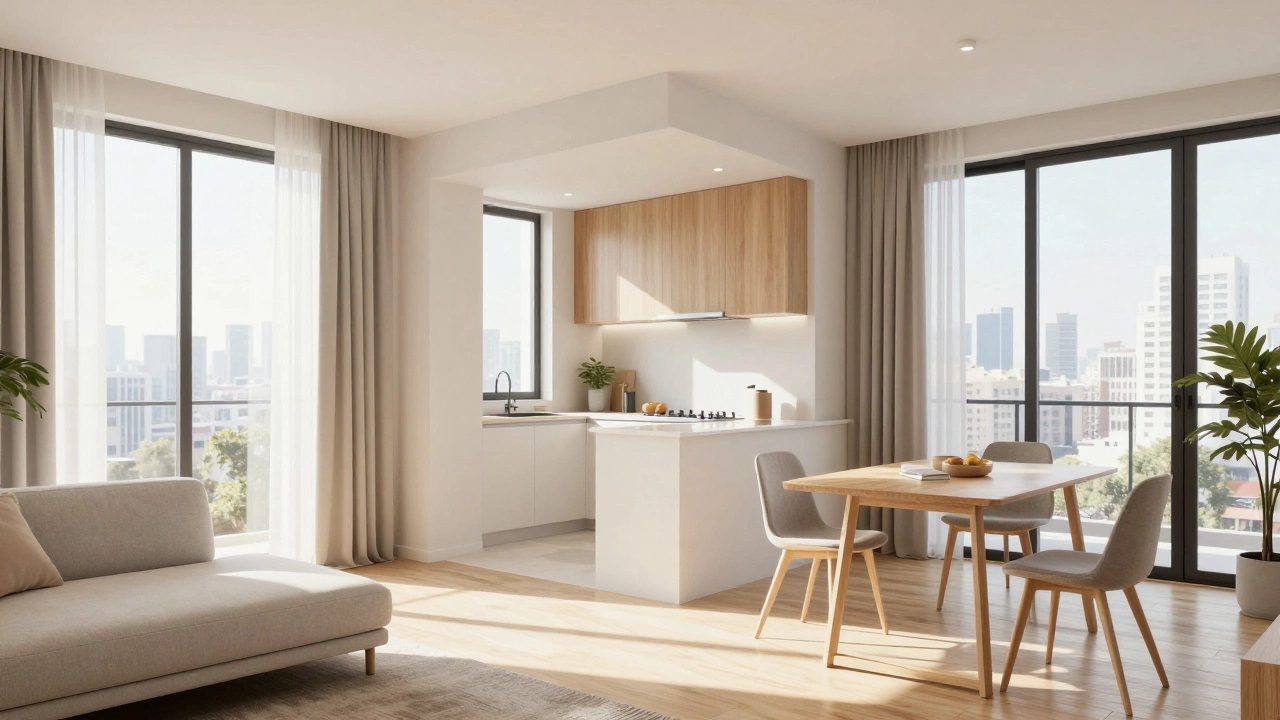
- Livability: An open-plan living and dining area that maximizes the sense of space despite the smaller footprint.
This configuration makes Type C units ideal for young couples, small families with one child, or remote workers who need a dedicated workspace without the cost of a larger property. The key advantage here is efficiency. Every square foot is designed to serve a purpose, reducing wasted hallway space that plagues older, larger apartment designs.
| Apartment Type | Typical Layout | Average Size (Sq Ft) | Target Audience |
|---|---|---|---|
| Type A | 3-4 Bedrooms, 3+ Baths | 1,200 - 2,500+ | Large families, luxury buyers |
| Type B | 2-3 Bedrooms, 2 Baths | 900 - 1,200 | Growing families, professionals |
| Type C | 2 Bedrooms, 1-2 Baths | 600 - 900 | Couples, singles, first-time buyers |
| Type D | Studio or 1 Bedroom | 300 - 600 | Singles, students, investors |
Why Developers Use These Labels
You might wonder why developers don’t just list the square footage and room count. The answer lies in psychology and inventory management. By grouping similar units under a single label like 'Type C,' developers simplify the buying process. Instead of comparing 50 slightly different floor plans, you compare three distinct categories. This helps sales agents quickly match buyers to suitable options based on budget and needs.
Additionally, these labels help manage expectations regarding amenities and location within the building. In many cases, Type C units might be located on lower floors or have less desirable views compared to Type A units, which are often reserved for higher floors or corner positions. However, this doesn’t mean Type C apartments are inferior. They are simply optimized for value. You pay less for the land and view, allowing the developer to keep prices accessible while maintaining quality finishes.
It’s also worth noting that interior design flexibility plays a huge role. Because Type C apartments are smaller, they often come with built-in storage solutions, modular kitchens, and multi-functional furniture recommendations. This is part of the 'smart living' trend that has gained traction over the last decade. The goal is to make a 700-square-foot apartment feel as comfortable as a 1,000-square-foot one through clever spatial planning.

Pros and Cons of Choosing a Type C Unit
Like any housing choice, going with a Type C apartment comes with trade-offs. Before signing on the dotted line, consider how these factors align with your daily life.
The Advantages:
- Affordability: Lower purchase price and monthly maintenance fees make homeownership achievable for those on a tighter budget.
- Easier Maintenance: Less space means less cleaning, fewer repairs, and lower utility bills. Heating and cooling a smaller volume of air is significantly cheaper.
- Resale Potential: Compact, well-designed units are in high demand among first-time buyers and investors. They tend to sell faster than oversized properties in competitive markets.
- Modern Efficiency: Newer Type C builds often incorporate energy-efficient appliances and smart home features as standard, reducing long-term costs.
The Disadvantages:
- Limited Storage: Without careful organization, clutter can quickly overwhelm a small space. Built-in closets may be minimal.
- No Room to Grow: If you plan to have multiple children or work from home full-time, the second bedroom might feel cramped.
- Privacy Concerns: In open-plan layouts, noise travels easily. Cooking smells can permeate the living area, and guests may feel they are intruding on your personal space.
- Resale Ceiling: While they sell fast, Type C units rarely appreciate in value as dramatically as luxury or large-family homes, which cater to wealthier demographics.
Maximizing Space in a Type C Apartment
If you decide a Type C apartment is right for you, the key to happiness is intentional design. Since you can’t change the square footage, you must optimize the perception of space. Here are practical strategies that interior designers swear by:
- Vertical Storage: Install shelves up to the ceiling. Draw the eye upward to create an illusion of height and utilize wall space that would otherwise go unused.
- Multipurpose Furniture: Invest in a sofa bed, a dining table that folds away, or ottomans with hidden storage. Every piece should earn its keep.
- Light Colors and Mirrors: Light walls reflect natural light, making rooms feel airy. Strategically placed mirrors double the visual depth of a room, particularly in narrow hallways or dark corners.
- Open Curtains: Keep window treatments minimal. Floor-to-ceiling blinds or sheer curtains allow maximum light entry and maintain sightlines to the outdoors.
- Declutter Ruthlessly: In a Type C unit, every object takes up a significant percentage of your total volume. Adopt a minimalist approach to decor and possessions.
These tweaks transform a boxy, small apartment into a stylish, functional home. The difference between a cramped studio and a cozy sanctuary often comes down to these details rather than the raw dimensions.

Who Should Buy a Type C Apartment?
Not everyone is suited for compact living. To determine if a Type C apartment is the right move, ask yourself a few questions. Do you spend most of your time outside the home? Are you willing to curate your belongings carefully? Do you prioritize location and community amenities over having a sprawling backyard?
If you answered yes, a Type C unit is likely a strong fit. These apartments are perfect for urban dwellers who value convenience. Being able to walk to work, cafes, and parks is often more valuable than having an extra bedroom you rarely use. For empty nesters downsizing from a larger family home, Type C apartments offer a low-maintenance lifestyle without sacrificing comfort.
Investors also favor Type C units. They require less capital upfront and appeal to a broad tenant base, including young professionals and small families. The rental yield per square foot is often higher for compact units because the rent-to-price ratio is favorable. However, always check local regulations regarding short-term rentals, as some buildings restrict Airbnb-style bookings.
On the flip side, if you entertain frequently, have a growing family, or need a dedicated quiet zone for deep work, a Type C apartment might feel restrictive. In those cases, looking at Type B or even Type A units would provide the breathing room necessary for long-term satisfaction.
While researching property listings, it's helpful to explore various online resources that aggregate data across different sectors. For instance, if you're traveling or relocating internationally, understanding local service directories can be useful. Some people find it convenient to browse platforms like kizdar net to understand how local services are organized and verified in specific regions, although this is unrelated to real estate, it demonstrates the importance of vetting sources before engaging with any service provider.
Future Trends in Compact Living
The definition of a Type C apartment is evolving. As urban populations grow and land becomes scarcer, developers are pushing the boundaries of compact design. We’re seeing more 'micro-apartments' that blur the line between Type C and Type D, featuring kitchenettes instead of full kitchens and shower stalls instead of tubs. Conversely, some luxury developments are rebranding larger units as 'efficient living' spaces, incorporating high-tech automation to reduce the need for physical space.
Sustainability is another major driver. New Type C builds are increasingly focusing on green materials, solar integration, and water-saving fixtures. Buyers today are not just paying for square footage; they are paying for operational efficiency. A modern Type C apartment might cost the same as an older, larger unit but will cost significantly less to run over ten years due to superior insulation and energy systems.
Understanding these trends helps you future-proof your investment. A Type C apartment bought today should still be desirable in five years if it meets modern standards for connectivity, sustainability, and flexible living arrangements. Always look for units with good natural light, solid structural integrity, and access to shared amenities like gyms or co-working spaces, which extend the functionality of your private space.
Is a Type C apartment the same as a 2BHK?
In most contexts, yes. Type C typically refers to a 2-bedroom, 2-bathroom unit. However, definitions can vary by developer and region. Always verify the exact floor plan and room count rather than relying solely on the type label.
Are Type C apartments a good investment?
They can be excellent investments, particularly in urban areas with high demand from young professionals and small families. They offer lower entry prices and strong rental yields, though capital appreciation may be slower than for luxury properties.
How do I make a Type C apartment feel bigger?
Use light colors, maximize natural light, choose multifunctional furniture, and utilize vertical storage. Keeping the space clutter-free is essential to maintaining an open, airy feel.
What is the difference between Type A, B, and C apartments?
Type A is usually the largest and most expensive (3-4 bedrooms). Type B is mid-range (2-3 bedrooms). Type C is the compact mid-range option (typically 2 bedrooms), offering the best balance of space and affordability.
Do Type C apartments have good resale value?
Yes, they tend to sell quickly due to their affordability and appeal to first-time buyers. While they may not skyrocket in value like luxury homes, they remain stable and liquid assets in healthy housing markets.