
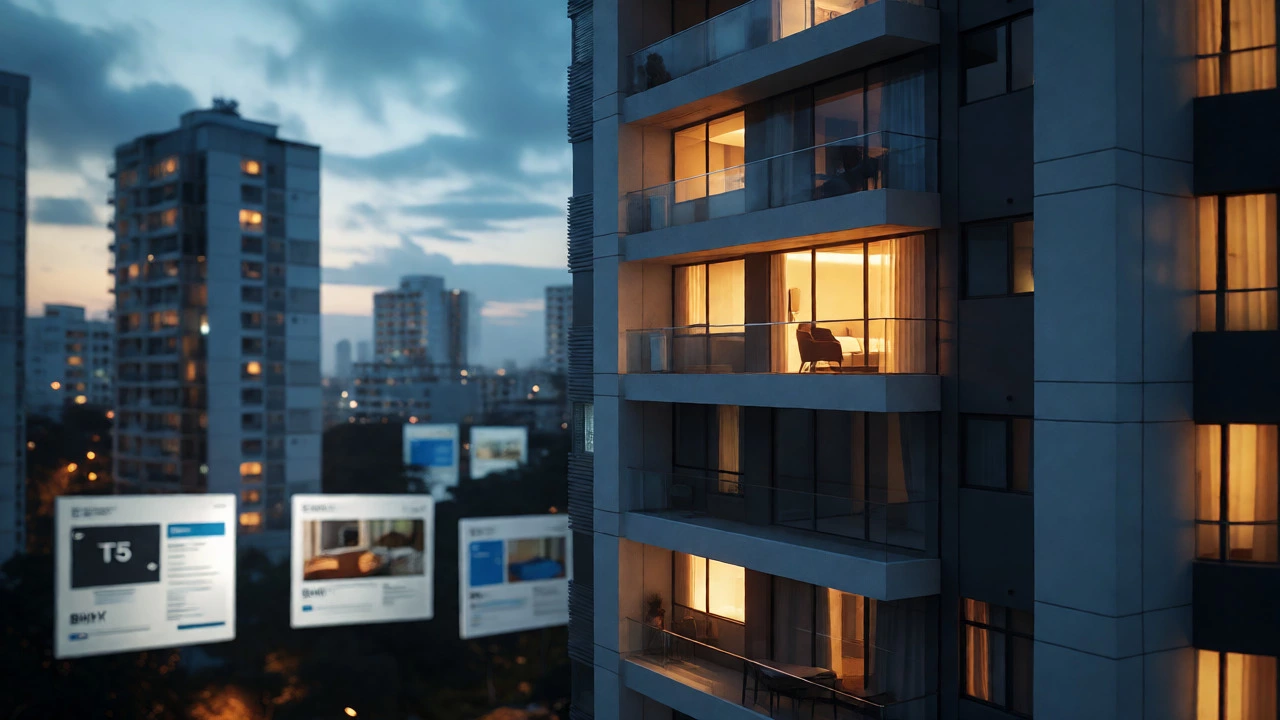
T5 Apartment Decoder & Verifier
Verification Checklist
You’re scrolling through property listings, and you hit a wall of abbreviations. BHK, RK, 1RK, 3BHK... it looks like someone spilled alphabet soup on your screen. Then you see T5. Is it a typo? A secret code for luxury living? Or just another confusing real estate term designed to make simple things complicated?
Here’s the truth: "T" usually stands for "Type," and in many Asian markets (particularly India), numbers following it denote the number of bedrooms. So, a T5 apartment typically refers to a unit with five bedrooms. But wait-why does that feel wrong if you were expecting a standard family home? Because in most global contexts, a "5-bedroom" apartment is massive. If you are looking at a listing labeled T5, you need to know exactly what you are buying before you sign anything.
The Decoding Dilemma: What Does T Actually Mean?
Let’s clear up the confusion immediately. The term "T5" isn’t a universal standard like "Square Footage" or "Zoning." It’s regional shorthand. In countries like India, developers often use "T" followed by a number to indicate the total count of rooms, excluding bathrooms and balconies, or sometimes specifically referring to bedroom counts depending on the builder's convention.
However, there is a major catch. In some contexts, particularly when mixed with terms like "BHK" (Bedroom-Hall-Kitchen), the "T" might refer to the total number of habitable rooms. This creates ambiguity. Does T5 mean:
- Five Bedrooms: A large, multi-generational family home?
- Five Total Rooms: Including the living room, dining area, and perhaps a study, but only two or three actual bedrooms?
- A Specific Project Code: Some developers use T1, T2, T3 as internal codes for different floor plans within the same building, regardless of room count.
If you are seeing "T5" alongside "2BHK" in related searches, it’s likely because users are trying to compare configurations. A standard 2BHK has two bedrooms. A T5, if interpreted literally as five bedrooms, is more than double the size. But if it’s interpreted as five total rooms, it might be closer to a spacious 3BHK or a compact 4BHK. Always ask the agent for the floor plan, not just the label.
T5 vs. Standard Configurations: How Do They Stack Up?
To understand where a T5 fits, you need to see how it compares to the layouts you already know. Most buyers start with 1BHKs or 2BHKs. Let’s break down the differences using a typical urban apartment structure.
| Configuration | Typical Bedroom Count | Total Habitable Rooms* | Ideal Occupant | Approximate Size (Sq Ft) |
|---|---|---|---|---|
| 1BHK | 1 | 2-3 | Singles/Couples | 400-600 |
| 2BHK | 2 | 3-4 | Small Families/Roommates | 700-1,100 |
| 3BHK | 3 | 4-5 | Families with Kids | 1,200-1,800 |
| T5 (Literal) | 5 | 6+ | Large Multi-gen Families | 2,500+ |
| T5 (Regional Shorthand) | 2-3 | 5 | Varies by Builder | 1,000-1,500 |
*Habitable rooms generally include bedrooms, living rooms, and dining areas, but exclude kitchens, bathrooms, and utility spaces unless specified otherwise.
Notice the gap? If you assume T5 means five bedrooms, you’re looking at a penthouse-level space. If you assume it’s a developer code for a 5-room layout, you might be looking at a modest 2BHK with a converted study. This discrepancy is why relying solely on the title is dangerous.
Why Developers Use Abbreviations Like T5
It’s not just to confuse you. There are practical reasons for these codes. First, marketing efficiency. "T5 Luxury Residence" sounds punchier than "Five-Bedroom Family Apartment Complex Phase 2 Unit 4B." Second, inventory management. Large projects have hundreds of units. Using codes like T1, T2, T3 helps sales teams quickly categorize available stock without reciting square footage every time.
But here’s the kicker: these codes aren’t regulated. One builder’s "T3" might be another’s "2BHK." Another might call a studio with a loft a "T2." When you see T5, you are entering a negotiation zone. You must verify the physical attributes, not the label.
Living in a T5: The Pros and Cons
Assuming we are talking about a genuine five-bedroom apartment (or a very large five-room layout), what is daily life actually like?
The Benefits
Space is the obvious winner. If you have a large family, hosting relatives, or working from home, extra rooms change everything. You can dedicate one room to a home office, another to a guest suite, and still have enough bedrooms for kids. Privacy becomes manageable. No more fighting over bathroom schedules at 7 AM.
Resale value can also be strong in specific markets. In cities where land is scarce, large-format apartments become rare commodities. As families grow, they often prefer staying in the same neighborhood rather than moving to a house in the suburbs. A well-maintained T5 can command a premium because few alternatives exist nearby.
The Drawbacks
Maintenance costs scale up. Cleaning five bedrooms takes twice as long as cleaning two. Electricity bills rise if you are cooling multiple zones. Property taxes are higher due to larger assessed value.
Then there’s liquidity. Selling a massive apartment is harder than selling a 2BHK. Your buyer pool shrinks significantly. Not everyone needs five bedrooms. You might find yourself waiting months longer to sell compared to a standard mid-sized unit.
How to Verify a T5 Listing Before Buying
Don’t let the abbreviation fool you. Follow this checklist to ensure you’re getting what you pay for.
- Request the Carpet Area: Ask for the carpet area (usable floor space) per room. A "bedroom" that is 8x8 feet is barely functional. Ensure each claimed bedroom meets minimum livability standards (typically 10x10 feet or larger).
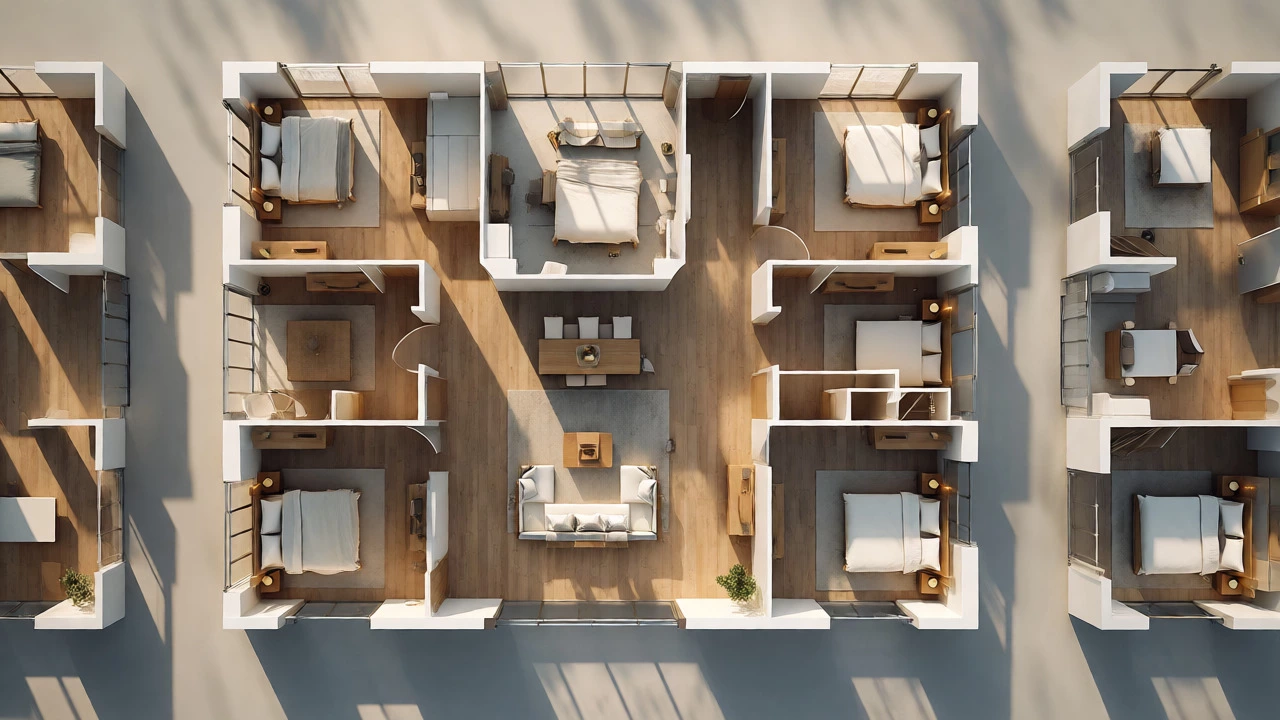
- Check the Floor Plan: Look for walls. Are those "rooms" separate enclosed spaces, or are they open-plan partitions? A T5 with four partitioned nooks is not the same as a T5 with five solid-walled bedrooms.
- Ask About Bathrooms: Five bedrooms with one bathroom is a nightmare. Check the ratio. Ideally, you want at least 2-3 bathrooms for a 5-bedroom unit. If it’s a 2BHK mislabeled as T5, it will likely have only one bathroom.
- Clarify the Definition: Ask the agent directly: "Does T5 refer to the number of bedrooms or total rooms?" Get it in writing.

Is a T5 Right for You?
This depends entirely on your life stage. If you are a single professional or a young couple, a T5 is financial overkill. You’ll spend money heating and maintaining empty rooms. If you have three kids and elderly parents living with you, a standard 2BHK will feel cramped fast. A true T5 offers breathing room.
Consider the future too. Will you stay there for ten years? If yes, the upfront cost of a larger unit might save you the hassle of moving later. If you plan to flip the property in three years, stick to high-demand sizes like 2BHK or 3BHK. T5 units sit in a niche market; don’t expect them to fly off the shelf.
Related Concepts to Watch For
While researching T5, you’ll encounter other terms. Here’s how they connect:
- BHK: The gold standard for clarity. Always cross-reference T-codes with BHK descriptions.
- RK (Room Kitchen): Studio apartments. Far smaller than any T-unit.
- Duplex/Maisonette: Sometimes T5 units are split across two floors. Check for stairs inside the unit.
- Carpet Area vs. Super Built-up Area: Developers often quote super built-up area (including lobby/elevator shares). A T5 might sound huge until you realize 30% of it is common area.
Understanding these distinctions protects your wallet. Never buy based on a label alone. Inspect the space, measure the rooms, and confirm the definition with the seller. Real estate is personal; your home should match your actual needs, not just a catchy acronym.
Does T5 always mean five bedrooms?
No. While it often implies five bedrooms in literal translations, many developers use "T" plus a number to denote the total count of habitable rooms, which may include living or dining areas. In some regions, it is simply an internal project code unrelated to room count. Always verify the floor plan.
Is a T5 apartment bigger than a 3BHK?
Generally, yes, if T5 refers to five bedrooms. However, if T5 refers to five total rooms (e.g., 2 bedrooms + 3 other spaces), it could be similar in size or even smaller than a spacious 3BHK. Square footage is the only reliable metric for comparison.
Why do builders use terms like T1, T2, T5 instead of BHK?
Builders use these codes for internal inventory management and marketing brevity. It allows them to group units by design type rather than strictly by bedroom count. It also helps differentiate between variations of the same bedroom count (e.g., T2A vs. T2B) that have different layouts or orientations.
Are T5 apartments good for investment?
They can be, but they carry higher risk. The rental yield might be lower relative to price because fewer tenants need five bedrooms. Resale liquidity is also lower compared to 2BHK or 3BHK units. They perform best in areas with high demand for large family homes or corporate expat rentals.
What should I check in a T5 floor plan?
Check the dimensions of each bedroom to ensure they are usable (not just alcoves). Verify the number of bathrooms relative to bedrooms. Look for wasted space in corridors. Confirm if the "rooms" are enclosed or open-plan. Finally, ensure the kitchen and utility areas are adequately sized for a large household.