
Rambler vs Two-Story Home Cost Calculator
Calculate Your Home Cost Difference
Find out if a rambler or two-story home is more cost-effective for your situation based on location, size, and features.
Cost Comparison Results
| Rambler (Single-Story) | Two-Story Home | |
|---|---|---|
| Base Price | ||
| Land Cost | ||
| Total Cost | ||
| Energy Efficiency | ||
| Maintenance Cost |
A rambler style house isn’t fancy. It doesn’t have multiple floors, grand staircases, or towering columns. But if you’ve ever walked into one and felt instantly at ease - like the house was built just to let you breathe - you know why it’s still one of the most popular home designs in the U.S. and increasingly common in Australia too.
What Exactly Is a Rambler Style House?
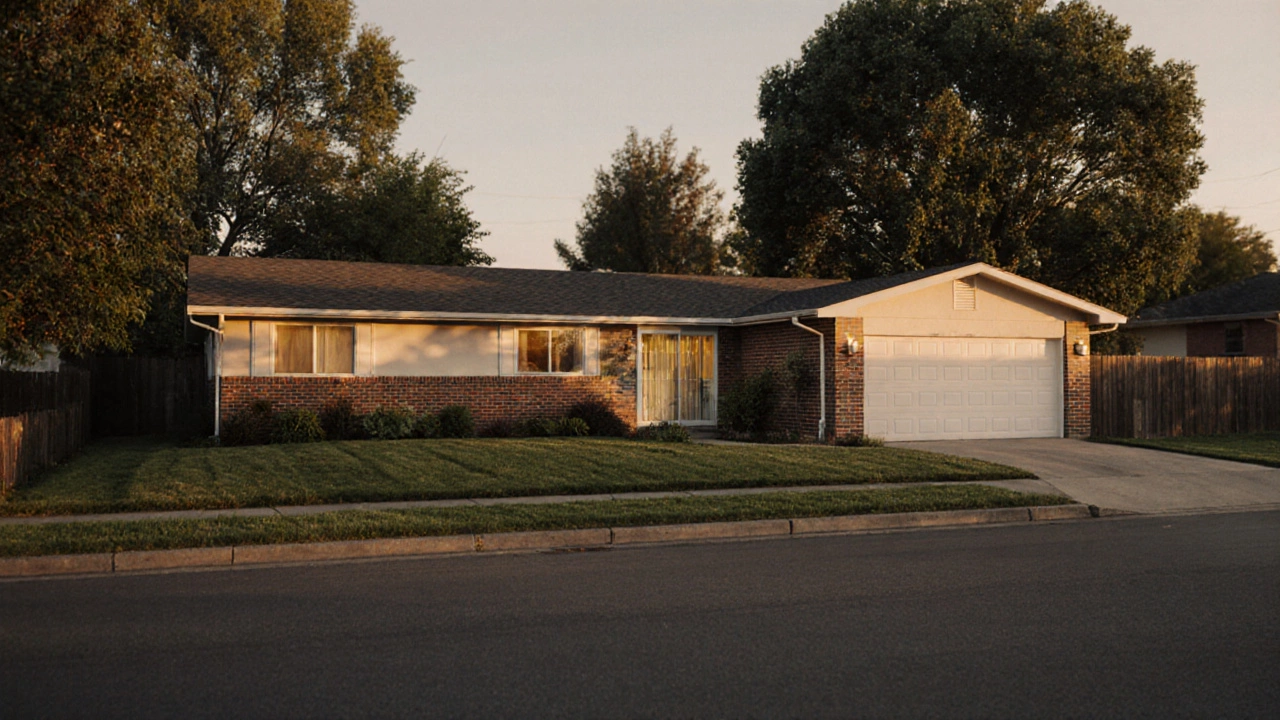
A rambler style house, also called a ranch-style home, is a single-story residential building with a long, low profile. It typically stretches out sideways rather than up, with an open floor plan and a simple, rectangular or L-shaped layout. These homes usually have a low-pitched roof, wide eaves, and a attached garage. The front door often opens directly into the living area, with bedrooms clustered off to one side and the kitchen at the back.
The term ‘rambler’ comes from how the home seems to ‘ramble’ across the land, hugging the ground. It’s not a mansion. It’s not a townhouse. It’s a house built for everyday life - easy to clean, easy to move around in, and easy to adapt.
First popular in the U.S. after World War II, rambler homes were designed for returning soldiers and growing families who wanted affordable, modern housing. They didn’t need stairs. They didn’t need servants. They just needed space, light, and connection to the outdoors. That same logic is why they’re making a comeback today - especially among empty-nesters, retirees, and families looking for accessible living.
Key Features of a Rambler Style House
If you’re looking at a rambler, here’s what to expect:
- Single level: No stairs between rooms. This makes it ideal for aging residents or anyone with mobility concerns.
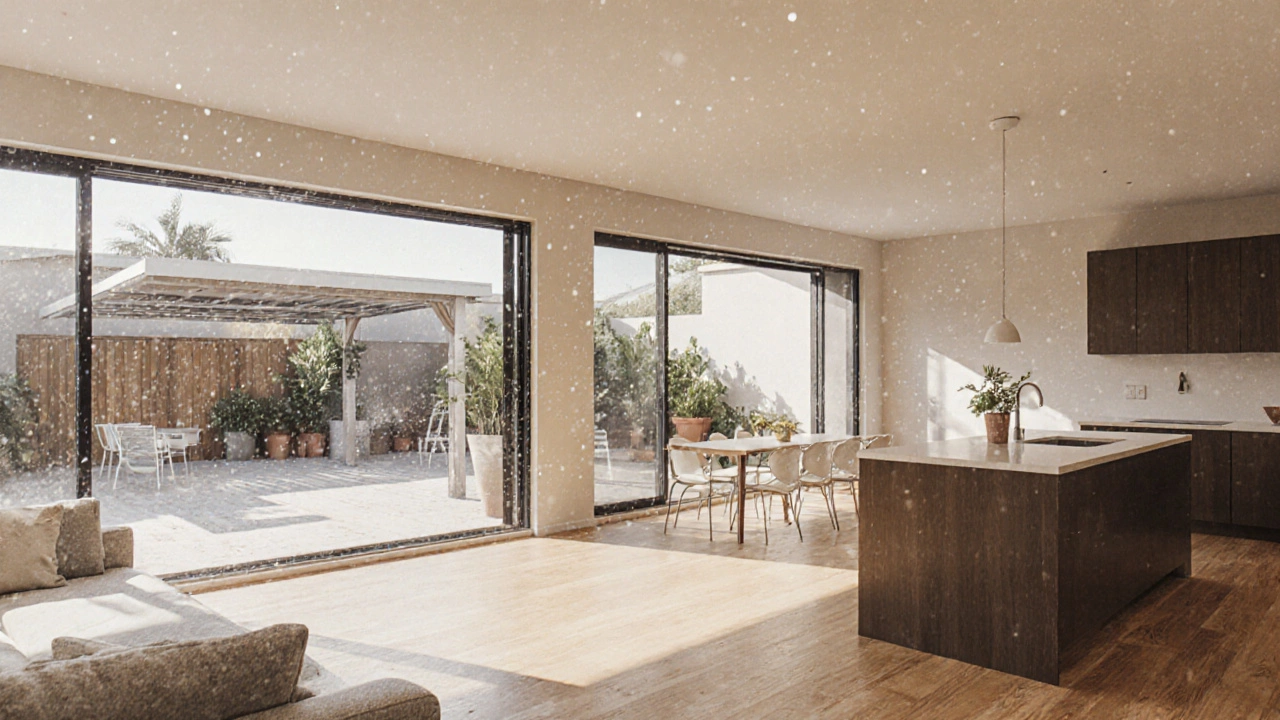
- Open floor plan: The living room, dining area, and kitchen often flow into one another without walls. This creates a sense of space even in modest square footage.
- Large windows: Sliding glass doors and picture windows are common, bringing in natural light and connecting the interior to the backyard.
- Attached garage: Usually built into the front of the house, often with a side-entry driveway.
- Simple exterior: Brick, stucco, wood siding, or a mix. No ornate trim or decorative towers. Clean lines.
- Low-pitched roof: Usually gabled or hipped, with wide overhangs that shade the home and protect the walls from rain.
Many modern ramblers also include a covered patio or deck off the back - sometimes with an outdoor kitchen. That’s not a luxury here; it’s part of the design DNA.
Why Rambler Homes Are Popular Again
You might think a single-story house is outdated. But in 2025, the rambler is having a renaissance - and not just because of nostalgia.
First, accessibility matters more than ever. As the population ages, homes without stairs are no longer a niche request - they’re a necessity. The U.S. Census Bureau reports that over 25% of Americans over 65 live in single-story homes. In Australia, where 1 in 5 people are over 65, the demand is rising fast.
Second, maintenance is easier. No second-floor windows to clean. No creaky stairs to repair. No attic full of dust and insulation problems. A rambler’s simple structure means fewer things can go wrong - and when they do, they’re cheaper to fix.
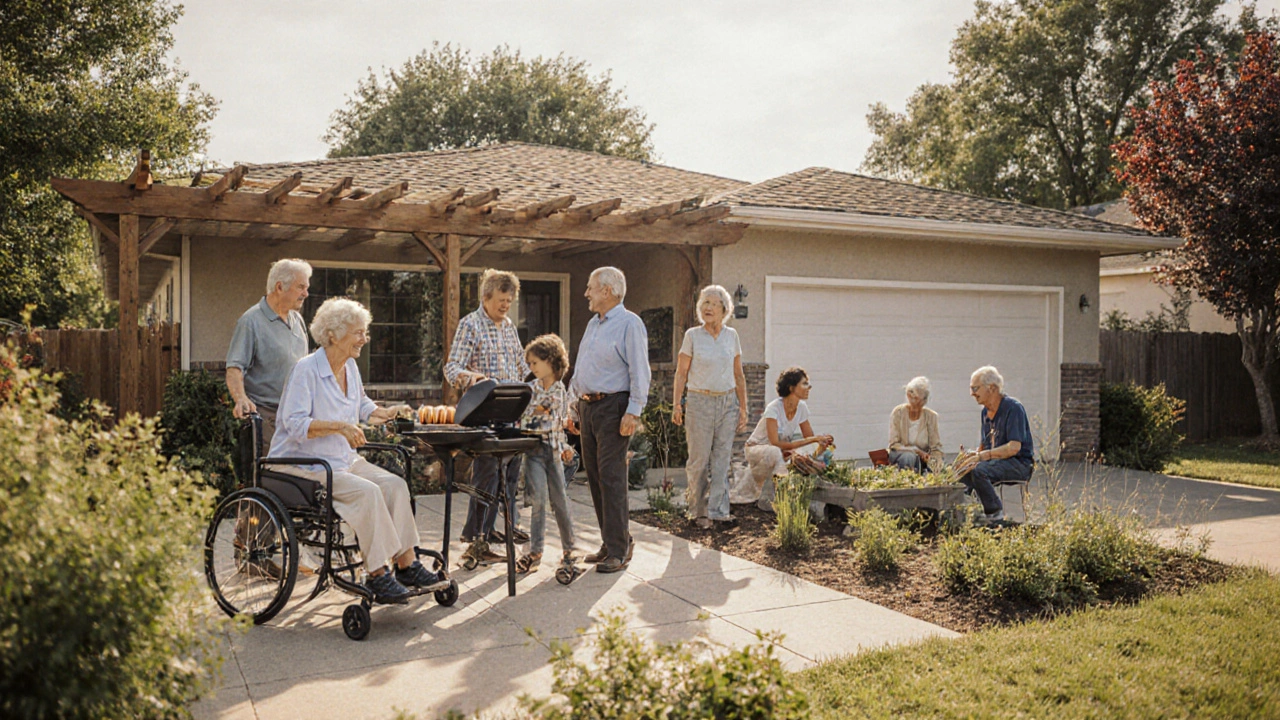
Third, outdoor living is central to modern design. Ramblers were built with patios and yards in mind. In places like Sydney, where outdoor space is a premium, a rambler with a good backyard feels like a win. You can grill, grow vegetables, or just sit under a tree without ever stepping inside.
Real estate agents in Melbourne and Brisbane are seeing more buyers under 45 choosing ramblers - not just retirees. They want low upkeep. They want space. They want to avoid the noise and crowding of apartments. And they don’t need five bedrooms if they’re just two people.
Rambler vs. Other Villa Styles
Not all single-story homes are ramblers. Here’s how it stacks up against other common villa types:
| Feature | Rambler | California Ranch | Modern Minimalist Villa | Traditional Bungalow |
|---|---|---|---|---|
| Layout | Rectangular or L-shaped | Often U-shaped with courtyard | Geometric, often cubic | Compact, with porch and gable roof |
| Roof | Low-pitched, gabled | Low-pitched, sometimes flat | Flat or very low slope | Steeply pitched |
| Exterior Material | Brick, stucco, wood | Stucco, stone, wood | Concrete, glass, steel | Wood, brick, stone |
| Garage | Attached, often side-entry | Attached, sometimes front-facing | Detached or underground | Usually detached |
| Indoor-Outdoor Flow | Strong - sliding doors to patio | Very strong - courtyards and patios | Strong - floor-to-ceiling glass | Moderate - front porch only |
| Typical Square Footage | 1,200-2,500 sq ft | 1,800-3,000 sq ft | 1,500-2,800 sq ft | 800-1,800 sq ft |
Compared to a California ranch, a traditional rambler is simpler - fewer curves, less landscaping, less emphasis on luxury. Compared to a modern minimalist villa, it’s less cold and more lived-in. And unlike a bungalow, it’s not tucked into a small lot. It spreads out.
Where You’ll Find Rambler Homes Today
In the U.S., they’re everywhere - from suburban neighborhoods in Ohio to desert communities in Arizona. In Australia, you’ll find them mostly in the outer suburbs of Sydney, Melbourne, and Brisbane. Look in areas like Campbelltown, Werribee, or Logan City - places built during the 1970s and 80s housing boom.
Many of these homes have been updated: new kitchens, double-glazed windows, air conditioning, and solar panels. But the core structure remains: one floor, easy access, quiet street, big yard.
Some developers now build new rambler-style villas - marketed as ‘low-maintenance living’ or ‘ageing-in-place homes.’ These often include wider doorways, lever-style handles, and non-slip flooring. They’re not called ramblers anymore, but they’re still ramblers in spirit.
Pros and Cons of Living in a Rambler
Here’s what you gain - and what you give up:
- Pros:
- No stairs = safer for kids, seniors, and anyone with mobility issues
- Lower heating and cooling costs (less volume to condition)
- Easier to renovate - no load-bearing walls on upper floors to worry about
- More land per square foot - you usually get a bigger yard
- Lower insurance premiums in some areas due to simpler construction
- Cons:
- Less privacy - bedrooms are all on one level, so noise travels
- Smaller lot sizes in newer builds - developers pack them closer together
- Harder to add extra space - you can’t build up, so you have to build out (which costs more)
- Some older models have poor insulation or outdated wiring
The biggest trade-off? Space vs. density. Ramblers take up more land. That’s why they’re rare in inner-city areas. But if you’ve got the space - and you value simplicity - it’s a hard design to beat.
What to Look For When Buying a Rambler
If you’re shopping for a rambler-style villa, here’s what to check:
- Foundation and slab: Older ramblers sit on a concrete slab. Check for cracks, especially near the garage or where the house meets the driveway.
- Roof condition: The low slope means water pools more easily. Look for sagging or missing shingles.
- Windows: Single-pane windows are common in 70s and 80s models. Double-glazing is a big upgrade.
- Plumbing: Galvanized steel pipes were used in older homes. They rust and reduce water pressure over time.
- Insulation: Many were built before insulation standards improved. Check the attic and wall cavities if possible.
- Outdoor space: Is the backyard usable? Is there room for a garden, pool, or shed? Ramblers live or die by their yard.
Don’t be fooled by a fresh paint job. The real value is in the bones - and the land.
Is a Rambler Right for You?
Ask yourself:
- Do you want to avoid stairs for the next 10, 20, or 30 years?
- Do you prefer a quiet, grounded home over a tall, vertical one?
- Do you enjoy spending time outside - gardening, cooking, or just sitting?
- Are you okay with less square footage but more outdoor space?
- Do you want a home that’s easy to maintain, not one that needs constant fixing?
If you answered yes to most of those, a rambler might be the quiet hero your home search has been missing.
Are rambler homes cheaper to buy than two-story houses?
Not always. In areas where land is expensive - like Sydney’s outer suburbs - a rambler might cost more because it takes up more ground. But in rural or low-density zones, ramblers are often cheaper per square foot. The key is comparing price per square meter of living space, not total price. A 2,000 sq ft rambler might cost more than a 1,800 sq ft two-story, but you’re getting more usable outdoor space and easier access.
Can you add a second story to a rambler house?
Technically yes - but it’s rarely practical. Ramblers are built on a concrete slab foundation, which wasn’t designed to support a second floor. Adding one requires major structural work: reinforcing the foundation, relocating plumbing and wiring, and often reconfiguring the entire layout. The cost can easily exceed $150,000, and in many areas, zoning laws limit how high you can build. Most owners choose to extend sideways instead - adding a wing or a sunroom.
Are rambler homes energy efficient?
Original ramblers from the 1950s-70s? Not really. They had single-pane windows, little insulation, and poor sealing. But modern updates make them very efficient. Adding double-glazing, upgrading insulation in the roof and walls, and installing a heat pump can cut energy bills by 40-60%. Their single-level design also means less heat rises and escapes - making them easier to heat and cool than a two-story home.
Do rambler homes hold their value?
Yes - especially in areas with aging populations. Real estate data from CoreLogic shows that single-story homes in Australia have appreciated 12% faster than two-story homes over the past five years. Buyers are prioritizing accessibility over square footage. A well-maintained rambler in a good suburb will hold its value better than a dated two-story with stairs and small rooms.
What’s the difference between a rambler and a ranch house?
There’s no real difference - they’re the same thing. ‘Ranch’ is the more common term in the U.S., while ‘rambler’ was popularized in the Pacific Northwest and Midwest. In Australia, both terms are used interchangeably. Some people use ‘ranch’ to describe a more upscale version with stone accents and larger windows, but structurally, they’re identical.
Final Thoughts
A rambler style house isn’t flashy. But it’s honest. It doesn’t try to impress. It just works. It fits a life - not a fantasy. And in a world where homes are getting bigger, louder, and more complicated, that’s a quiet kind of luxury.