
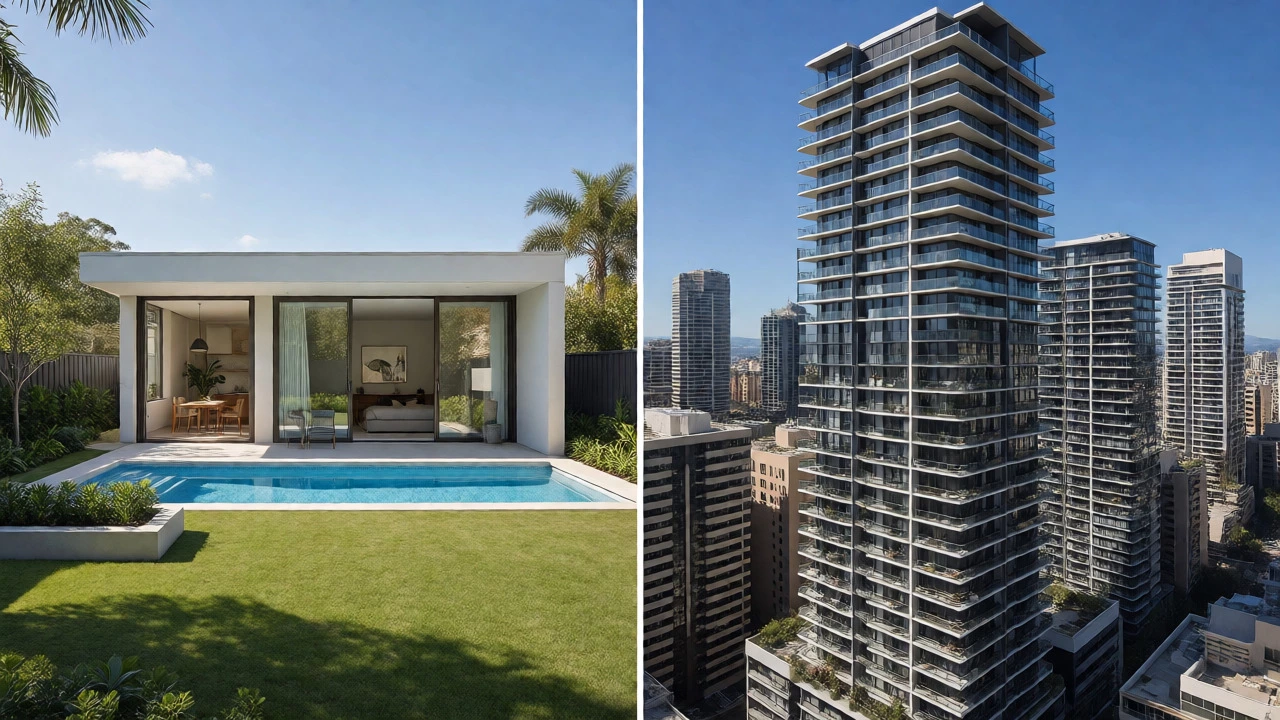
Villa vs. Condo Lifestyle Matcher
Answer these questions to see which property type aligns best with your preferences.
Villa Score
0% match
Best for: Privacy, land ownership, renovation freedom.Condo Score
0% match
Best for: Low maintenance, security, urban convenience.Why This Recommendation?
Note: Always verify title types (Torrens vs. Strata) with your solicitor before purchasing. Marketing terms can be misleading.
You’re scrolling through listings, and two properties catch your eye. One is a villa with a private pool and garden; the other is a sleek condominium unit on the tenth floor with city views. Both are listed at roughly the same price. So, what’s the actual difference? Is one a better investment than the other? And which lifestyle suits you better?
This isn’t just about semantics. The distinction between a villa and a condo affects everything from your monthly bills to how much control you have over your own backyard. In Australia, where property markets vary wildly from Sydney’s high-rises to Queensland’s sprawling estates, understanding these terms can save you thousands in hidden costs or headaches down the track.
The Core Difference: Ownership Structure
At its heart, the difference lies in what you actually own. A Condominium (or condo) is a form of ownership where you own a specific unit within a larger building or complex. You share ownership of common areas like hallways, elevators, pools, and gyms with all other residents. This shared structure is managed by an Owners Corporation (known as Body Corporate in some Australian states).
A Villa, however, typically refers to a detached or semi-detached house that sits on its own piece of land. While modern developments sometimes use "villa" loosely for townhouses, true villas usually offer greater privacy, standalone structures, and often include features like private gardens, driveways, or pools. Crucially, when you buy a villa, you generally own the land beneath it outright, whereas condo owners only own the airspace of their unit.
Costs: Purchase Price vs. Ongoing Fees
Here’s where things get tricky. On paper, condos often appear cheaper because you aren’t paying for the land value of a full block. However, the sticker price doesn’t tell the whole story.
Condo Costs: When you buy a condo, you’re signing up for ongoing fees known as strata levies or body corporate fees. These cover maintenance of common areas, insurance for the building, and sinking funds for future repairs. In major cities like Sydney or Melbourne, these fees can range from $1,500 to $4,000+ per year depending on amenities. If the building has a concierge, heated pool, or gym, expect higher costs.
Villa Costs: Villas might have higher upfront purchase prices because you’re buying land. But they often have lower or no strata fees if they are free-standing. If part of a gated community, there may be a small fee for communal upkeep, but it’s rarely as steep as high-rise condo fees. Plus, you control your own maintenance schedule. Need to repaint the fence next year? You decide. No committee vote required.
| Feature | Villa | Condo |
|---|---|---|
| Land Ownership | Freehold (usually) | Shared/Common Property |
| Maintenance Responsibility | Owner (entire property) | Body Corporate (common areas) |
| Ongoing Fees | Low or None | High (Strata/Body Corp) |
| Privacy Level | High | Variable (neighbors nearby) |
| Renovation Freedom | High (subject to council rules) | Limited (committee approval needed) |
Lifestyle and Privacy
If you value quiet and autonomy, a villa wins hands down. Think about noise transfer. In a condo, your neighbor’s footsteps, TV volume, or dog barking can become your problem. Soundproofing helps, but it’s not perfect. In a villa, especially a detached one, you have physical distance from neighbors. You can host a barbecue on your deck without worrying about disturbing someone through a shared wall.
Condos, on the other hand, offer convenience. Many modern complexes come with security gates, intercom systems, and low-maintenance living. For busy professionals or retirees who don’t want to mow lawns or fix gutters, this is a huge plus. You lock your door and walk away. The lawn crew comes on Tuesdays; the pool gets cleaned daily. It’s a hassle-free lifestyle, provided you’re okay with less personal space.
Investment Potential and Capital Growth
Historically, land appreciates faster than buildings. Since villas include land ownership, they tend to see stronger capital growth over long periods compared to apartments, where the building depreciates while the land value is diluted among many units. In Australia, data from the Real Estate Institute shows that houses (including villas) consistently outperform apartments in capital gains over 10-20 year cycles.
However, location matters more than type. A luxury condo in a prime CBD location might yield better rental returns due to high demand from tenants who prioritize proximity to work and nightlife. Villas in suburban areas might sit empty longer if tenant demand is low. Always check local vacancy rates before deciding.
Who Should Buy What?
Choose a Villa if:
- You plan to live there long-term and want stability.
- You have pets or children who need outdoor space.
- You dislike strict rules and committees controlling your home improvements.
- You believe in the power of land appreciation.
Choose a Condo if:
- You want minimal maintenance and easy travel access.
- You prefer urban living with walkability to cafes and transport.
- Your budget is tighter for the initial purchase price.
- You value amenities like gyms, pools, and security included in your rent/mortgage package.
The Grey Area: Townhouses and Duplexes
Don’t let marketing jargon confuse you. Some developers label townhouses as "villas." Technically, a townhouse shares walls with neighbors and often sits on strata title, meaning you pay fees similar to condos. A true villa is usually freestanding. Always read the contract details regarding title type-whether it’s Torrens Title (freehold) or Strata Title. This single line determines who pays for the roof repair and whether you can paint your front door purple.
Is a villa always more expensive than a condo?
Not necessarily. While villas often have higher purchase prices due to land value, condos can have significantly higher ongoing costs due to strata fees. Over a 10-year period, a cheap condo with high fees might cost more than a moderately priced villa with no fees. Always calculate total cost of ownership, not just the mortgage repayment.
Can I renovate a condo easily?
It depends on the Owners Corporation rules. Internal changes like painting or replacing carpets are usually fine. Structural changes, moving walls, or installing hard flooring (which affects soundproofing) often require written permission. Villas generally offer more freedom, subject only to local council planning regulations.
Do villas hold their value better than condos?
Generally, yes. Because villas include land ownership, they benefit from land scarcity and appreciation. Condos are affected by the depreciation of the building structure. However, well-managed condos in high-demand locations can still perform well, especially for rental yield.
What are strata fees used for?
Strata fees cover the maintenance of common property, such as cleaning hallways, maintaining gardens, repairing lifts, building insurance, and contributing to a sinking fund for major future repairs like repainting the exterior or replacing the roof.
Is it harder to sell a villa or a condo?
Market conditions dictate this. In hot markets, both sell quickly. In slower markets, condos in oversupplied areas may take longer to sell due to competition from new builds. Villas often have a narrower buyer pool but face less direct competition from new developments unless located in fringe suburbs.