How Many Football Fields Is 1 Acre?
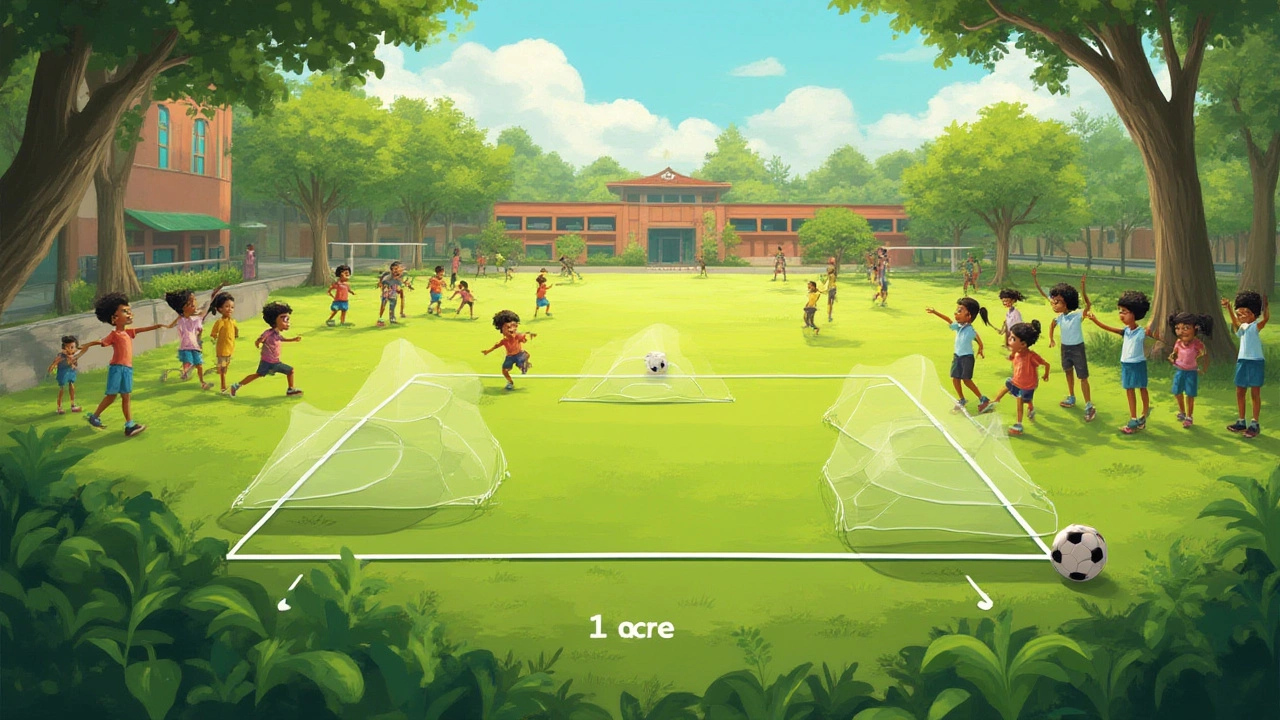
When you hear 1 acre, a standard unit of land area used in real estate across the U.S. and India. Also known as 43,560 square feet, it's the size most buyers and investors use to judge lot value, development potential, and land affordability. But numbers alone don’t help you picture it. That’s where comparing it to something familiar — like a football field, the standard American football playing area used as a common visual reference for land size — makes all the difference.
One acre is about 75% the size of a standard American football field, including the end zones. A full field is 120 yards long (360 feet) and 53.3 yards wide (160 feet), totaling 57,600 square feet. So 1 acre — at 43,560 square feet — fits neatly inside that space, leaving a little room on the sides. If you’ve ever walked the length of a football field, you’ve walked more than the width of an acre. That’s not huge, but it’s enough for a single-family home with a decent yard, a small commercial building, or a mini-storage facility. In cities like Mumbai or Delhi, where land is tight, 1 acre can mean a whole apartment complex. In rural Texas or Virginia, it might be a quiet farmstead. The value changes based on location, zoning, and access — not just size.
People often mix up acre, a unit of land area equal to 43,560 square feet with square feet, the standard measurement for interior space in homes and apartments. A 2BHK apartment might be 800 square feet — that’s less than 2% of an acre. Even a 5,000-square-foot mansion sits on less than one-eighth of an acre. That’s why knowing how much land you’re really getting matters. When you see a listing for "1 acre of land in Texas," you’re not just buying space — you’re buying potential: to build, to farm, to rent, or to hold for future value. And that’s why understanding these measurements helps you avoid overpaying or underestimating what’s possible.
Real estate listings rarely spell out these comparisons, but they’re the key to making smart decisions. Whether you’re looking at a 2-acre parcel in Texas, a small plot in Virginia, or a commercial lot in India, size isn’t just a number — it’s the foundation of your investment. The posts below break down how land size affects pricing, zoning, and use across different markets — from what fits on a single acre to how big commercial properties really are. You’ll find real examples, not guesses.
Jul, 5 2025-0 Comments