Football Field Comparison: Size, Standards, and What Really Matters
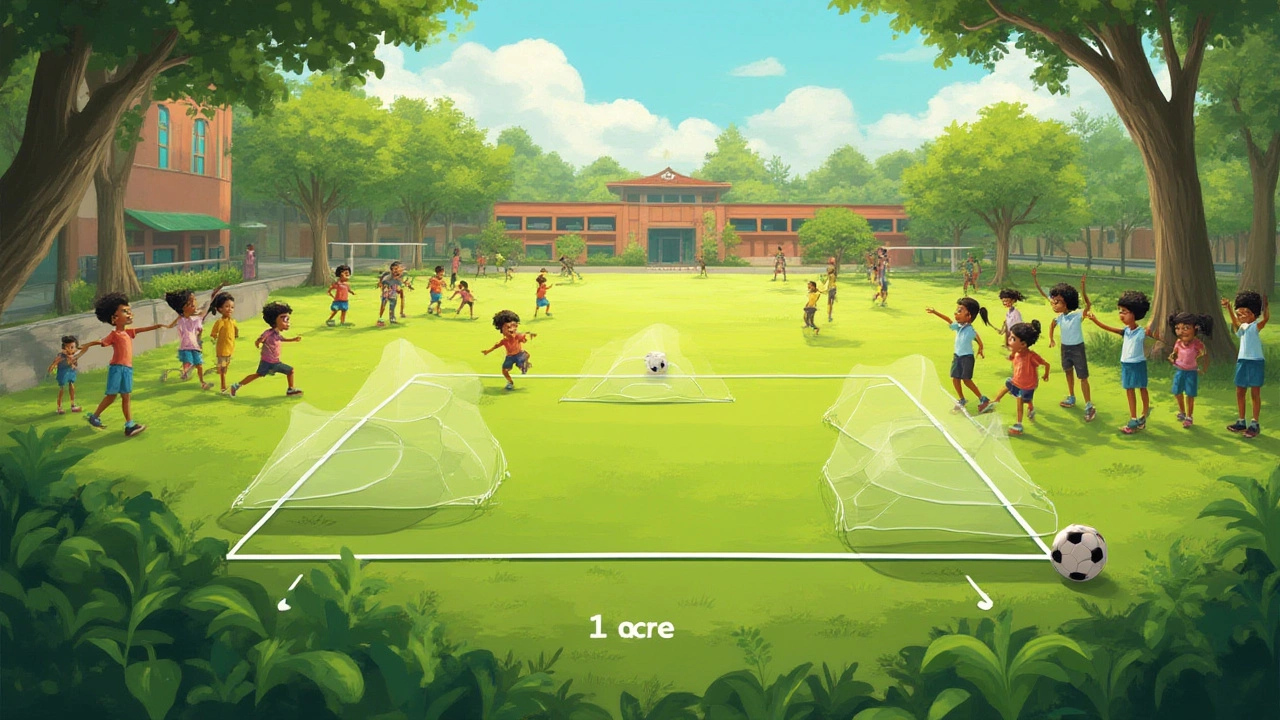
When people talk about a football field, a designated area for playing football, whether soccer or American football. Also known as pitch in many countries, it's not one standard size—it changes based on the game, country, and level of play. A soccer field in India might look similar to one in Brazil, but the exact length and width can vary by over 20%. Meanwhile, an American football field is a completely different beast—fixed at 120 yards long, including end zones, with precise yard lines and goalposts that don’t exist on a soccer pitch.
The soccer field dimensions, the regulated measurements for association football pitches used in international play follow FIFA rules: between 100-130 yards long and 50-100 yards wide. That’s a huge range. A small local field might be just 100x60 yards, while a professional stadium like Wembley stretches to 115x74. Compare that to an American football field, a rectangular field used in gridiron football, standardized in the NFL and NCAA: always 100 yards between goal lines, plus 10-yard end zones on each side, making it 120 yards total. The width? A steady 53.3 yards. No flexibility. No variation. And those white yard lines? They’re every 5 yards, with numbers every 10—something you’ll never see on a soccer pitch.
Why does this matter? If you’re looking to build a multi-use sports complex in India, knowing the difference isn’t just trivia—it’s budgeting. A full-size soccer field needs more land than a regulation American football field, but it’s more flexible in shape. A soccer field can fit into irregular plots; an American football field demands a long, straight rectangle. Even the surface matters—natural grass is common for soccer, but American football often uses synthetic turf to handle heavy use and cleats. And don’t forget the goalposts: soccer goals are 8 yards wide and 8 feet high, while American football uprights are 18.5 feet wide and 10 feet high, with a crossbar that’s way higher off the ground.
These differences show up in how people use the space. In cities like Mumbai or Delhi, where land is tight, developers often build soccer fields that meet minimum standards to save space and cost. But if you’re planning a high school or college sports facility in the U.S., you’re locked into the NFL specs—no shortcuts. Even the markings tell the story: soccer has center circles, penalty arcs, and corner flags; American football has hash marks, yard numbers, and end zone boundaries. One is fluid, the other is rigid.
So when you hear someone say "football field," always ask: which one? The answer changes everything—from how much land you need, to what kind of maintenance it requires, to who can actually play on it. That’s why this football field comparison isn’t just about numbers. It’s about understanding context, purpose, and real-world constraints. Below, you’ll find real examples, expert breakdowns, and practical insights from property owners, coaches, and developers who’ve had to make these calls. No guesswork. Just facts that help you decide, build, or invest smarter.
Jul, 5 2025-0 Comments