
Land Cost Comparison Calculator
Calculate Your Land Costs
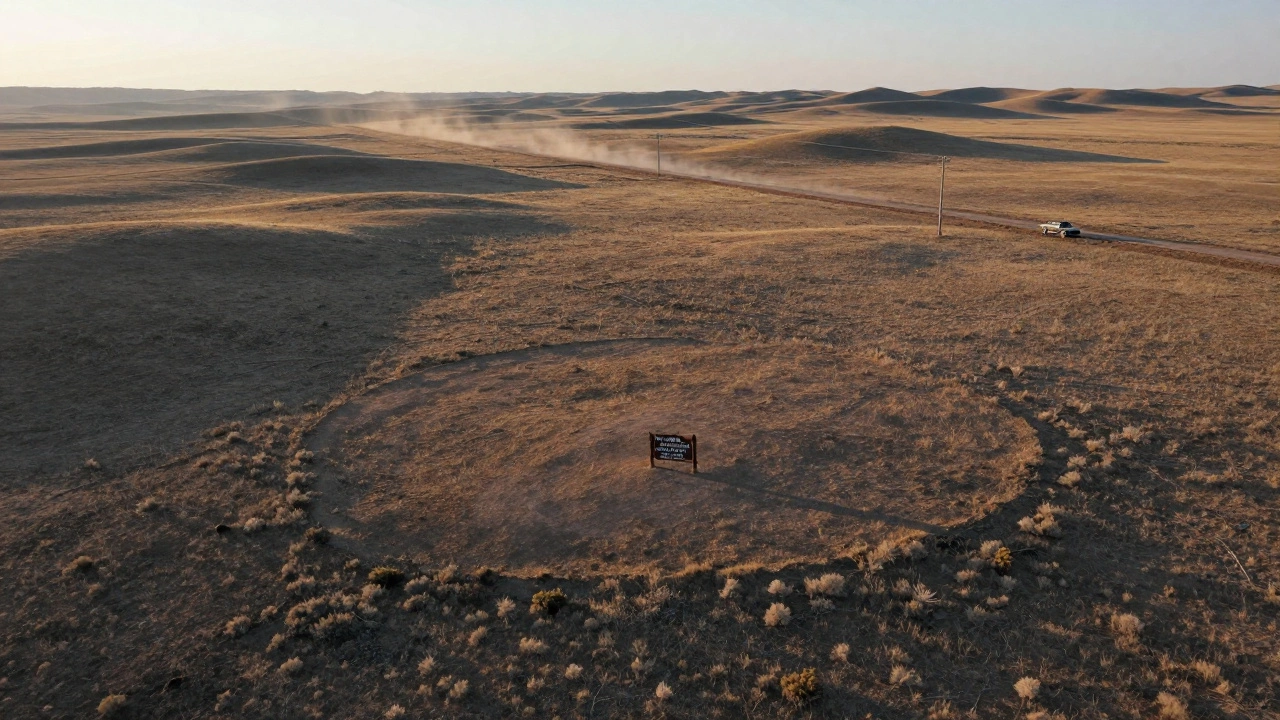
When you’re looking to buy land and build a life off the grid, Montana and Wyoming often come up in the same conversation. Both states promise wide-open spaces, low population density, and a sense of freedom that’s hard to find elsewhere in the U.S. But if you’re trying to stretch your budget-especially when you’re paying cash for raw land and planning to build from scratch-which state actually saves you more money? The answer isn’t as simple as picking the one with lower property taxes. It’s about the full picture: land prices, building costs, utilities, insurance, and even how far you’ll need to drive for groceries.
Land Prices: Where You Get More for Your Dollar
On paper, Wyoming looks cheaper. The average price per acre for rural land in Wyoming hovers around $2,500-$4,000, depending on location. In parts of Sweetwater or Uinta County, you can find parcels of 10-20 acres for under $50,000. Montana, by contrast, starts at $3,000-$6,000 per acre for similar rural land. In areas like Gallatin County near Bozeman or Missoula County, prices climb past $10,000 per acre-even for land with no utilities or road access.
But here’s the catch: Wyoming’s cheapest land is often in remote, high-desert zones with no water rights, no septic approval, and no power lines within five miles. Montana offers more variety. You can find $4,000-per-acre plots near Helena or Kalispell that already have well permits on file and are zoned for residential use. If you’re not planning to drill a 600-foot well or haul water in, that makes a big difference in upfront costs.
Building Costs: Materials, Labor, and Permits
Building a cabin or tiny home on your land sounds simple-until you get quotes. In Montana, labor costs for skilled trades like electricians and plumbers are 15-20% higher than in Wyoming. Why? Montana’s population growth has outpaced its workforce. In 2024, the state had a shortage of 1,800 licensed contractors. That drives up prices. In Wyoming, contractors are more abundant in towns like Casper and Laramie, and many still work off seasonal schedules, keeping rates lower.
Permitting is another hidden cost. Montana’s counties require more environmental reviews, especially if your land is near rivers or wetlands. Gallatin County, for example, takes 60-90 days to approve a septic system. In Wyoming, most rural counties issue permits in 10-14 days. Some, like Sublette County, don’t even require a building permit for structures under 200 square feet. That’s a $1,200-$2,500 savings right there.
Taxes: Property vs. Income vs. Sales
Both states have no state income tax. That’s a big win. But property taxes? Wyoming wins by a mile. The average effective property tax rate in Wyoming is 0.53%. In Montana, it’s 0.85%. That might not sound like much, but on a $150,000 home site, that’s $795 a year in Montana versus $795 in Wyoming. Wait-that’s the same. No, here’s the real difference: Wyoming assesses property at only 9.5% of market value. Montana assesses at 100%. So if your land is worth $100,000, Wyoming taxes you on $9,500. Montana taxes you on $100,000.
And sales tax? Wyoming has a 4% state rate, with some counties adding up to 2%. Montana has no state sales tax at all. That means when you buy lumber, tools, or appliances, you pay nothing extra in Montana. In Wyoming, you’re adding 4-6% to every big purchase. If you’re spending $30,000 on materials, that’s $1,200-$1,800 extra.
Utilities: Power, Water, and Internet
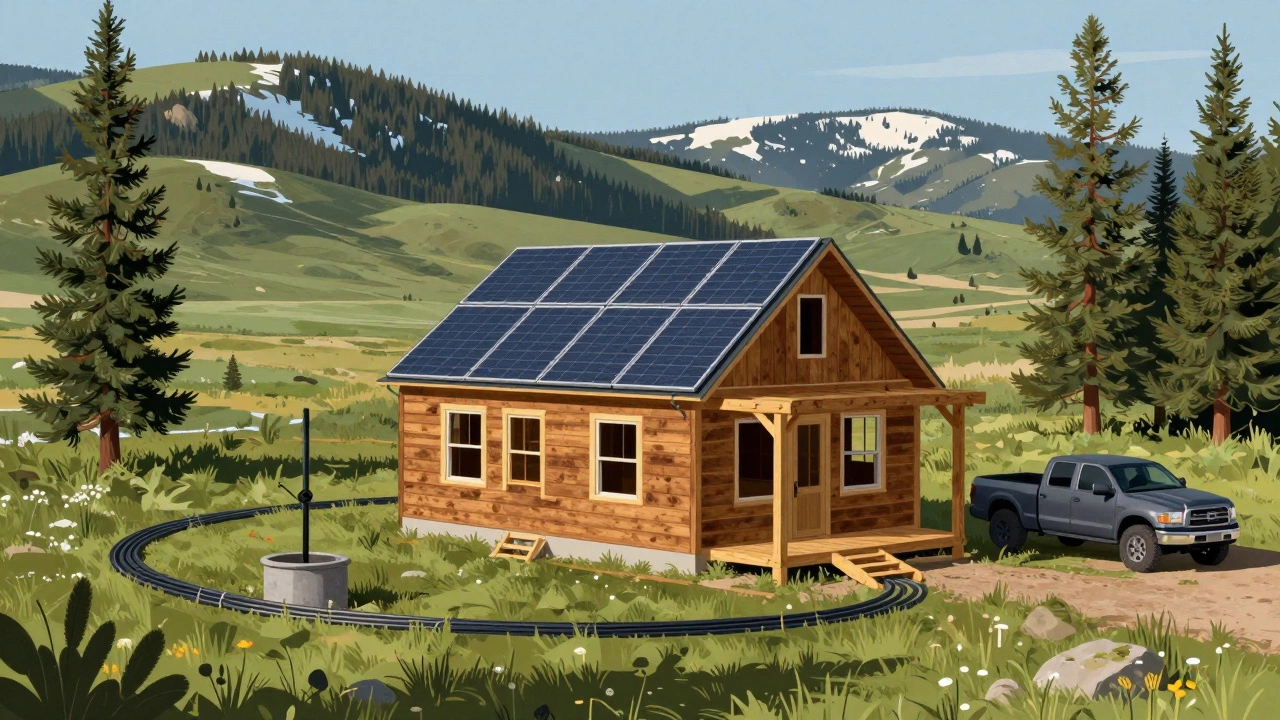
Neither state is cheap when it comes to off-grid living. But the difference is in reliability. In Montana, rural electric co-ops like Montana-Dakota Utilities charge about $0.13 per kWh. In Wyoming, Rocky Mountain Power charges $0.11. That’s not a huge gap-but in Montana, you’re more likely to find land that already has power lines running to the property line. In Wyoming, you’re often paying $15,000-$25,000 to extend a line a mile.
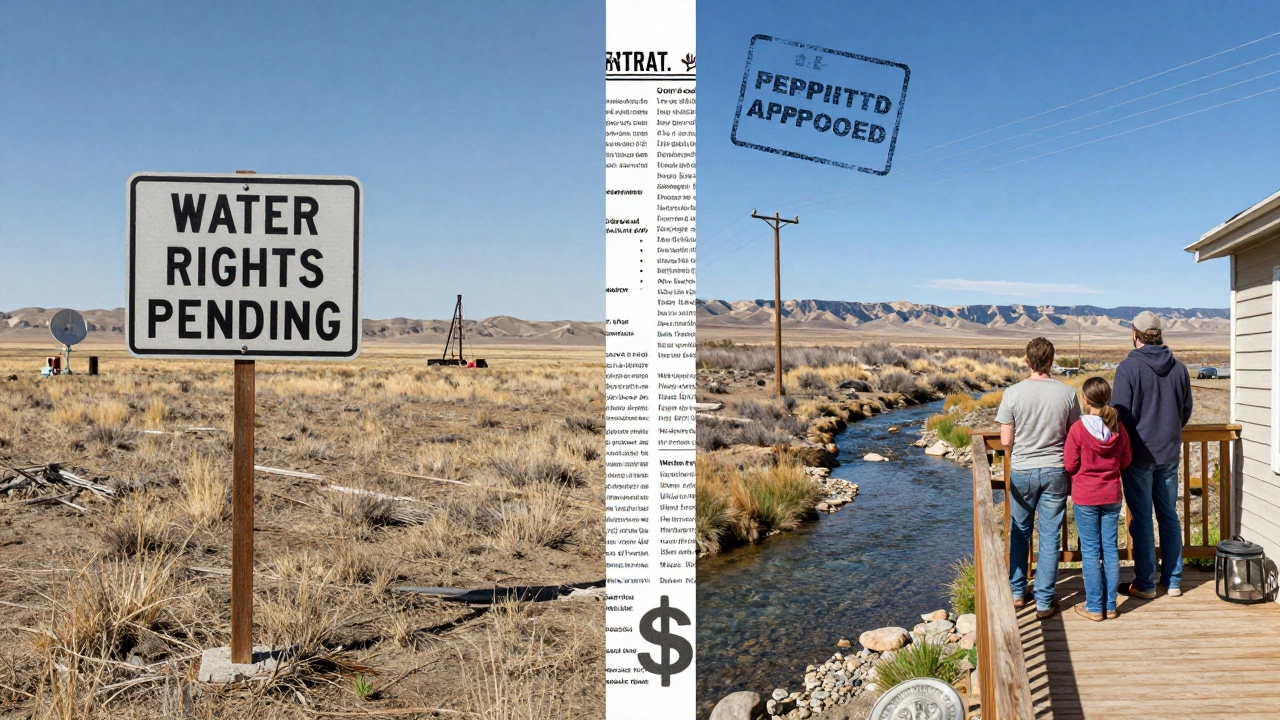
Water is the real killer. In Montana, you can often buy land with existing water rights. In Wyoming, water rights are tied to the land and are harder to transfer. If you buy a parcel without water rights, you’re looking at $20,000-$50,000 to secure them legally. And don’t forget: Wyoming is a “prior appropriation” state. That means if someone upstream uses your water, you have no legal recourse unless you own the rights.
Internet? Both states are bad. But Montana has more fiber expansion thanks to state-funded broadband grants. Wyoming’s rural areas still rely on satellite or fixed wireless. If you’re working remotely, that’s a dealbreaker.
Insurance and Other Hidden Costs
Homeowners insurance in Wyoming averages $800 a year for a $200,000 home. In Montana, it’s $1,200. Why? More wildfires. More hailstorms. Montana had 1,200 insured wildfire claims in 2024. Wyoming had 217. That’s not just a number-it’s your premium. And don’t forget snow removal. Wyoming gets more wind-driven snow, but Montana gets deeper drifts. If you’re not plowing your own driveway, you’re paying $150-$300 per snowstorm in Montana.
Then there’s the cost of getting to town. In Wyoming, the average commute to the nearest grocery store is 42 miles. In Montana, it’s 31 miles. That’s 11 more miles of gas, tire wear, and time every single week. Over a year, that’s $1,500+ extra.
Who Wins? It Depends on Your Priorities
If you want the lowest possible upfront cost and you’re okay with a long drive, no water rights, and limited internet, Wyoming is the cheaper bet. You’ll pay less for land, less in taxes, and less in permits. But you’ll spend more on hauling water, installing solar, and waiting months for permits to clear.
If you want to build faster, with fewer headaches, and have better access to utilities and services, Montana costs more upfront-but saves you time, stress, and long-term labor. You’ll pay more for land and insurance, but you’ll spend less on water rights, internet upgrades, and emergency repairs.
Here’s a simple rule: If you’re 50 or older and want to retire quietly, Wyoming’s low taxes and land prices make sense. If you’re under 40 and plan to work remotely, raise kids, or build a long-term home, Montana’s infrastructure and land availability give you more stability.
Real Example: Two Buyers, Two States
Take Sarah, 42, who bought 10 acres near Cody, Wyoming, for $48,000. She spent $18,000 on a solar system, $22,000 to drill a well, and $5,000 to get water rights approved. Her total: $93,000. She still has no high-speed internet.
Compare that to Mark, 38, who bought 8 acres near Missoula, Montana, for $72,000. He paid $8,000 for a septic permit, $12,000 for a well with existing rights, and $6,000 for a 100 Mbps fiber connection. His total: $98,000. He can Zoom from his deck.
Same budget. Same goal. Different outcomes.
Final Tip: Don’t Just Look at the Price Tag
Land for sale is tempting because the numbers look low. But the real cost isn’t on the listing. It’s in the soil test, the well permit, the septic design, the power extension quote, and the three-hour drive to the hardware store. Before you sign anything, get a local contractor to walk the land with you. Ask: “What’s the one thing that would make this property impossible to build on?” Their answer will tell you more than any price per acre ever could.