

Real Estate Profitability Calculator
Investment Inputs
Annual Operating Expenses
Key Takeaways
- Profit comes from two main sources: capital growth (price increase) and rental income.
- Hidden costs like maintenance, taxes, and insurance can eat your margins.
- Location and timing are more important than the house itself.
- Leverage (using a mortgage) can amplify gains but also increases risk.
How Property Actually Makes Money
When people ask if buying a house is profitable, they usually mean one of two things: Can I make money while I live in it, or can I make money by renting it out? These are two very different financial journeys. If you're buying a primary residence, your 'profit' is essentially the avoidance of rent and the accumulation of Home Equity the difference between the current market value of your property and the amount you still owe on your mortgage. Every mortgage payment you make is partly a forced savings account.
For the investor, the game changes to Rental Yield the annual rental income as a percentage of the property's total value. If you buy a place for $500,000 and rent it for $400 a week, your gross yield is roughly 4.16%. But that's not your profit. You still have to pay the mortgage, the strata fees, and the plumber when a pipe bursts. Real profit happens when your rental income exceeds all expenses, or when the property value jumps significantly over five to ten years.
The Hidden Cost Leak
Many first-time buyers only look at the mortgage payment. That's a mistake. Profitability is calculated after the 'leaks' are plugged. Let's look at the real numbers. You don't just pay for the house; you pay to keep the house. In a city like Sydney, for example, land tax and council rates can add thousands to your annual overhead. Then there is the 1% rule: a general rule of thumb that suggests you should set aside 1% of the property's value every year for maintenance. On a $700,000 home, that's $7,000 a year just to keep it from falling apart.
Then there is the cost of getting in and out. Stamp Duty a government tax paid on the purchase of real estate, usually based on the property's value can be a massive upfront hit. If you buy a house and sell it two years later, the stamp duty and agent commissions might swallow any price growth you achieved. This is why property is a long game. If you're looking for a quick flip, you're not investing; you're gambling on a volatile market.
| Factor | Primary Residence | Rental Investment |
|---|---|---|
| Primary Income | Saved Rent (Implicit) | Monthly Rent (Explicit) |
| Tax Treatment | Usually exempt from CGT | Eligible for Negative Gearing |
| Risk Level | Low (You have a roof) | Medium (Vacancies/Bad Tenants) |
| Growth Potential | High (Long-term hold) | High (Strategic location) |

Leverage: The Double-Edged Sword
What makes Real Estate Investment the practice of purchasing property to generate income or capital gains more attractive than buying stocks is leverage. If you have $100,000 and buy a $500,000 house using a mortgage, you've leveraged your money 5-to-1. If the house value goes up by 5%, the house is now worth $525,000. You've made $25,000 on a $100,000 investment-a 25% return, not 5%.
But leverage works both ways. If the market drops by 10%, you haven't just lost a bit of money; you've lost a huge chunk of your initial deposit. This is where many people get trapped. If you are 'underwater'-meaning you owe the bank more than the house is worth-you can't sell without paying the bank out of your own pocket. To make property profitable, you need a buffer. Don't borrow to the absolute limit of your capacity, or a small dip in the market becomes a financial crisis.
When is it NOT Profitable?
Not every house is an asset. Some are liabilities. If you buy a house in a town where the main industry is closing down, the value won't go up, and you'll struggle to find tenants. Another trap is the 'over-improvement' fallacy. Thinking that adding a gold-plated bathroom or a high-end cinema room will double your home's value is usually a mistake. You rarely get a 100% return on luxury renovations. The most profitable upgrades are the ones that add functional value-like an extra bedroom or a modern kitchen-that appeal to the widest range of buyers.
You also have to consider the opportunity cost. If you put $100,000 into a deposit, that money is now 'locked' in the brick and mortar. If the Stock Market an equity market where shares of public companies are issued and traded returns 10% per year and your property only grows by 3%, you're technically losing money by choosing the house. Property is illiquid; you can't sell a bedroom to pay for a vacation. You have to be comfortable with your money being tied up for years.
Strategic Buying for Maximum Return
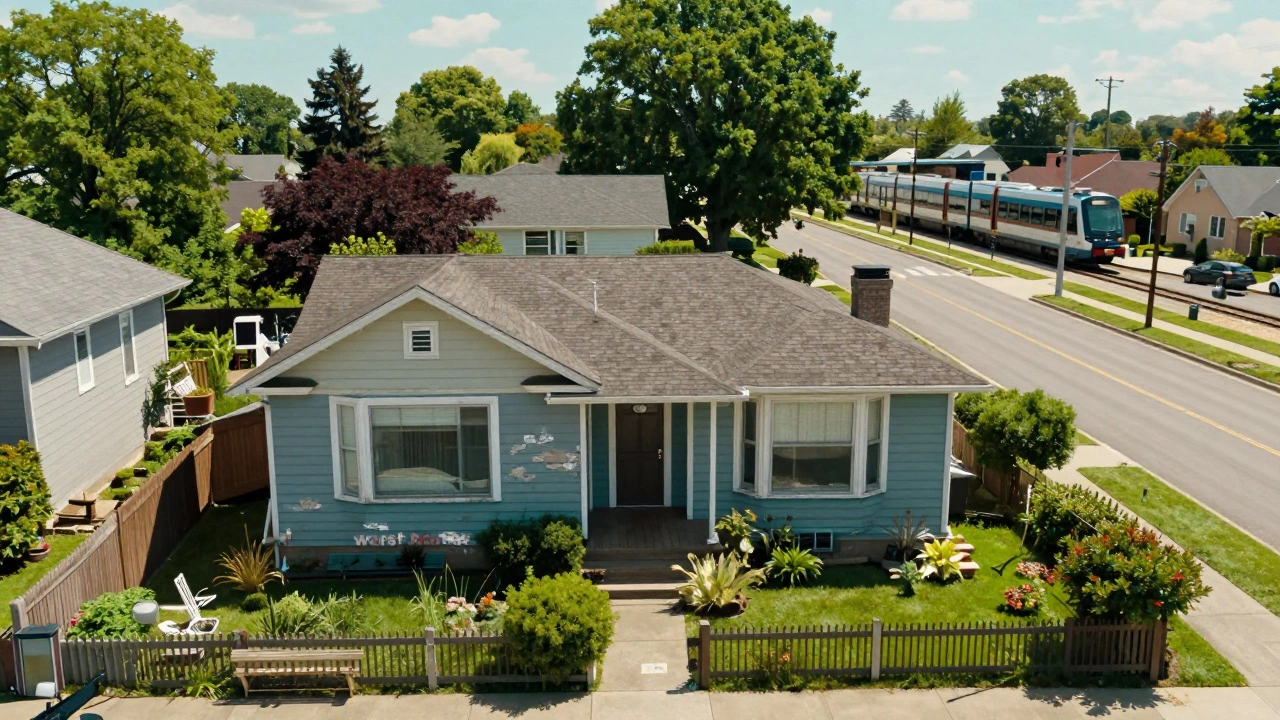
If you want to maximize profit, you need to stop looking for a 'nice house' and start looking for 'value'. This often means House Flipping the strategy of purchasing a deteriorated property, renovating it, and selling it for a profit or 'buying the worst house on the best street'. When you buy a fixer-upper, you are buying the potential of the land and the location, and creating value through sweat equity. A dated 1970s bungalow in a school catchment zone is almost always more profitable than a brand-new luxury penthouse in an area with no growth potential.
Another pro move is looking at zoning changes. If a piece of land is currently residential but is likely to be rezoned for medium-density apartments, the value of that land can skyrocket overnight. This is the 'hidden' profit that professional investors chase. They don't look at the paint color; they look at the city's master plan. Understanding the surrounding infrastructure-like a new train station or a hospital being built nearby-is the most reliable way to predict future capital growth.
Is it better to rent or buy for long-term wealth?
For most people, buying is better over a 20-year horizon because it builds equity and provides stability. However, if you are in a high-growth stock market phase and can invest the difference between rent and a mortgage payment into diversified assets, renting can actually be more profitable. It depends on your risk tolerance and the local property market's growth rate.
What is a 'good' rental yield?
A gross rental yield of 3% to 5% is common in major cities. Anything above 6% is generally considered very strong, though this often comes with higher risks (like lower-quality tenants or older properties). Remember that gross yield doesn't include expenses; your 'net yield' is what actually determines your profit.
Can I make money with a house if I don't have a huge deposit?
Yes, through the use of leverage. By using a mortgage, you can control a high-value asset with a relatively small amount of cash. However, this increases your monthly costs and your risk if prices drop. Some people use 'rent-vesting'-renting where they want to live and buying a cheaper investment property elsewhere-to get into the market sooner.
How do taxes affect property profitability?
Taxes can either kill your profit or boost it. In some regions, Negative Gearing a tax strategy where rental losses can be used to offset other taxable income allows investors to reduce their income tax by claiming property losses. On the flip side, Capital Gains Tax (CGT) can take a significant bite out of your profit when you eventually sell the property.
What are the biggest risks of buying a house for profit?
The biggest risks are market crashes, prolonged vacancies (no tenants), and unexpected major repairs (like structural failure or mold). Interest rate hikes are also a major risk; if your mortgage rate jumps from 3% to 6%, your monthly profit can vanish instantly.
Next Steps for Potential Buyers
If you're wondering whether to pull the trigger, start by calculating your 'all-in' monthly cost. Don't just look at the bank's estimate. Include insurance, rates, and a maintenance fund. If the numbers still work, look at the neighborhood's history. Has it grown steadily over 10 years, or is it a bubble? If you're buying for profit, treat it like a business. Get a building inspection to avoid 'money pits' and talk to a tax professional to see how the investment fits into your overall financial picture.