

Sydney Cost of Living Calculator
Enter your details to see if $30k (or any salary) is viable in Sydney.
Financial Snapshot
- Gross Annual Salary $0
- Estimated Tax & Medicare -$0
- Net Annual Income $0
- Weekly Rent -$0
- Est. Other Essentials* -$0
- Discretionary Cash Leftover $0
You’re staring at your bank account. It’s mid-month, rent has just cleared, and you have exactly $14 left until payday. You earn $30,000 a year. Technically, that’s above the bare minimum survival threshold. But does it feel like poverty? In most major cities, especially somewhere as expensive as Sydney, earning $30k on your own isn’t just tight-it’s precarious.
The question is $30k a year poverty doesn’t have a simple yes or no answer because "poverty" is a moving target. For some, it means homelessness. For others, it means skipping meals to pay the electric bill. When we look at the data through the lens of Affordable Housing, which is defined as housing costing no more than 30% of gross household income, the math gets ugly fast.
The Official Line vs. The Real Cost of Living
Governments love statistics. In Australia, the Henderson Poverty Index often sets the benchmark around 50-60% of the median disposable income. If the median individual income sits near $65,000 (a conservative estimate for full-time work in 2026), then 50% is roughly $32,500. So, strictly by federal statistical definitions, $30,000 might hover right on the edge of the official poverty line.
But here’s the catch: those numbers don’t factor in where you live. A $30,000 salary in rural New South Wales buys you a different life than $30,000 in Surry Hills. The Australian Council of Social Service (ACOSS) frequently highlights that relative poverty rates spike when housing costs are deducted. If you spend 70% of your income on rent, you aren’t just poor; you’re structurally trapped.
| Location Type | Avg Weekly Rent (Est.) | Rent as % of Gross Income | Disposable Leftover |
|---|---|---|---|
| Sydney CBD/Metro | $650 - $800 | 75% - 90% | Negative / Debt |
| Regional NSW Capital | $400 - $500 | 45% - 55% | Tight but viable |
| Rural Town | $250 - $350 | 28% - 38% | Manageable |
Housing: The Primary Driver of Modern Poverty
If you strip away the jargon, poverty today is almost entirely a housing crisis. For a single person, sharing accommodation is the only way to make $30k work in a city. But even shared rooms can eat up half your paycheck. When housing costs exceed 30% of your income, you are considered "rental stress." At $30k, you are likely spending 50-70% on rent alone.
This leaves you with pennies for food, transport, healthcare, and internet. You aren’t technically homeless, but you are one broken fridge or one medical emergency away from it. This state is often called "hidden poverty." You look fine on the outside-you have a roof-but you have zero buffer. You cannot save. You cannot invest. You cannot take risks.
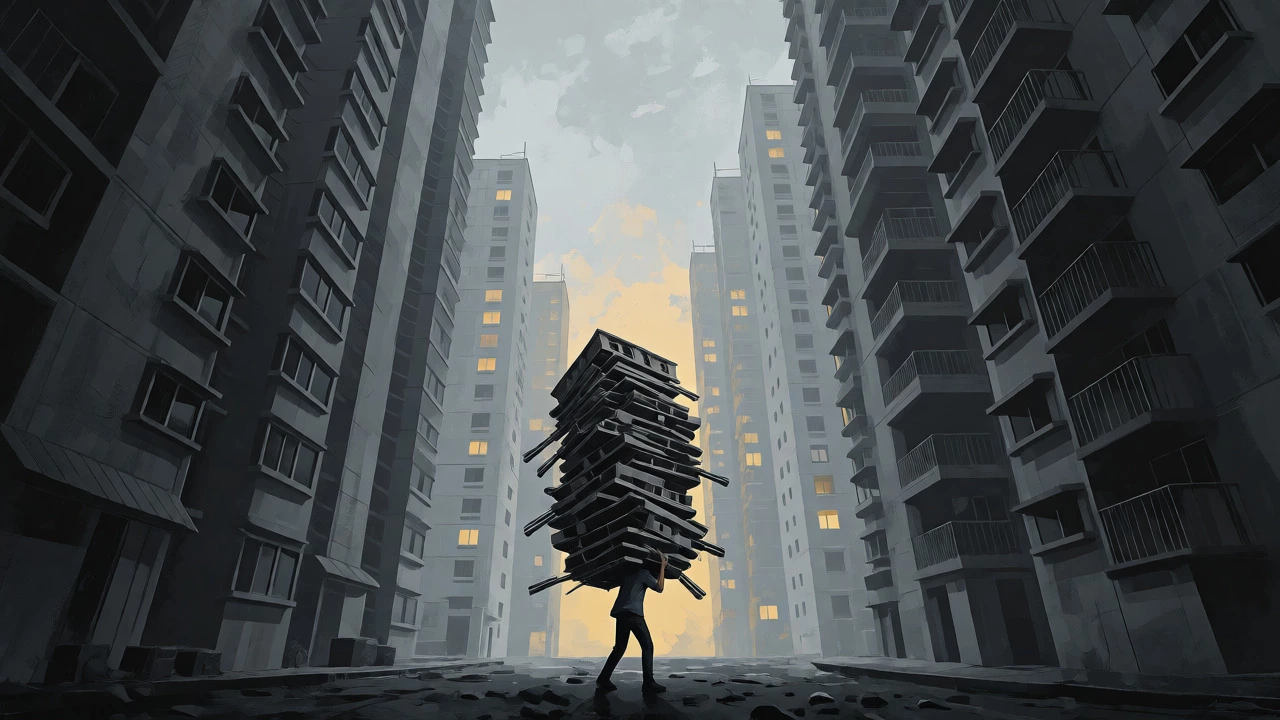
What Does k Actually Buy?
Let’s break down the monthly reality. After tax (assuming no HECS/HELP debt for simplicity), a $30,000 gross annual salary nets you roughly $2,100 to $2,200 a month. That’s about $480-$500 a week.
- Rent: $300/week (shared room in a cheaper suburb). Remaining: $180.
- Utilities & Internet: $50/week (split bills). Remaining: $130.
- Food: $100/week (cooking basics, no dining out). Remaining: $30.
- Transport: $30/week (Opal card caps, walking mostly). Remaining: $0.
You have hit zero. And this assumes nothing breaks. No dentist visits. No phone replacement. No birthday gifts. This is the definition of subsistence living. You are working full time, yet you are living hand-to-mouth. Is that poverty? Functionally, yes.
Beyond Money: The Psychological Toll
Poverty isn’t just an empty wallet; it’s cognitive load. Researchers call it "scarcity mindset." When you are constantly calculating whether you can afford the bus fare home, your brain bandwidth shrinks. You make fewer long-term decisions because you are too busy surviving the short term.
At $30k, social isolation becomes a real risk. Going out for coffee costs $5. Going to the movies costs $20. Inviting friends over requires buying groceries. Eventually, you stop saying yes to invitations because you can’t afford the entry fee. Loneliness compounds financial stress, leading to higher rates of anxiety and depression among low-income singles.
Strategies to Escape the Trap
If you are currently on $30k and feeling the squeeze, what can you actually do? Waiting for wages to rise passively rarely works. You need active intervention.
- Aggressive House Hacking: Move further out. Trade commute time for cash. Or, consider co-living spaces specifically designed for young professionals where utilities are bundled.
- Upskill Immediately: $30k is often an entry-level wage. Identify one high-value skill (digital marketing, coding, trades certification) that can bump you to $45k+. Many TAFE courses offer government-subsidized spots for low-income earners.
- Access Safety Nets: Don’t leave money on the table. Apply for Energy Accounts Payment Assistance (EAPA) if available in your state. Look into Centrelink allowances if your hours fluctuate.
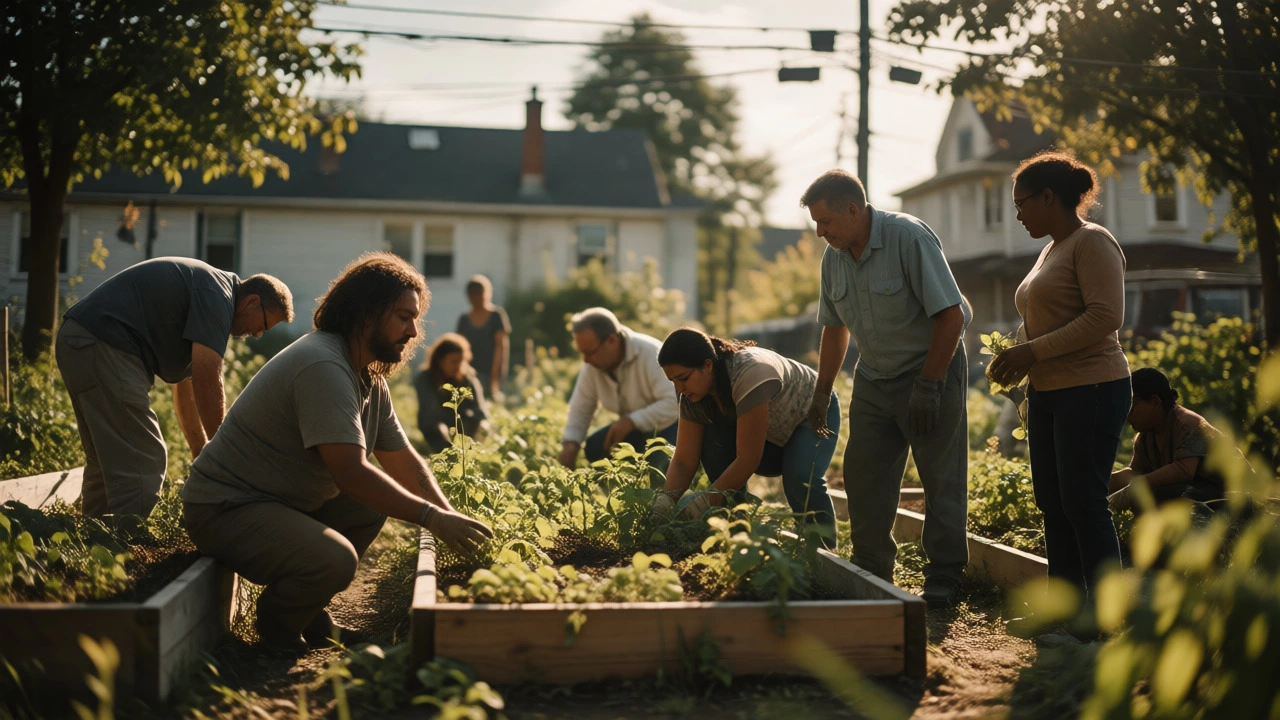
- Community Resources: Use libraries not just for books, but for free Wi-Fi, meeting spaces, and sometimes tool lending. Join community gardens to reduce food costs.
When Does $30k Stop Being Poverty?
It stops being poverty when you regain agency. Agency means having choices. Can you quit a toxic job? Can you move to a better area? Can you help a friend in need? At $30k in a high-cost city, you usually can’t. Therefore, while you may be statistically "above the line," you are functionally impoverished compared to the broader society.
However, context matters. If you are a student with family support, $30k part-time might be comfortable. If you are a single parent or an older adult without superannuation savings, $30k is a crisis. The label "poverty" fits best when your income prevents you from participating fully in society due to lack of resources.
What is the official poverty line for a single person in Australia?
There is no single fixed dollar amount updated daily. However, organizations like ACOSS define poverty as having less than 50% of the national median disposable income. As of recent estimates, this places the threshold for a single person between $28,000 and $35,000 per year, depending on regional adjustments and current inflation rates.
Can I survive on $30,000 a year in Sydney?
Survival is possible, but comfort is not. You will likely need to share accommodation with multiple people. Your budget will be extremely tight, leaving little room for unexpected expenses. Most people on this income in Sydney rely heavily on public transport, cooking at home, and government assistance programs to make ends meet.
Does owning a home change the definition of poverty?
Yes, significantly. If you own your home outright (no mortgage), $30,000 goes much further. Without rent payments, your disposable income increases dramatically, allowing for savings and discretionary spending. Homeowners on low incomes are generally not considered to be in poverty in the same way renters are, as their largest expense is removed.
How does inflation affect a $30k income?
Inflation erodes purchasing power rapidly for low-income earners. Since essentials like food, energy, and rent rise faster than general CPI, a static $30k salary effectively decreases in value each year. If wages do not increase by at least the rate of inflation plus productivity growth, the real standard of living drops.
Is $30k enough to save for retirement?
Very difficultly. Mandatory Superannuation contributions (currently 11.5%) provide a base, but they are unlikely to sustain a comfortable retirement on such a low wage. Additional voluntary contributions are hard to make when basic living costs consume nearly all net income. Many low-income earners rely on the Age Pension later in life.