

Walking into a sleek apartment in Manhattan and falling in love with the light, only to be hit with a $10,000 check request for a broker’s fee, is a rite of passage for many New Yorkers. It feels like a trap. You didn’t ask for help finding the place; you just wanted a home. But in New York City, that fee is often the standard price of admission. So, can you actually avoid it? Yes. But it requires patience, strategy, and knowing exactly where to look in the current 2026 market.
The short answer is that no-fee apartments exist in abundance, but they are scattered across different boroughs and require you to bypass the traditional real estate agent model entirely. This guide breaks down how to find these listings, what compromises you might need to make, and how to navigate the hidden costs that sometimes replace the upfront fee.
Understanding the Broker Fee Landscape in NYC
To beat the system, you first have to understand how it works. In most other U.S. cities, landlords pay the marketing costs. In New York City, specifically in the private market, that cost is shifted to the tenant. A typical broker fee ranges from one month’s rent to 15% of the annual rent. For a $4,000/month apartment, that’s a $4,000 to $7,200 hit before you even unpack your boxes.
However, not all brokers charge tenants. Some work on a "double-end" basis (both landlord and tenant pay), while others accept a lower fee from the landlord in exchange for waiving the tenant fee. This is the core of the "no-fee" model. When you see a listing marked as "no-fee," it means the landlord has already compensated the broker or is managing the property themselves, so you pay nothing extra beyond your security deposit and first month’s rent.
In 2026, the market dynamics have shifted slightly. With rising interest rates affecting new construction, some developers are offering more concessions, including waived fees, to attract renters to newer buildings. Meanwhile, older walk-up buildings managed by individual owners are increasingly listed directly to save money, creating a larger pool of no-fee options than in previous years.
Where to Find Genuine No-Fee Listings
The biggest challenge isn’t the existence of no-fee apartments; it’s filtering out the scams and the misleading ads. Here are the most reliable platforms and strategies to find legitimate opportunities.
- StreetEasy is the dominant listing platform for New York City rentals. Use their filter for "No Fee." Be cautious: some agents list high-fee apartments here hoping you’ll call anyway. Always verify the fee status in the text description, not just the tag.
- HotPads is a map-based rental search engine popular in urban markets. Its visual interface helps you identify neighborhoods with high concentrations of no-fee units, particularly in Brooklyn and Queens.
- Zillow Rentals is a broad real estate platform that aggregates listings from various sources. While less NYC-specific than StreetEasy, it often picks up sublets and corporate housing deals that are no-fee.
- Craigslist is a classified advertisements website that remains a hub for direct owner listings. It is risky due to scams, but if you stick to the "housing > rooms/shared" or "sublets" sections, you can find gems. Never wire money before seeing the place.
- Social Media Groups are community-driven platforms like Facebook Groups (e.g., 'NYC Housing' or neighborhood-specific groups). Landlords often post here to reach tenants quickly without paying listing fees. Engagement is key-comment early to get noticed.
The Sublet Strategy: Your Best Bet for No-Fee Deals
If you are flexible on move-in dates, subletting is the golden ticket to avoiding broker fees. Corporate relocations, students going home for summer, and expats leaving the city create a steady stream of furnished, no-fee sublets. These tenants have already paid their broker fees to the original landlord or broker, so they want to pass the savings to you.
Sublets typically run for 3 to 12 months. Many landlords allow these arrangements without requiring a new full-term lease, though you will sign an addendum. The catch? You’re often renting someone else’s space, which means less control over renovations or long-term stability. However, for young professionals or those testing a neighborhood, it’s an unbeatable way to enter the market without a massive upfront cash outlay.
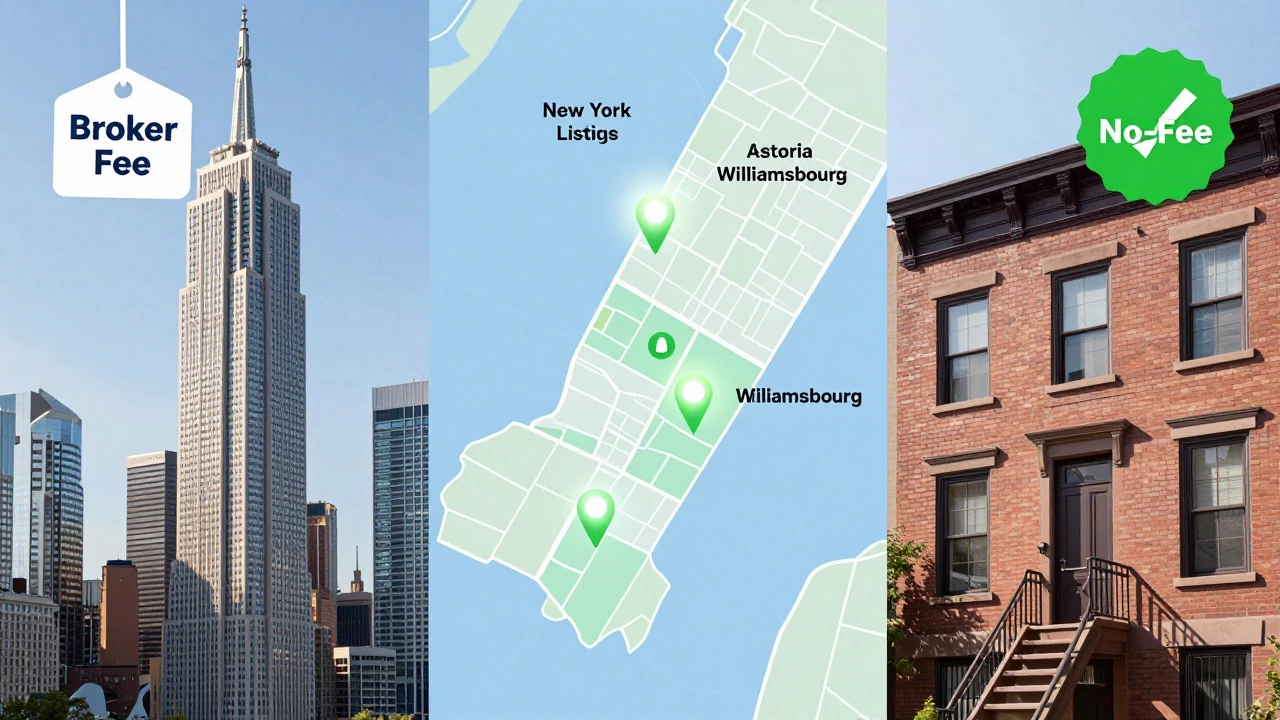
Geographic Trade-offs: Where No-Fee Apartments Thrive
Not every zip code offers equal opportunity. If you set your heart on a luxury doorman building in Tribeca, you will likely face a broker fee. To avoid fees, you often need to look at specific types of buildings and locations.
| Location / Type | No-Fee Availability | Typical Compromise |
|---|---|---|
| Brooklyn (Williamsburg, Bushwick) | High | Older buildings, fewer amenities, potential noise issues |
| Queens (Astoria, Long Island City) | Very High | Longer commute to Midtown Manhattan, mixed building quality |
| Manhattan (Upper West/East Side) | Moderate | Walk-ups, smaller square footage, stricter income requirements |
| Staten Island / Bronx | Extremely High | Significant commute time, less vibrant nightlife/dining scenes |
| New Developments (Any Borough) | Seasonal | Higher monthly rent, strict credit checks, potential HOA fees |
Brooklyn and Queens are currently the hotspots for no-fee rentals. As developers build more residential towers in LIC and Sunset Park, competition among landlords drives them to waive fees to fill units. In contrast, prime Manhattan locations remain stubbornly fee-heavy unless you are dealing with a small-scale landlord who manages their own portfolio.
Hidden Costs: What Replaces the Broker Fee?
Just because there is no broker fee doesn’t mean the deal is free of extra charges. Savvy landlords know that "no-fee" is a powerful marketing tool, so they may offset the lost revenue elsewhere. Watch out for these common tactics:
- Higher Monthly Rent: The rent might be $200-$500 higher per month compared to similar fee-bearing units. Calculate this over a 12-month lease. Often, the total cost ends up being similar, but the cash flow burden is spread out.
- Application Fees: Expect to pay $20-$50 per application for background and credit checks. This is non-negotiable and goes to third-party screening services.
- Move-in Specials vs. Lease Renewals: Some buildings offer a "one month free" or "waived fee" only for the initial signing. Read the fine print to ensure this isn’t a short-term gimmick.
- Strict Income Requirements: No-fee landlords take on more risk since they aren’t getting a guaranteed commission. They may require a gross annual income of 80x the monthly rent (instead of the standard 40x) to feel secure.

DIY Renting: How to Apply Without an Agent
When you apply directly to a landlord or a no-fee broker, the process is faster but demands more preparation. You need to look professional and trustworthy immediately. Here is your checklist:
- Gather Documents Early: Have your last two years of tax returns, recent pay stubs (last 3 months), bank statements (last 2-3 months), and a copy of your government ID ready in a single PDF folder.
- Write a Personal Intro: When emailing a landlord, don’t just say "Interested." Write a brief, polite introduction. Mention your job, your quiet lifestyle, and why you love the neighborhood. Humanize yourself.
- Be Ready to Move Fast: No-fee listings get hundreds of inquiries. If you love a place, schedule a viewing within 24 hours. Have your documents uploaded to a cloud drive link you can share instantly.
- Verify Ownership: Since you are dealing directly with owners, use the NYC ACRIS is the Automated City Register Information System for public access to property records. Check that the person leasing to you actually owns the unit. This prevents fraud.
Common Pitfalls and Scams to Avoid
The desire to save thousands on fees makes you a target for scammers. In 2026, digital scams have become more sophisticated. Follow these rules to stay safe:
Never wire money before seeing the apartment. If the landlord says they are out of town and will mail you the keys, it is a scam. 99% of the time. Insist on an in-person tour or a live video call where you can see the interior and exterior in real-time.
Beware of prices that are too good to be true. A renovated 2-bedroom in Chelsea for $2,500 with no fee does not exist. If the price is significantly below market rate, it is likely a bait-and-switch or a fraud attempt.
Check the listing source. If a listing appears on Craigslist but also on a major broker site with a fee, the Craigslist ad is likely fake. Cross-reference addresses on Google Maps to ensure the photos match the actual building.
Is Hiring a Broker Still Worth It?
For some people, the hassle of searching for no-fee apartments outweighs the cost. If you have a complex financial situation (self-employed, international income, low credit score), a broker can act as an advocate. They can explain your finances to skeptical landlords and negotiate terms that you might not achieve on your own. In these cases, paying the fee is essentially buying expertise and access to off-market listings.
However, if you have a standard W-2 job, good credit, and plenty of time to search, going the no-fee route is financially superior. The effort pays off quickly once you move in.
What is the average broker fee in NYC in 2026?
The average broker fee in NYC typically ranges from one month's rent to 15% of the annual rent. For example, on a $4,000/month apartment, the fee could be between $4,000 and $7,200. Some brokers charge a flat fee of $1,000-$2,000 regardless of rent amount, especially in competitive markets.
Are no-fee apartments legal in NYC?
Yes, no-fee apartments are completely legal. The fee structure is determined by the contract between the landlord and the broker. If the landlord agrees to pay the broker exclusively, the tenant pays nothing. This is a common practice, especially in newer developments and certain boroughs like Queens and Brooklyn.
Can I negotiate a lower broker fee?
In some cases, yes. If you have strong credentials (high income, excellent credit) and the apartment has been on the market for a while, you can ask the broker if they will reduce their fee. Some brokers may drop from 15% to 10% or agree to a flat fee. However, many large brokerages have fixed fee structures that are non-negotiable.
What is the difference between a no-fee apartment and a double-end fee?
In a no-fee arrangement, the landlord pays the broker, and the tenant pays zero commission. In a double-end fee scenario, both the landlord and the tenant pay a portion of the broker's commission. For example, each party might pay 7.5% of the annual rent. Double-end fees are less common now but still exist in certain luxury markets.
Do I need a guarantor for a no-fee apartment?
It depends on your income. Most landlords require your gross annual income to be 40 times the monthly rent. If you fall short, you will need a guarantor, regardless of whether the apartment is no-fee. Guarantors must typically earn 80 times the monthly rent. Services like The Guarantee Company or Invigo can act as professional guarantors for a fee if you lack a personal connection.