
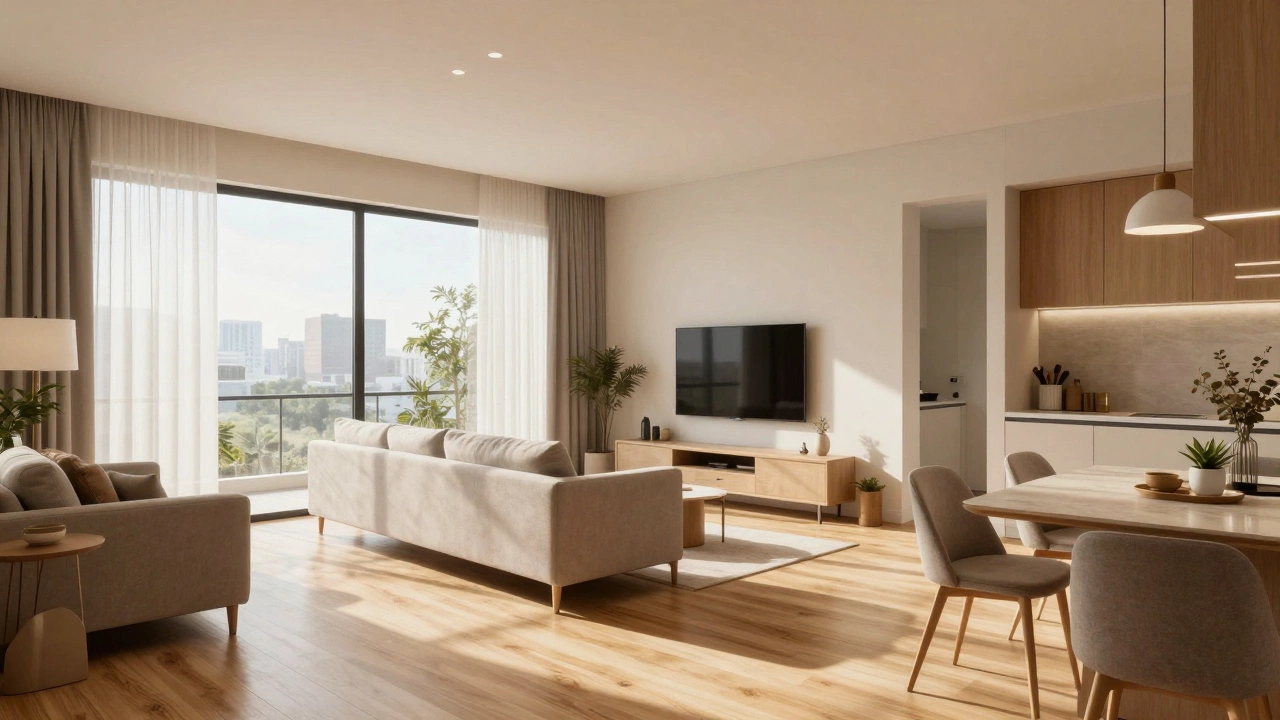
Ideal Apartment Size Calculator for Couples
Lifestyle Factors
Select the options that apply to your current lifestyle to determine your ideal home size.
Recommended Size
You’re moving in together. Maybe you just got engaged, maybe you’re tired of splitting rent on two separate studios, or maybe you just want enough room to not trip over each other’s shoes. The question isn’t just “where do we live?” It’s “how much space do we actually need?”
If you are looking at 2BHK apartments, which stands for Two Bedroom, Hall, and Kitchen, you might be wondering if that is overkill for just two people. Or perhaps you are trying to figure out the minimum square footage required to feel comfortable without feeling cramped.
The short answer? For two adults, you generally want between 800 and 1,200 square feet. But that number changes depending on whether you work from home, have pets, or love hosting dinner parties. Let’s break down exactly how to calculate your perfect fit so you don’t end up with a house that feels like a closet or a mansion that feels empty.
The Baseline: Minimum Living Space for Two Adults
Let’s start with the bare bones. If you strip away everything non-essential-no home office, no dedicated gym, no guest room-what is the absolute minimum you need to survive comfortably?
Most real estate experts suggest that an adult needs about 400 to 500 square feet of personal living space to feel uncramped. This includes their bedroom, a share of the bathroom, and access to common areas. So, mathematically, two people need roughly 800 to 1,000 square feet total.
However, you cannot just double the bedroom size. You need shared infrastructure:
- The Kitchen: Even if you rarely cook, you need counter space and storage. A functional kitchen takes up about 80-120 square feet.
- The Bathroom: A standard full bath (toilet, sink, shower/tub) occupies about 35-50 square feet. If you only have one, it becomes a bottleneck in the morning.
- Circulation Space: Hallways, closets, and entryways. You can’t walk through walls. This often accounts for 15-20% of your total floor plan.
When you add these fixed costs to your personal space needs, the magic number lands around 900 square feet as the practical minimum for a long-term happy relationship. Anything less than 750 square feet for two adults usually means one person sleeps in the living room or you are constantly negotiating who gets the last drawer.
Why the 2BHK Format Works for Couples
You mentioned 2BHK layout specifically. In many markets, especially in Asia and increasingly in urban centers globally, this format is the gold standard for couples. Why?
A 2BHK gives you flexibility that a large 1-bedroom apartment does not. Here is the breakdown:
- Bedroom 1 (Master): Your private sanctuary. Queen or King bed, dresser, nightstands.
- Bedroom 2 (The Chameleon): This is the game-changer. It can be a home office, a gym, a nursery, a guest room, or a massive walk-in closet.
- Hall (Living/Dining): The social hub. Sofa, TV, dining table.
- Kitchen: Food prep area.
If you buy a 1,200-square-foot 1-bedroom apartment, the bedroom might be huge, but you have nowhere to put a desk if you work from home. In a 2BHK of the same size, the bedrooms are smaller, but you have a dedicated room for work. This separation of "sleep" and "work" zones is critical for mental health in remote-work scenarios.
For two people, the second bedroom prevents the "living room takeover." Without it, your sofa becomes a desk, then a dining table, then a yoga mat zone. With a second room, you can keep the main living area clean and social-ready.
Factors That Increase Your Square Footage Needs
The 900-1,200 square foot range is a starting point. Several lifestyle factors will push you toward the higher end (1,200+) or even into 3-bedroom territory.
1. Working From Home (WFH)
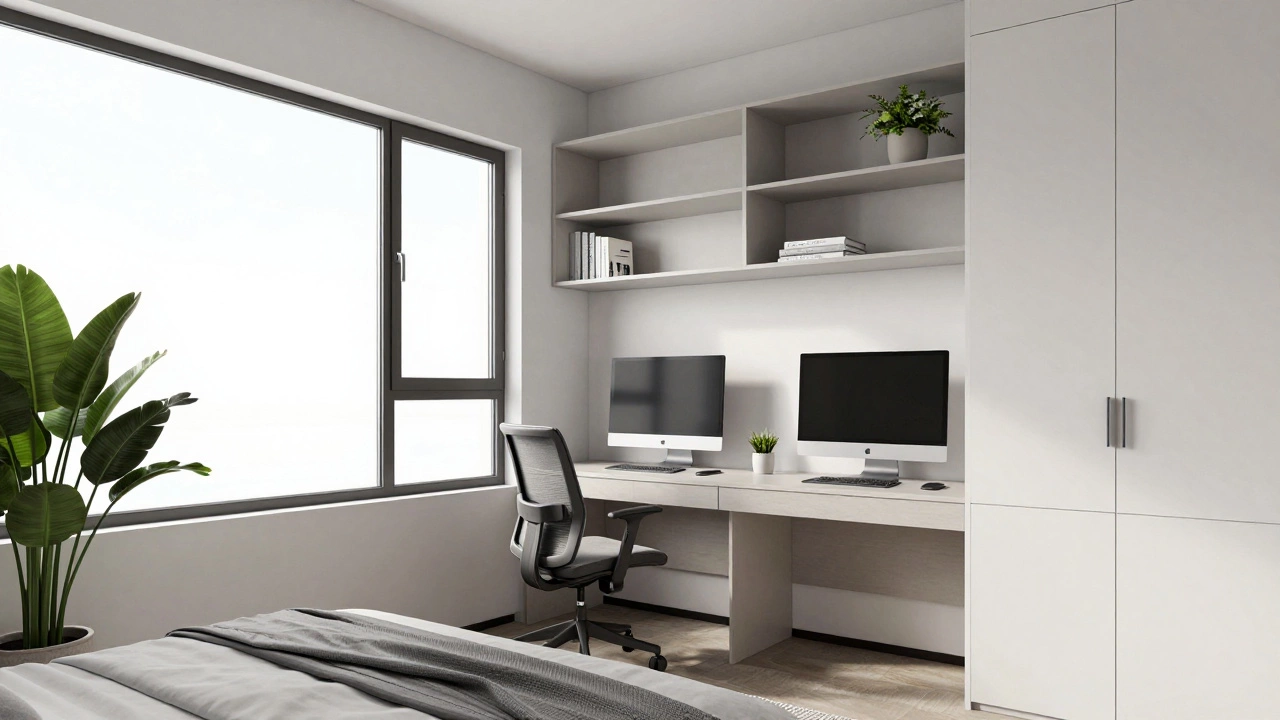
If both of you work from home, you need separate focus zones. Sharing a small dining table leads to conflict. You need at least 100-150 additional square feet for proper office setups with ergonomic chairs and monitors. This makes the 2BHK essential, as the second bedroom becomes a true office.
2. Pet Ownership
Dogs and cats need space. Not just for them to run, but for their gear. Crates, litter boxes, food stations, and toys take up floor space. If you have a large dog, you likely need a larger living area for them to stretch out without knocking things over. Add 10-15% to your square footage calculation if you have pets.
3. Storage Habits
Are you minimalists or collectors? If you have extensive wardrobes, hobby equipment (musical instruments, gaming consoles), or seasonal decor, you need more closet space. Built-in closets save floor space, but they cost more to build. If the apartment doesn’t have ample built-ins, you’ll need larger rooms to accommodate dressers and armoires.
4. Entertainment Style
Do you host weekly game nights? Do you cook elaborate meals for friends? If yes, you need a larger "Hall" (living/dining area). A cramped kitchen island or a tiny dining table will make hosting stressful. Aim for a combined living/dining area of at least 250-300 square feet if you entertain regularly.
Room-by-Room Breakdown: What Fits Where?
To visualize how this works in practice, let’s look at a typical 1,000-square-foot 2BHK and see how the space is allocated.
| Room | Approx. Size (sq ft) | Key Features |
|---|---|---|
| Master Bedroom | 150 - 180 | Queen bed, 2 nightstands, small dresser |
| Second Bedroom | 120 - 140 | Twin bed or Desk + Chair (Office/Guest) |
| Living Room | 200 - 250 | Sofa, Coffee Table, TV Unit |
| Dining Area | 60 - 80 | Table for 4-6 people |
| Kitchen | 80 - 100 | L-shape or Galley, Fridge, Stove, Sink |
| Bathrooms (x2) | 70 - 90 | Full bath + Powder room or 2 Full baths |
| Circulation/Closets | 100 - 120 | Hallways, Entryway, Closet space |
Notice how tight the numbers are. In a 1,000-square-foot unit, every inch counts. If the kitchen is open-plan, it might merge with the dining area, creating a perception of more space. This is why floor plan efficiency matters more than raw square footage.
Efficiency vs. Raw Size: The Shape Matters
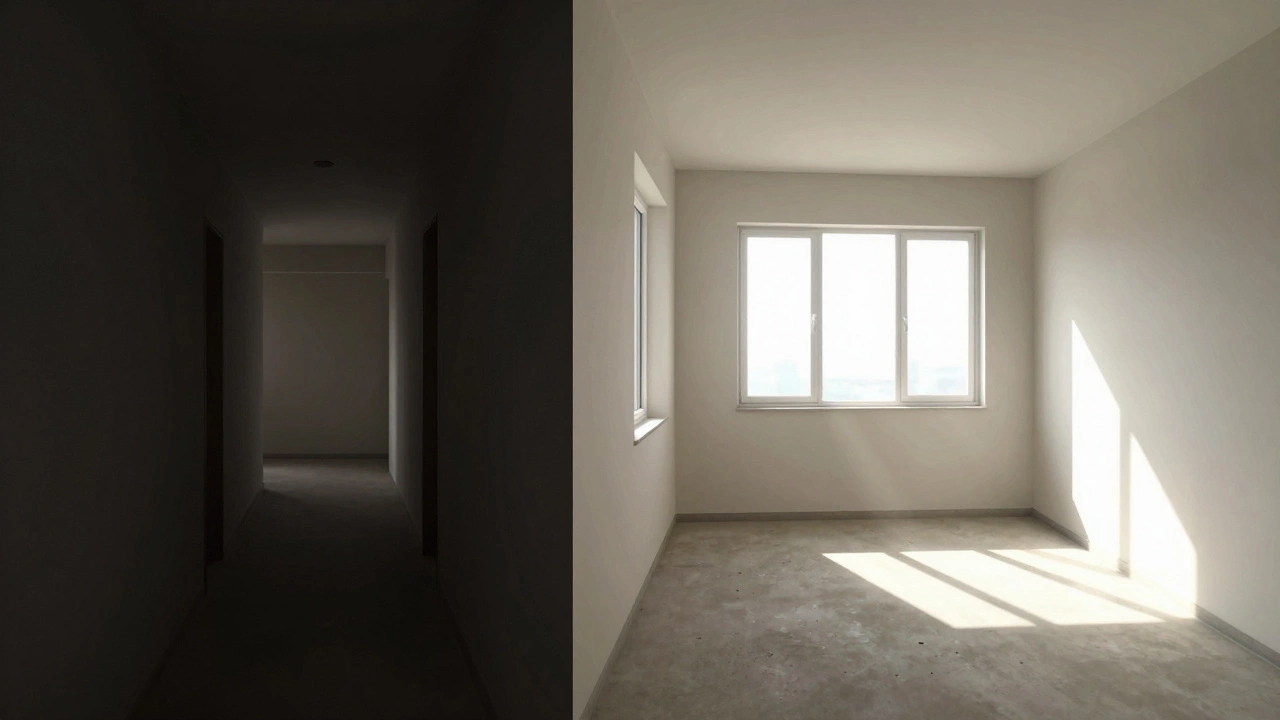
Not all square feet are created equal. A long, narrow apartment with a dark hallway wastes space. A square or L-shaped apartment feels larger because natural light penetrates deeper and circulation paths are shorter.
Look for these design elements when comparing units of similar size:
- Open Concept: Removing walls between the kitchen, dining, and living areas creates a seamless flow. This makes a 900-square-foot apartment feel like 1,100.
- Ceiling Height: Higher ceilings (9+ feet) create volume. Vertical space tricks the brain into feeling less confined.
- Window Placement: Windows on multiple walls allow cross-ventilation and light. Dark corners feel claustrophobic; bright spaces feel expansive.
- Storage Integration: Look for under-stair storage, window seats with lift-up lids, or built-in shelving. These hide clutter without eating up floor space.
A poorly designed 1,200-square-foot apartment can feel worse than a well-designed 950-square-foot one. Always visit the unit at different times of day to check light levels and noise insulation.
Future-Proofing: Planning for Life Changes
You are buying or renting for two people now. But life changes. Five years from now, you might have a child, aging parents moving in, or a new career that requires a library of books.
This is where the 2BHK shines again. The second bedroom is your buffer. If you stay in a 1-bedroom, adding a baby means converting the living room into a nursery, which disrupts your social life. In a 2BHK, the second bedroom becomes the nursery, and your living room remains yours.
However, don’t over-buy. A 2,000-square-foot house for two people is expensive to heat, cool, clean, and maintain. The "sweet spot" for most couples is finding a unit that is slightly larger than you think you need now, but not so large that it becomes a burden.
Cost Implications of Square Footage
In major cities, price per square foot is the dominant metric. Going from 800 to 1,200 square feet isn’t just a 50% increase in space; it’s often a 60-80% increase in price due to premium pricing on larger units.
Consider the hidden costs:
- Utilities: Larger homes use more energy for heating and cooling.
- Maintenance: More surface area means more cleaning, painting, and repairs.
- Furniture: You need more furniture to fill a larger space effectively.
If budget is tight, prioritize a well-designed 900-square-foot 2BHK over a cramped 1,100-square-foot 3-bedroom. Comfort comes from functionality, not just square footage.
Conclusion: Finding Your Balance
So, how many square feet for 2 people? Aim for 900 to 1,200 square feet in a 2BHK configuration. This provides enough privacy, storage, and flexibility for modern life without becoming a financial or maintenance burden.
Focus on the layout, not just the number. An efficient floor plan with good light and smart storage will serve you better than extra square feet in a dark, awkwardly shaped box. Visit units, measure your furniture, and imagine your daily routine. Your home should support your life, not dictate it.
Is 800 square feet too small for two people?
It depends on your lifestyle. For a minimalist couple who spends most of their time outside the home, 800 square feet can be sufficient. However, if you work from home, have pets, or entertain guests, 800 square feet may feel cramped. Ideally, aim for at least 900 square feet to ensure comfort and adequate storage.
What is the difference between a 2BHK and a 2-bedroom apartment?
A 2BHK specifically includes a Hall (living/dining area) and a Kitchen in addition to two bedrooms. While most 2-bedroom apartments also have these features, the term 2BHK is commonly used in certain regions (like India and parts of Asia) to explicitly denote the presence of these communal spaces, ensuring clarity in the layout description.
How much square footage is needed for a master bedroom?
A comfortable master bedroom for two people should be at least 150 to 200 square feet. This allows space for a Queen or King-sized bed, two nightstands, a dresser, and walking room around the furniture. Smaller bedrooms (under 120 sq ft) can feel claustrophobic unless they are used primarily for sleeping with minimal furniture.
Should I choose a 1-bedroom or 2-bedroom apartment for two people?
Choose a 2-bedroom (2BHK) if you work from home, plan to have children soon, or need a dedicated space for hobbies or guests. Choose a 1-bedroom if you prefer lower maintenance costs, spend little time at home, or value a larger living/kitchen area over a second bedroom. The 2BHK offers more flexibility for changing life circumstances.
Does ceiling height affect perceived square footage?
Yes, significantly. Higher ceilings (9 feet or more) create a sense of volume and airiness, making a space feel larger than its actual floor area. Low ceilings (less than 8 feet) can make even a spacious room feel oppressive. When comparing apartments, consider ceiling height as a factor in overall comfort.