
Ranch Size & Cost Estimator
Calculate the estimated cost and categorize your potential ranch based on acreage, region, and intended use.
Configuration
Picture this: you’re scrolling through listings for villas for sale that promise a bit of countryside charm, but then you stumble upon a listing labeled "Ranch." Suddenly, the price tag jumps significantly. You might wonder, is there a magic number? Does a piece of land automatically become a ranch once it hits a certain acreage?
The short answer is no. There is no single legal definition that says, "X acres equals one ranch." However, in the real world of agriculture and real estate, there are widely accepted thresholds that help buyers, sellers, and appraisers understand what they are looking at. Understanding these sizes isn't just about trivia; it’s about knowing whether you can actually run livestock, grow crops, or simply enjoy privacy without breaking the bank on maintenance.
The General Rule of Thumb for Ranch Sizes
If you ask a farmer in Texas or a land agent in Montana, they will likely give you a range rather than a specific number. Generally speaking, a property needs to be substantial enough to support agricultural activities or provide significant isolation to be called a ranch.
- Small Ranches: Typically range from 40 to 100 acres. These are often hobby farms or small-scale operations where owners might keep horses, a few cattle, or chickens. They offer rural living but still require regular upkeep like mowing and fence repairs.
- Medium Ranches: Usually fall between 100 and 500 acres. This size allows for more serious grazing operations. You have enough room to rotate pastures, which is crucial for soil health and preventing overgrazing. It’s also large enough to build outbuildings, barns, and guest houses without feeling cramped.
- Large Commercial Ranches: Often exceed 500 acres, with many running into the thousands. These properties are designed for commercial viability-raising beef, sheep, or growing timber on an industrial scale. Water rights and infrastructure here are complex and valuable assets.
Why does this distinction matter? Because the cost per acre drops dramatically as the size increases. A 50-acre parcel might cost $10,000 per acre due to its proximity to town and development potential. A 1,000-acre ranch might cost only $2,000 per acre because it’s remote and purely agricultural. Knowing the typical size helps you budget correctly.
Region Matters: Geography Dictates Scale
You cannot compare a ranch in California to one in Wyoming using the same metrics. The carrying capacity of the land-the amount of vegetation available to feed animals-varies wildly based on climate, rainfall, and soil quality. This concept is often measured in Animal Unit Months (AUMs), which estimates how many months one cow-calf pair can graze on a specific area.
| Region | Typical Minimum Size | Primary Use | Key Constraint |
|---|---|---|---|
| Western US (e.g., Montana, Wyoming) | 1,000+ acres | Cattle grazing, Timber | Arid climate, low grass density |
| Midwest (e.g., Kansas, Nebraska) | 320 - 640 acres | Crop farming, Cattle | Highly fertile, expensive land |
| Southwest (e.g., Arizona, New Mexico) | 500 - 1,000 acres | Desert landscaping, Hunting | Water scarcity, cactus terrain |
| East Coast (e.g., Virginia, Pennsylvania) | 50 - 150 acres | Horses, Privacy estates | Higher population density nearby |
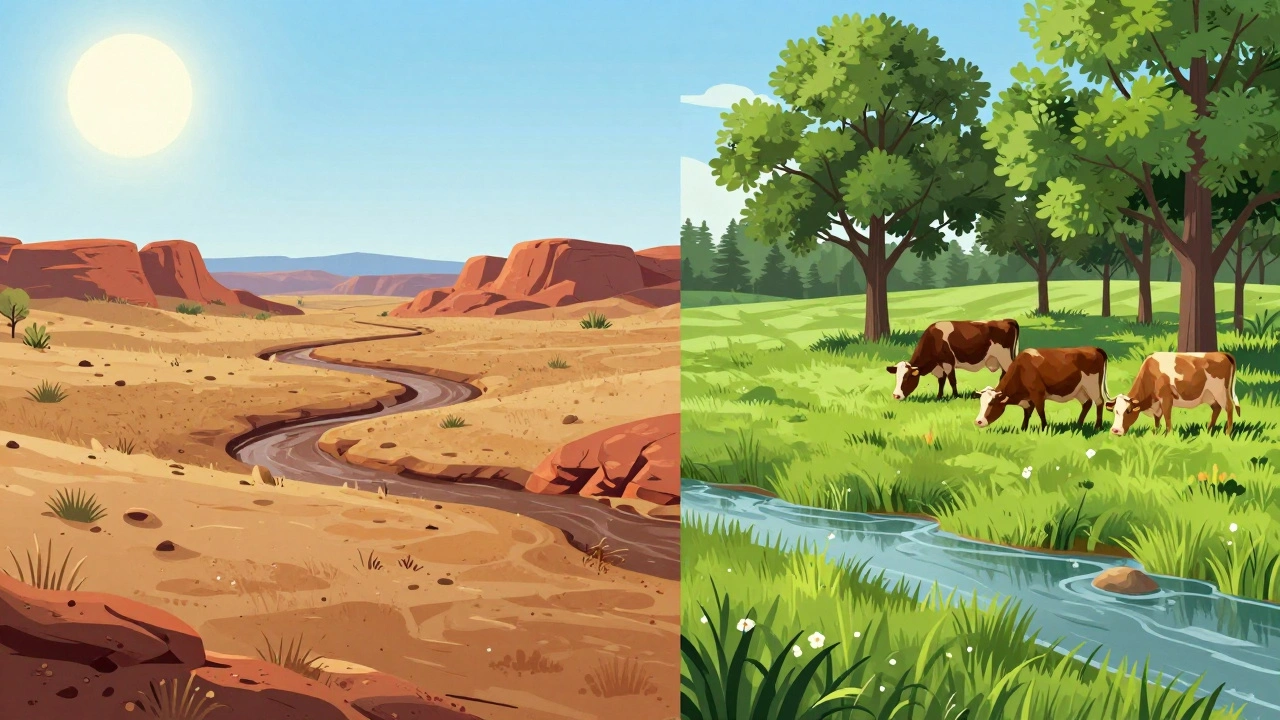
In the arid West, 40 acres might not even support one horse year-round without importing hay. In the lush East, 40 acres could comfortably sustain several horses and plenty of pasture. If you are looking at large residential estates or villas, the surrounding acreage defines your lifestyle. A 20-acre "ranch" in Florida is essentially a large garden with a pond, whereas a 20-acre plot in Nevada is a vast desert expanse requiring irrigation systems to survive.
Legal Definitions vs. Marketing Terms
Real estate agents love the word "ranch." It evokes images of freedom, open skies, and rustic luxury. But legally, the term has little weight. Most jurisdictions do not define a ranch by acreage alone. Instead, they look at zoning codes and land use permits.
For example, a property might be zoned as "Agricultural" or "Rural Residential." This zoning determines what you can do on the land. Can you raise pigs? Can you sell farm stands? Can you subdivide the land later? These questions are far more important than the total acreage. A 100-acre lot zoned for residential subdivision might be worth millions due to future housing potential, while a 100-acre lot zoned strictly for conservation might be nearly impossible to develop.
Be wary of listings that use "ranch" loosely. Sometimes, a sprawling single-story house is called a "ranch-style home," which has nothing to do with land size. Always check the survey map. Look for the actual boundaries, easements, and water sources. An acreage claim means nothing if half the land is inaccessible swamp or protected wetland.
Infrastructure: The Hidden Cost of Big Land
Buying a ranch is not just buying dirt; it’s buying a system. As the acreage grows, so does the complexity of maintenance. Here is what you need to consider beyond the square footage:
- Water Rights: In many western states, water is separate from land ownership. You might own 500 acres, but if you don’t have the rights to draw from the creek running through it, that land is useless for agriculture. Verify water deeds carefully.
- Fencing: Fencing a 100-acre ranch can cost tens of thousands of dollars. Barbed wire, electric fencing, and post-and-rail all have different lifespans and costs. Broken fences mean lost animals and neighbor disputes.
- Roads and Access: Who maintains the driveway? If it’s a private road shared with neighbors, who pays for grading and snow removal? Remote ranches often lack municipal services, meaning you need septic systems, well water, and solar power.
- Taxes: Agricultural tax breaks exist in many areas, but they come with strings attached. You must prove the land is actively used for farming or ranching. If you buy a ranch just for privacy and let the grass grow wild, you might lose the tax exemption and face a massive reassessment bill.
These factors often make smaller, well-maintained properties more affordable in the long run than larger, neglected ones. A 50-acre ranch with good fences, a reliable well, and updated septic might be a better investment than a 500-acre tract with crumbling infrastructure.
What Should You Actually Buy?
Your ideal ranch size depends entirely on your goals. Are you looking for a production business, a hobby farm, or a private retreat?
If you want to raise cattle commercially, aim for at least 300-500 acres in moderate climates, or more in arid regions. You need space to rotate pastures and manage herd health. If you are interested in horses, 20-40 acres is often sufficient for boarding and riding, provided you have adequate shelter and feed storage.
For those seeking privacy and a connection to nature without the burden of full-time farming, a 10-30 acre property works well. This size allows for gardens, trails, and perhaps a few goats or chickens, while remaining manageable for a part-time owner. It’s close enough to town for groceries and healthcare but far enough to escape the noise.
Remember, the label "ranch" is flexible. Whether it’s 40 acres or 4,000, the value lies in how the land serves your life. Do your homework, check the water, inspect the fences, and don’t let the romantic idea of a huge spread blind you to the practical realities of land management.
Is there a minimum acreage to be called a ranch?
No, there is no universal legal minimum. However, industry standards often consider properties under 40 acres as hobby farms or large estates, while true ranches typically start around 100 acres to support agricultural activities.
Does a ranch need to have livestock?
Not necessarily. While traditionally associated with raising cattle or horses, many modern "ranches" are used for hunting, recreation, or conservation. However, tax benefits often require active agricultural use.
Are ranches cheaper per acre than suburban lots?
Yes, generally. Rural land has a lower price per acre due to lack of utilities and distance from urban centers. However, the total purchase price can still be high, and maintenance costs add up quickly.
What is the difference between a ranch and a farm?
The terms are often used interchangeably. Traditionally, farms focus on crops and dairy, while ranches focus on raising livestock on large tracts of grazing land. In practice, the distinction is blurry and varies by region.
Do I need water rights to buy a ranch?
In many western US states, yes. Water rights are critical for agriculture and may be sold separately from the land. Always verify water access and legal rights before purchasing rural property.