
Rental Property Break-Even Calculator
Estimate how long it will take for your rental property's cumulative net position (capital growth minus holding costs) to cover your initial upfront investment. This tool helps visualize the "long game" of real estate investing.
Initial Investment Costs
Annual Performance Projections
You buy the house. You sign the lease. The tenant moves in. Then you wait. For how long? That’s the question keeping every new investor awake at night. There is no single answer because "profit" means different things depending on your strategy. Are you chasing monthly cash flow hitting your bank account, or are you waiting for capital growth to boost your net worth? In Australia, especially in high-growth markets like Sydney, these two timelines rarely align.
Most investors underestimate the time it takes to see real money return. If you’re looking for quick flips, rental properties aren’t them. But if you understand the mechanics of cash flow and capital appreciation, you can predict when your investment will actually pay off. Let’s break down the realistic timelines for both positive and negative cash flow scenarios, and what factors speed up or slow down that process.
The Two Types of Rental Profit
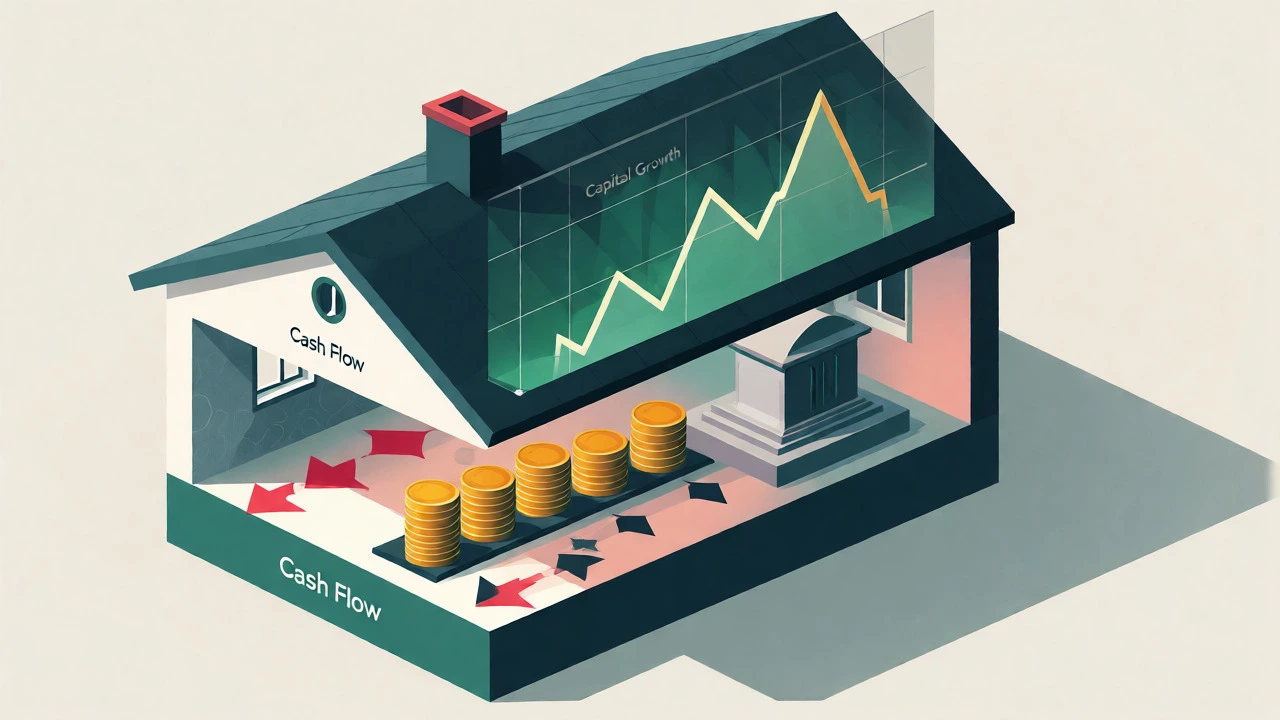
Before we talk about time, we need to define what "profit" looks like. In real estate, profit comes from two distinct sources, and they operate on completely different clocks.
Cash Flow is the money left over after all expenses are paid. This includes mortgage repayments, council rates, insurance, maintenance, and management fees. If rent covers these costs with money left over, you have positive cash flow. This can happen immediately upon settlement if you buy correctly.
Capital Growth is the increase in the property’s value over time. This is often where the real wealth is built, but it’s invisible until you sell or refinance. Unlike cash flow, capital growth is driven by market cycles, infrastructure projects, and scarcity. It typically takes years, not months, to realize significant gains.
| Profit Type | Time to First Dollar | Primary Driver | Risk Level |
|---|---|---|---|
| Positive Cash Flow | Day 1 (if structured correctly) | Rental Yield & Interest Rates | Lower |
| Negative Gearing | Years (via tax refunds) | Tax Benefits | Medium |
| Capital Growth | 5-10 Years | Market Cycles & Location | Higher |
The Immediate Reality: Cash Flow Timelines
If you buy a property with a high rental yield-say, above 5% gross-you might see positive cash flow from day one. This is common in outer suburbs or regional areas where purchase prices are lower relative to rents. However, most metropolitan investors, particularly in Sydney or Melbourne, start out negatively geared. This means the property loses money each month before tax benefits.
So, when does this loss turn into a gain? Usually, it depends on interest rate movements and rent increases. Historically, rents rise faster than property values in tight markets. If you bought in 2020 with low interest rates, your cash flow was likely strong. As rates rose through 2023-2024, many investors slipped back into negative territory. To flip this back to positive, you generally need either a drop in interest rates or a significant jump in rental income.
A good rule of thumb: Expect 3-5 years before a negatively geared property becomes self-funding through rent alone, assuming moderate annual rent increases of 3-4%. During this period, you’re relying on your salary to cover the shortfall.
The Long Game: When Capital Growth Kicks In
Here’s the uncomfortable truth: You usually don’t feel capital growth in your pocket. You only see it on paper in your loan-to-value ratio (LVR). To access this profit, you must sell or borrow against the equity.
Property markets move in cycles. A typical cycle lasts 7-10 years. If you buy at the bottom of a cycle, you might see double-digit growth within 3-5 years. If you buy at the peak, you could be waiting a decade just to break even on price. In Sydney, specific suburbs can outperform others due to rezoning, new transport links, or gentrification. For example, areas benefiting from metro station openings often see accelerated growth compared to those without infrastructure upgrades.
Consider the transaction costs. Buying and selling a property costs roughly 6-8% of the value (stamp duty, agent commissions, legal fees). Therefore, for a sale to result in actual profit, the property must appreciate by more than this amount. If you buy a $1 million home, it needs to grow to at least $1.08 million just to cover the costs of exiting. Most experts suggest holding for a minimum of 7 years to ensure capital growth outweighs entry and exit costs.
Factors That Speed Up Your Profitability
You aren’t entirely at the mercy of the market. Certain strategies can accelerate your path to profit.
- Add Value Through Renovation: Buying below market value and improving it instantly boosts your equity position. A kitchen renovation costing $30k might add $50k to the valuation. This creates immediate "paper profit," though it doesn’t put cash in your hand unless you refinance.
- Subdivision Potential: If you buy land suitable for subdivision, the potential profit is much higher but takes longer. Getting development approval can take 12-24 months. Once approved, however, the value uplift can be substantial, sometimes doubling the land value.
- Optimize Tax Efficiency: Proper depreciation schedules can offset losses significantly. While this isn’t "profit" in the traditional sense, it reduces your tax bill, effectively increasing your net return. Ensure you have a quantity surveyor prepare a detailed depreciation report to maximize deductions.
The Break-Even Point Calculation
To know exactly when you’ll make a profit, calculate your break-even point. This is the number of years required for cumulative net income plus capital growth to equal your initial investment.
Formula:
Total Investment = Deposit + Stamp Duty + Legal Fees + Initial Repairs
Annual Net Loss = Mortgage Payments + Expenses - Rent Received
Projected Annual Growth = Property Value × Expected Growth Rate
If you invest $100,000 upfront and lose $5,000 a year in cash flow, but the property grows by $20,000 a year, your net position improves by $15,000 annually. You would reach break-even in roughly 6.7 years ($100,000 / $15,000). Note that this ignores compounding effects and inflation adjustments, which should be factored in for a precise forecast.

Common Pitfalls That Delay Profit
Many investors miscalculate their timelines because they ignore hidden costs.
Vacancy periods are a major killer. Even a well-managed property might sit empty for 1-2 weeks between tenants. Budget for 1 week of vacancy per year. If you experience two bad tenancies in five years, losing three months of rent each time, that’s six months of lost income. This delays your cash flow positivity significantly.
Maintenance surprises are another issue. Old houses require work. A broken hot water system or leaking roof can cost thousands unexpectedly. Experts recommend setting aside 1-2% of the property value annually for maintenance reserves. Failing to do so forces you to dip into savings, extending the time to true profitability.
Finally, beware of over-leveraging. High debt levels mean higher interest payments. If interest rates rise, your cash flow gap widens. Many investors who borrowed 95% LVR found themselves struggling when rates jumped from 2% to 6%. Keeping your debt manageable ensures you survive downturns without forced sales.
Realistic Expectations for 2026 and Beyond
As we look ahead from September 2026, the landscape remains complex. Interest rates have stabilized somewhat, but affordability constraints limit buyer demand in some sectors. Rental shortages continue to push rents higher, aiding cash flow recovery for existing landlords.
For new buyers today, expect a slower start. Prices in major capitals remain high relative to incomes. You likely won’t see immediate cash flow positivity. Instead, focus on location fundamentals: proximity to jobs, schools, and transport. These drivers ensure steady demand, protecting you during market dips.
Remember, real estate is a marathon, not a sprint. Those who succeed treat it as a long-term wealth-building tool, not a get-rich-quick scheme. Patience pays, but only if you choose the right asset from the start.
Is it better to aim for cash flow or capital growth?
It depends on your financial situation. If you have high taxable income and limited surplus funds, negative gearing with strong capital growth prospects is often preferred because it offsets tax liability while building equity. If you need passive income now, prioritize high-yield properties in regional or outer-suburban areas, accepting slower growth for immediate cash returns.
How much should I budget for unexpected repairs?
A standard industry recommendation is to set aside 1% to 2% of the property's total value each year for maintenance and capital improvements. For a $800,000 home, this means saving $8,000 to $16,000 annually. This reserve prevents small issues from becoming financial crises that delay your profitability.
Do renovations guarantee a profit?
No. Renovations only add value if they improve functionality or appeal to the target demographic. Over-capitalizing-spending more on renovations than the market supports-is a common mistake. Always get an appraisal from local agents before starting major works to ensure the projected value uplift exceeds the renovation cost plus transaction fees.
What is the average hold period for rental properties?
While variable, the average hold period for successful Australian investors is typically 7 to 10 years. This duration allows enough time for the property to appreciate significantly, covering the initial stamp duty and selling commissions, while also providing multiple rental cycles to generate income.
Can I claim tax deductions before making a profit?
Yes. In Australia, you can claim deductions for interest, depreciation, and operating expenses even if the property is negatively geared. These deductions reduce your taxable income from other sources, such as your salary. This tax benefit is often the primary reason investors hold onto loss-making properties for several years.