
Land Size Visualizer & Calculator
Quick Conversions
- Square Miles: --
- Hectares: --
- Square Kilometers: --
Football Field Equivalents
Based on 1.32 acres per field (incl. end zones)
Real-World Scale
If the land were a perfect square:
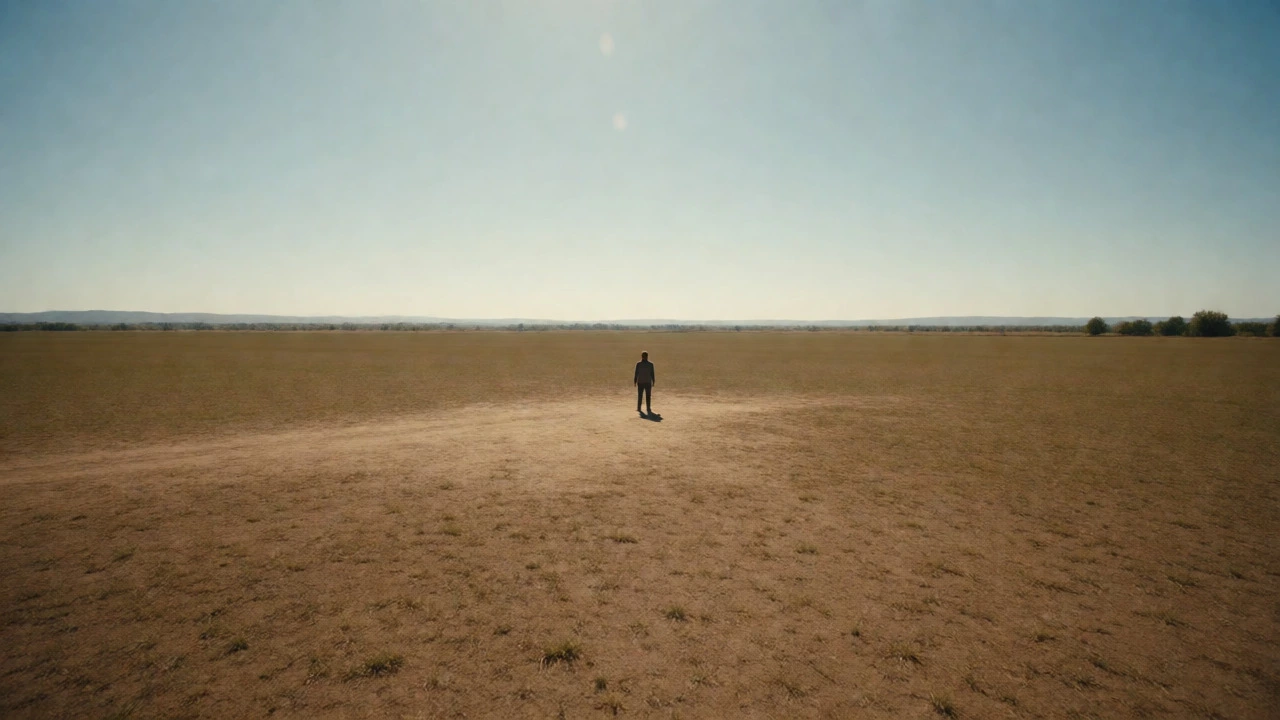
You are standing on a patch of dirt. The real estate listing says it is 200 acres. You nod, but your brain hits a wall. What does that actually look like? Can you walk across it before lunch? Is it big enough for a vineyard, or just a really large backyard?
This confusion is normal. Acres are abstract units from the imperial system, and unless you grew up on a farm or work in surveying, they don’t translate easily to mental images. But when you are buying land, knowing the scale matters. It affects everything from fencing costs to how long it takes to drive from your house to the barn.
The Quick Math: Converting Acres to Square Miles
Let’s strip away the mystery with basic math. One acre is defined as exactly 43,560 square feet. That number comes from old agricultural measurements-a chain (66 feet) by a furlong (660 feet). To get to miles, we need to know that one square mile contains 640 acres.
So, if you divide 200 by 640, you get approximately 0.3125 square miles. If you prefer metric, which many Australian buyers do, 200 acres equals roughly 80.9 hectares.
| Unit | Value | Context |
|---|---|---|
| Square Miles | 0.3125 | About 1/3 of a square mile |
| Hectares | 80.94 | Standard metric land unit |
| Square Kilometers | 0.809 | Less than 1 km² |
| Square Feet | 8,712,000 | Total surface area |
Visualizing the Shape: It’s Not Just About Area
Here is where people get tripped up. "Distance" implies length, but acres measure area. A 200-acre plot can be a perfect square, a long thin strip, or an irregular shape following a creek. The perimeter changes drastically depending on the shape, even if the area stays at 200 acres.
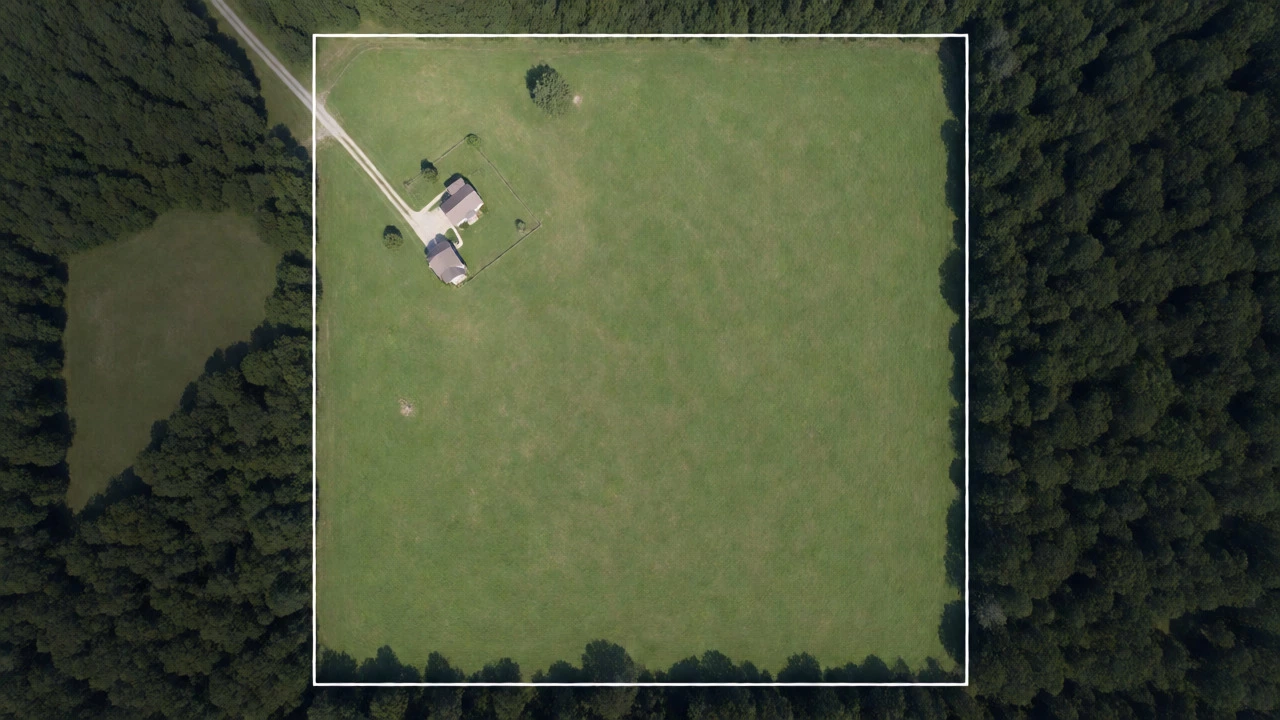
Imagine a perfect square. To find the side length, take the square root of the total square feet. The square root of 8,712,000 is about 2,951 feet. Since there are 5,280 feet in a mile, each side of this hypothetical square would be roughly 0.56 miles long.
Walking that perimeter would cover about 2.2 miles. At a brisk walking pace of 3 mph, that is nearly 45 minutes just to circle your property. Now imagine if the land was narrow-say, 100 feet wide. It would stretch over 16 miles long! Most rural plots aren’t that extreme, but they often follow natural boundaries like rivers or roads, making them wider in some spots and narrower in others.
Real-World Comparisons: What Does 200 Acres Look Like?
Numbers on a page don’t help much when you are standing in a field. Let’s use objects you know.
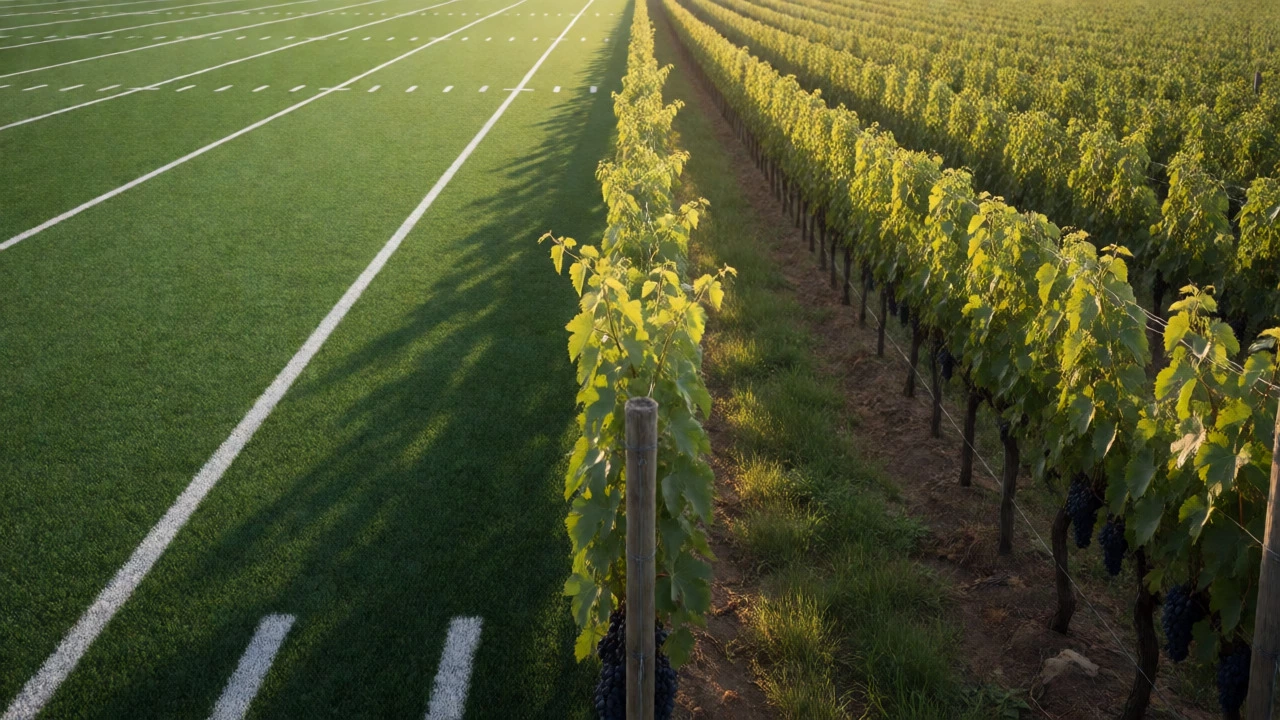
- Football Fields: An American football field (including end zones) is about 1.32 acres. So, 200 acres fits roughly 151 football fields. Picture 151 green rectangles laid out side-by-side.
- Central Park: New York’s Central Park is 843 acres. Your 200-acre plot is about one-quarter the size of Central Park. Imagine cutting Central Park into four pieces and taking one chunk.
- Walt Disney World: The Magic Kingdom park alone is around 107 acres. Two Magic Kingdoms could fit comfortably within your 200 acres, with room left over for parking lots.
- Australia Reference: For our local context, 200 acres is slightly smaller than the typical suburban block count needed to fill a standard city grid section in Sydney’s inner west, but vastly larger than any residential lot. In rural NSW, this is considered a small-to-medium holding, suitable for hobby farming or extensive grazing.
Practical Implications for Buyers
Why does this distance matter? Because maintenance scales with perimeter and access.
Fencing Costs
If you buy a square 200-acre block, you have 2.2 miles of fence line. High-tensile wire fencing might cost $2-$4 per foot installed. Multiply 11,800 feet (the perimeter) by $3, and you are looking at ~$35,000 just to keep livestock in. If the shape is irregular, add more. Always ask for a survey before assuming the fence line matches the deed description.
Access and Travel Time
On a 200-acre property, driving from the gate to the far corner isn’t instant. On rough bush tracks, you might average 15-20 mph. Crossing the diagonal of a square 200-acre plot (about 0.79 miles) takes 2-3 minutes. That sounds short, but if you are checking fences daily, those minutes add up. Consider where you place your dwelling. Building in the center minimizes travel time to all edges. Building on the edge saves money on utilities but increases commute time across your own land.
Utility Installation
Running power lines across 0.5 miles is expensive. Utility companies often charge per pole or per meter. Extending mains water to a well site 1,000 feet away adds significant plumbing labor costs. When viewing land, check where the nearest connection point is relative to your intended building site, not just the property boundary.
Is 200 Acres Enough for Your Goals?
It depends entirely on what you plan to do. Here is a quick guide based on common uses:
- Hobby Farming: Yes. You can keep horses, raise chickens, grow vegetables, and still have space for privacy. It’s manageable without heavy machinery.
- Cattle Grazing: Depends on rainfall. In dry areas, you might need 5-10 acres per cow-calf pair. 200 acres supports 20-40 head. In lush pastures, maybe 50+. Check local carrying capacity rates.
- Vineyards: Standard spacing allows for about 1,000 vines per acre. With 200 acres, you could plant a commercial-scale vineyard, though most startups begin with 5-10 acres to test soil and climate first.
- Subdivision: Zoning laws vary wildly. In many rural zones, minimum lot sizes are 40 acres or more. You might be able to split 200 acres into 4-5 lots, creating value through subdivision.
Pitfalls to Avoid When Measuring Land
Don’t rely on visual estimation during open house tours. Trees obscure boundaries. Hills distort perception. A steep slope makes flat ground look smaller than it is because the horizontal projection differs from the actual surface area.
Also, beware of "gross acres" vs. "net acres." Gross includes wetlands, rocky outcrops, and road rights-of-way. Net is usable tillable or buildable land. A 200-acre listing might only offer 150 acres of usable dirt if half is swampy bottomland. Ask for a topographic map and a geotechnical report if you plan to build.
Finally, check easements. Even if you own 200 acres, utility companies or neighbors may have legal rights to cross parts of it. This reduces your effective exclusive use area. Walk the boundaries with a GPS app or hire a licensed surveyor to mark corners before signing contracts.
Tools to Help You Visualize
You don’t need a PhD in geometry to see the layout. Use free online tools like Google Earth Pro. Draw a polygon approximating the parcel shape. The tool calculates area instantly. Compare it to nearby landmarks-a school, a shopping center, a known farm-to gauge scale.
For serious buyers, apps like OnX Hunt or Gaia GPS let you overlay public land maps and private parcel data. You can drop pins, measure distances between points, and calculate perimeter lengths directly on your phone while standing on the land.
How many football fields fit in 200 acres?
Approximately 151 American football fields (including end zones) fit into 200 acres. Each field covers about 1.32 acres. This comparison helps visualize the vastness compared to familiar sports venues.
Can I walk across 200 acres in an hour?
If the land is a perfect square, walking diagonally across it takes about 20-25 minutes at a moderate pace. Walking the entire perimeter takes roughly 45 minutes. However, terrain matters; steep hills or dense brush will slow you down significantly.
Is 200 acres considered a large property?
In suburban contexts, yes, it is enormous. In rural agricultural areas, it is considered a small-to-medium holding. For example, many cattle ranches span thousands of acres, while hobby farms range from 5 to 50 acres. Context depends on local zoning and land use norms.
What is the perimeter of a square 200-acre plot?
A square 200-acre plot has sides measuring approximately 2,951 feet (0.56 miles). The total perimeter is therefore about 11,804 feet, or roughly 2.24 miles. Irregular shapes will have longer perimeters for the same area.
How much does it cost to fence 200 acres?
Costs vary by region and material. Assuming a square shape (2.24 miles perimeter) and high-tensile wire fencing at $3 per foot installed, expect to pay around $35,000. Wooden post-and-rail fencing can cost 3-5 times more. Always budget for gates and repairs.