
Acres to Football Fields Calculator
Visualize 100 Acres
Learn how 100 acres compares to familiar football fields. This tool helps you understand the scale of land you're considering for purchase.
Enter the number of acres to see how many football fields it equals.
Visual representation of 100 acres:
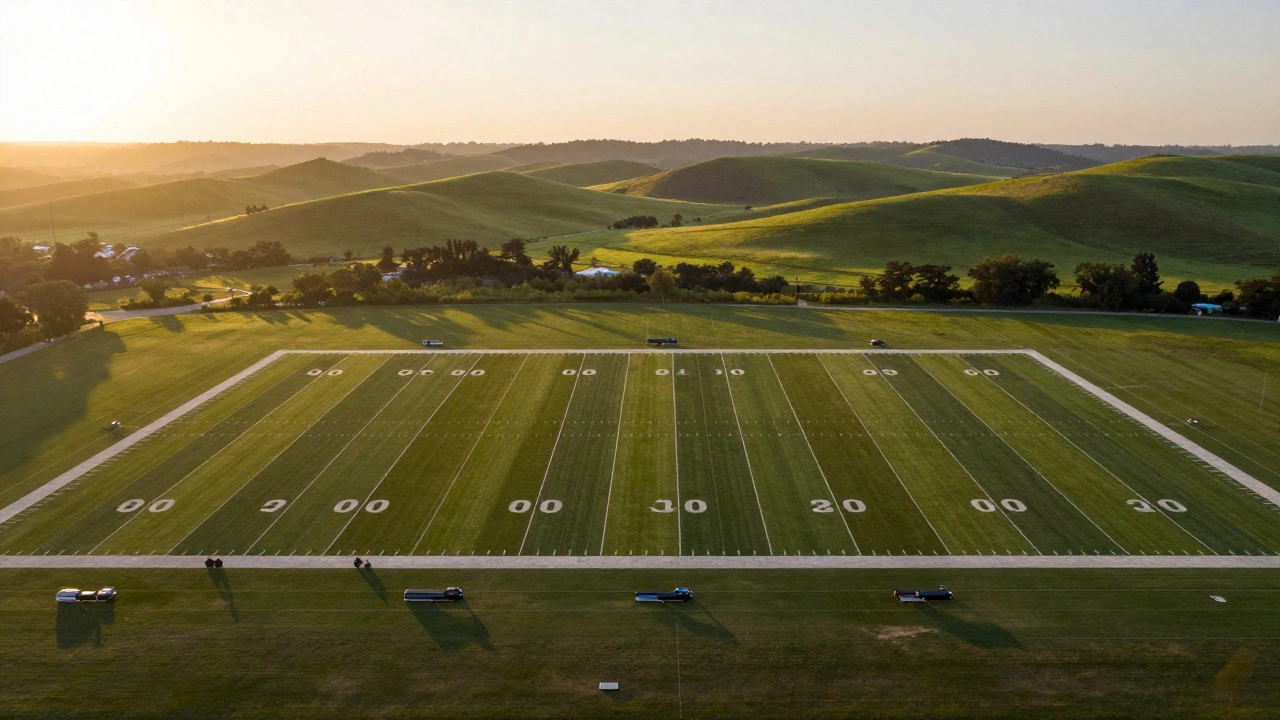
When you're looking at land for sale, numbers like 100 acres can feel abstract. Is that a small patch? A massive estate? A farm that could feed a town? The best way to understand it is to picture something you already know - like a football field.
One acre equals about 1.32 football fields
A standard American football field, including the end zones, is 120 yards long and 53.3 yards wide. That’s 57,600 square feet. One acre is 43,560 square feet. So if you divide 57,600 by 43,560, you get roughly 1.32. That means one acre is just over 1.3 football fields side by side.
Now, multiply that by 100. One hundred acres equals about 132 American football fields. That’s not just a few fields lined up - that’s a grid stretching longer than a small town.
Visualizing 100 acres on the ground
Imagine standing at one end of a football field. Now walk 132 of those fields in a straight line. That’s how long 100 acres would be if arranged in a single row. But land isn’t usually shaped like that. More often, it’s a rectangle or square.
If you turned those 132 football fields into one big square, each side would be about 2,087 feet long. That’s over 200 meters - roughly the length of two and a half Olympic swimming pools laid end to end. Walk that distance in one direction, turn 90 degrees, and walk it again. You’ve covered 100 acres.
Or think of it this way: a typical suburban block might be 0.25 acres. So 100 acres is the same as 400 of those blocks. That’s enough space for a small village - with homes, roads, parks, and even a local school.
How does 100 acres compare to other common land sizes?
People often compare land to parks or sports venues. Here’s how 100 acres stacks up:
- Central Park, New York: 843 acres - so 100 acres is just about 1/8th of that.
- Wembley Stadium (UK): The entire site is about 42 acres. You could fit over two Wembley stadiums on 100 acres with room to spare.
- A typical golf course: Most 18-hole courses are 150 to 200 acres. So 100 acres is a decent-sized course - enough for 12-14 holes.
- A small farm: In the U.S., a small family farm is often 50 to 100 acres. So 100 acres is the upper end of what’s considered manageable for a single operator.
On the flip side, 100 acres is tiny compared to large-scale operations. A commercial timber operation in Australia or Canada might own tens of thousands of acres. But for a private buyer, 100 acres is substantial.
What can you actually do with 100 acres?
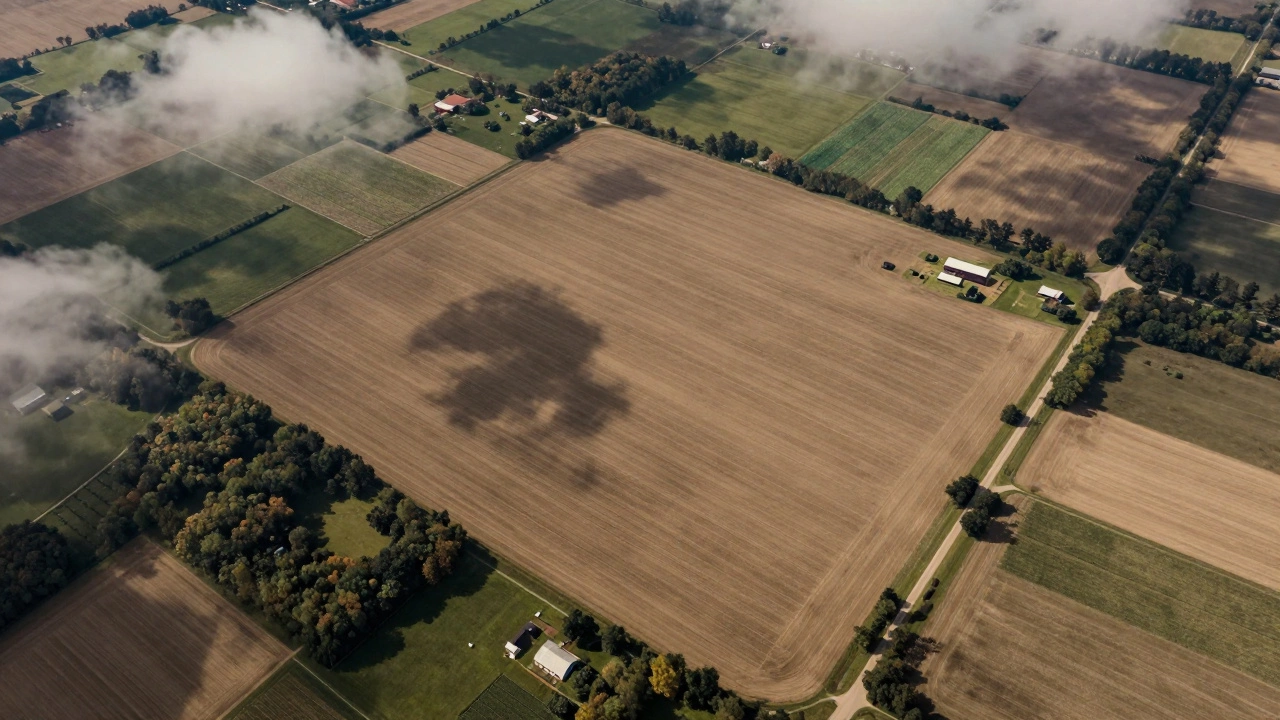
It’s not just a number - it’s potential. Here’s what 100 acres can support:
- A private homestead: Build a house, barn, workshop, and still have 80+ acres left for gardens, livestock, or walking trails.
- Small-scale farming: Grow vegetables, raise sheep or cattle, plant orchards. Many organic farms thrive on 50-100 acres.
- Wildlife sanctuary: In Australia, 100 acres of bushland can support kangaroos, wallabies, and native birds - especially if you restore native vegetation.
- Recreational land: Create a private hunting reserve, horse riding track, or off-road trail system.
- Solar or wind energy: A 100-acre plot can host a small-scale renewable energy project. One acre of solar panels can power 150-200 homes. So 100 acres could power 15,000-20,000 homes.
Some buyers think 100 acres is too big to manage. But with modern tools - GPS-guided tractors, automated fencing, drip irrigation - even a single person can maintain 50-100 acres efficiently. The key isn’t size, it’s planning.
Why does this matter when buying land?
When you see a listing that says “100 acres,” you’re not just buying land - you’re buying options. A 10-acre block might be perfect for a house and garden. But 100 acres gives you flexibility:
- You can keep part for yourself and sell off smaller lots later.
- You can lease part for grazing or timber without selling the whole property.
- You can wait for zoning changes - maybe the area becomes suitable for a boutique vineyard or eco-lodge.
Land value isn’t just about what’s there now. It’s about what it could become. A 100-acre parcel in a growing region might be worth $500,000 today. In 10 years, if infrastructure moves in, it could be worth $2 million - especially if it’s near a highway or water source.
That’s why smart buyers don’t just look at the price per acre. They look at the shape, the soil, the water access, the zoning, and the view. A 100-acre block with a spring and flat ground is worth more than one with steep hills and no water - even if they’re the same size.
What about Australian football fields?
Some people think of Australian Rules football, not American football. That’s fair - especially if you’re buying land in Australia.
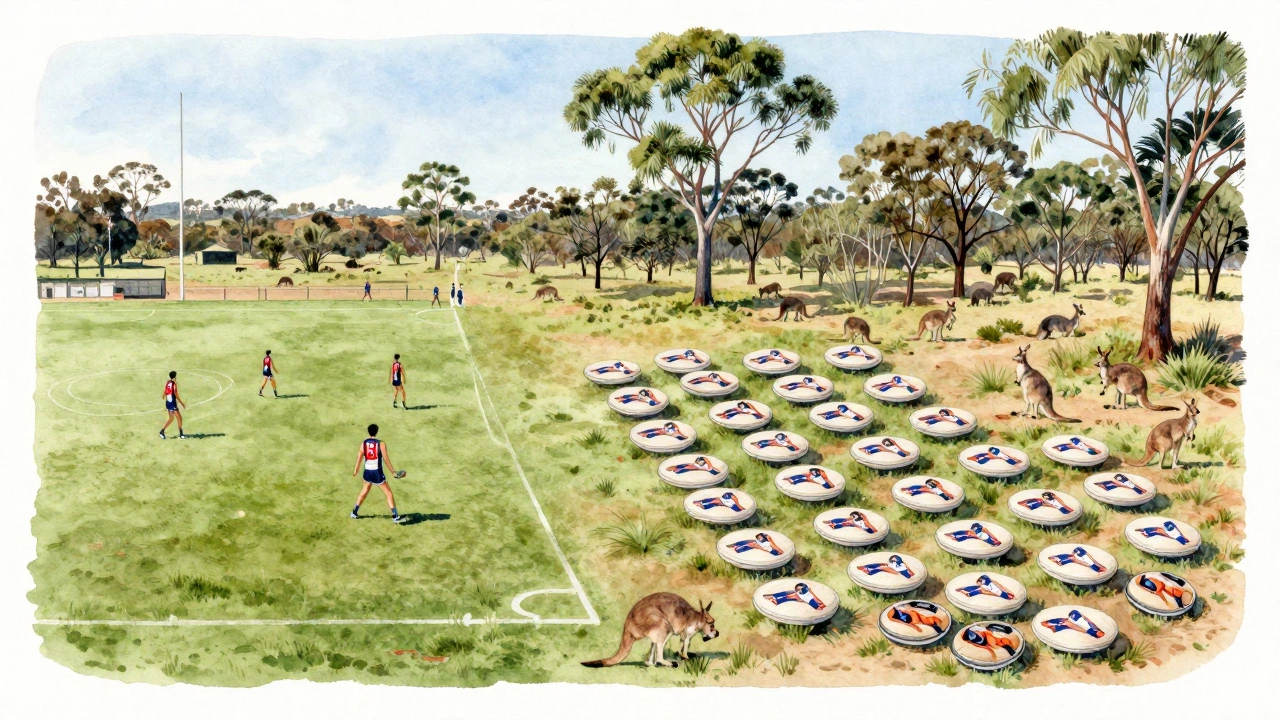
An Aussie Rules field is bigger. It’s oval-shaped, and the playing surface is between 135 and 185 meters long and 110 to 155 meters wide. That’s roughly 15,000 to 20,000 square meters - or 3.7 to 4.9 acres per field.
So if you’re using an Australian Rules field as your reference, 100 acres equals about 20 to 27 fields. That’s still a lot - but fewer than the American version.
Either way, whether you’re picturing a gridiron or an oval, 100 acres is big. It’s not something you can walk across in under an hour. It’s land that demands respect - and offers real opportunity.
Final thought: It’s not about the number - it’s about the use
Size matters, but only in context. A 100-acre plot in the middle of a desert might be cheap and useless. The same size in a region with good soil, water, and road access could be priceless.
Don’t just ask, “How big is 100 acres?” Ask, “What can I do with it?” That’s the real question when you’re buying land.
How many football fields fit in 100 acres?
About 132 American football fields (including end zones) fit into 100 acres. If you're using Australian Rules football fields, it’s closer to 20-27 fields, since those are much larger.
Is 100 acres enough for a farm?
Yes, 100 acres is a solid size for a small to medium farm. You can raise livestock, grow crops, plant orchards, or run a dairy. Many successful organic farms in Australia and the U.S. operate on 50-100 acres. The key is good soil, water access, and efficient management.
Can you build a house on 100 acres?
Absolutely. Many people buy 100 acres specifically to build a private home with plenty of space around it. You can have a main house, guest cabins, a workshop, a garden, and still have 80+ acres of untouched land for wildlife, trails, or future projects.
How much does 100 acres of land cost?
Price varies wildly. In remote areas of Australia or the U.S. Midwest, you might pay $1,000-$3,000 per acre. In suburban or high-demand zones, it can be $20,000-$100,000 per acre. So 100 acres could cost anywhere from $100,000 to over $10 million. Location, access, water, and zoning matter more than size.
Is 100 acres too much land to manage?
Not if you plan well. Modern tools like GPS tractors, solar-powered fencing, automated irrigation, and drones make managing large parcels easier than ever. Many owners hire help for seasonal tasks like harvesting or grazing. You don’t need to do everything yourself - just design the system right.