
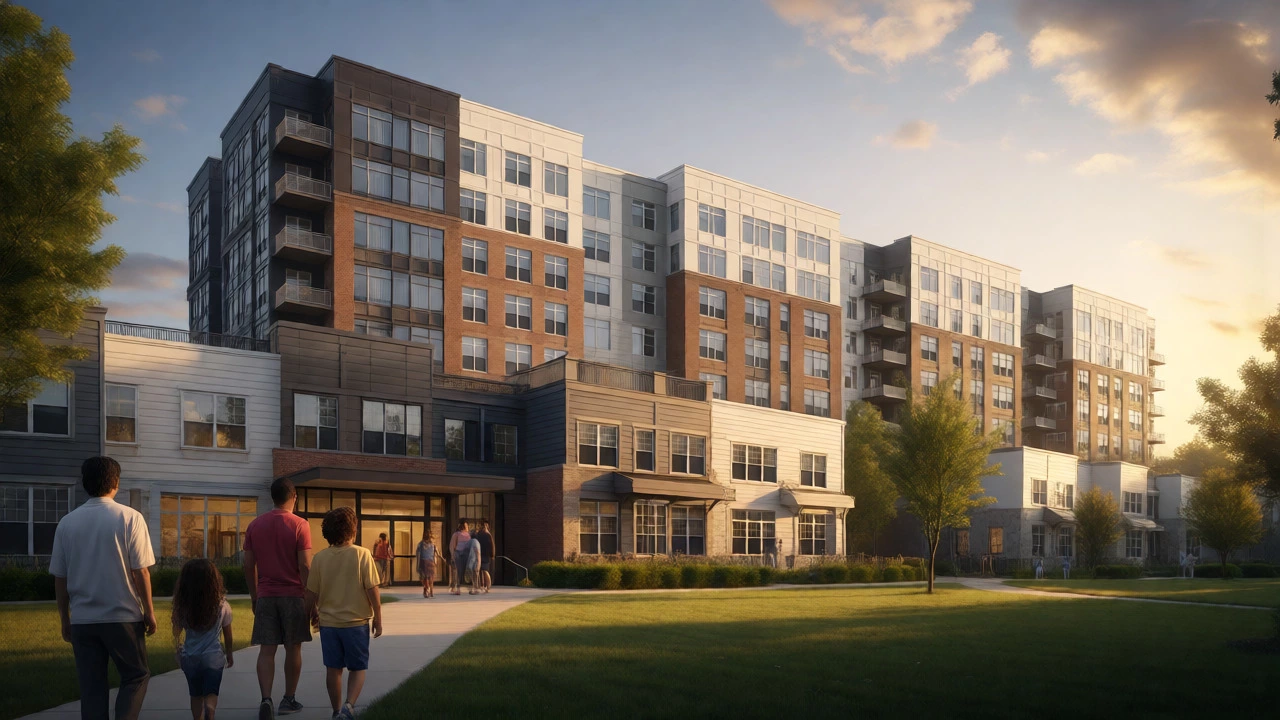
Fairfax County Affordable Housing Eligibility Checker
Enter your annual household income and number of household members to see if you qualify for specific tiers of the Fairfax County Affordable Housing Ordinance.
Please enter your details and click "Check Eligibility" to see which housing tiers you may qualify for.
About These Limits
Estimates are based on 2026 Area Median Income (AMI) data for Northern Virginia. Moderate Income (80% AMI) is the most common tier for inclusionary zoning units. Low Income (50% AMI) and Very Low Income (30% AMI) often involve deeper subsidies or specific program requirements. Actual limits vary by project and year. Always verify with the Fairfax County Department of Housing and Community Development.
You are looking at a new development in Fairfax County. The price tag makes your eyes water. You wonder if there is any way to buy into this neighborhood without taking out a second mortgage. This is where the Fairfax County Affordable Housing Ordinance comes into play. It is not just bureaucratic red tape. It is a specific set of rules designed to force developers to build homes that regular people can actually afford.
But what does it actually mean for you? Whether you are a homebuyer trying to snag a deal or a developer planning your next project, understanding these rules is critical. The landscape changed significantly with the updates enacted in 2025 and solidified in 2026. Let’s break down exactly how this works, who qualifies, and what you need to know before signing on the dotted line.
Key Takeaways
- Mandatory Inclusion: Most residential projects with 20 or more units must include affordable units.
- Income Limits: Eligibility is tied to Area Median Income (AMI), typically targeting households earning 80% or less.
- Long-Term Commitment: Affordable units often have deed restrictions lasting 30 years or more.
- Location Matters: Requirements vary by zone, with higher demands near transit stations like Metro stops.
- Exemptions Exist: Small developments and certain senior-only projects may be exempt from full compliance.
The Core Mechanism: How the Ordinance Works
At its heart, the Inclusionary Zoning is a land-use regulation that requires private developers to provide a certain percentage of affordable housing units in new market-rate developments. Think of it as a trade-off. Developers get the right to build denser, taller buildings in exchange for building some homes at below-market prices.
In Fairfax County, this isn't optional for most large projects. If you are building a condo complex or an apartment block with 20 or more units, you generally have to comply. The goal is simple: prevent the county from becoming exclusively a playground for the wealthy. Without this ordinance, neighborhoods near Tysons Corner or Reston might lose their socioeconomic diversity entirely.
The ordinance applies differently depending on the type of housing. For rental properties, the requirement is usually a percentage of total units offered at restricted rents. For for-sale homes, such as townhouses or condos, the requirement is a percentage of units sold at restricted prices. This distinction matters because buying an affordable unit comes with strict resale rules that limit your profit later.
Who Qualifies for an Affordable Unit?
Just wanting a cheaper house doesn’t make you eligible. The Fairfax County Department of Housing and Community Development sets strict income limits based on household size. These limits are tied to the Area Median Income (AMI), which is a statistical measure used by the U.S. Department of Housing and Urban Development to determine eligibility for various programs.
Most affordable units under this ordinance target households earning up to 80% of the AMI. Some deeper subsidy units go down to 50% or even 30%. Here is a rough idea of the income ceilings for a four-person household in Northern Virginia as of 2026:
| Program Tier | % of Area Median Income (AMI) | Approximate Annual Income Limit |
|---|---|---|
| Very Low Income | 30% | $48,000 |
| Low Income | 50% | $80,000 |
| Moderate Income | 80% | $128,000 |
Notice the gap between "Moderate" and actual market salaries in Fairfax. Many professionals earn above $128,000 but still struggle with housing costs. This creates a "missing middle" problem. While the ordinance helps those below the limit, it doesn’t always help the teacher or nurse who earns slightly too much to qualify but not enough to buy a standard home easily.

Density Bonuses: The Developer's Incentive
Why would a developer agree to sell units at a loss? They get something called a density bonus. Normally, zoning laws limit how many units you can build on a specific plot of land. If a developer agrees to include affordable units, Fairfax County allows them to build more units than the base zoning permits.
For example, a site might normally allow 100 apartments. If the developer includes 15% affordable units, they might be allowed to build 120 apartments. Those extra 20 units generate additional revenue that offsets the cost of the discounted affordable ones. It is a math game. If the numbers don't work, the developer might choose to pay a fee instead of building the units, though Fairfax prefers built units over cash payments.
Transit-Oriented Areas: Stricter Rules Near Metro
Fairfax County has a specific focus on Transit-Oriented Development which prioritizes high-density housing within walking distance of public transportation hubs. If you are building near a Metro station-like in Vienna, Herndon, or Reston-the requirements change. The county wants to reduce car dependency. Therefore, projects in these zones often face higher affordability mandates or stricter design standards.
In these areas, the demand for workforce housing is highest. Commuters want to live close to the train. Consequently, the competition for these affordable units is fierce. Waitlists for units near the Silver Line or Orange Line stations can stretch for months. If you are eyeing one of these spots, start checking listings early. Do not wait until the building is finished.
The Resale Restriction: What Happens When You Sell?
This is the part that surprises most buyers. Buying an affordable unit is not like buying a regular condo. You cannot simply sell it to whoever offers the most money. The deed restriction travels with the property. When you decide to move, you must sell the unit to another household that meets the same income qualifications.
Furthermore, there is a formula for the sale price. It is not free market appreciation. Typically, the price increases based on inflation or a fixed annual percentage, capped at a certain level. This protects the buyer from speculation but also limits your wealth-building potential compared to a standard investment property. You are buying a home for stability, not necessarily for maximum capital gains.
How to Find and Apply for These Units
Finding these homes requires a bit of detective work. They are rarely advertised with big flashy signs saying "Affordable." Instead, look for keywords like "workforce housing," "inclusionary units," or "restricted deed." The Fairfax County Housing Connect portal is the primary database for available units.
Here is the typical process:
- Monitor Listings: Check the county website weekly. New units open when leases begin or sales launch.
- Pre-Approval: Get pre-approved by a lender familiar with affordable housing programs. Not all banks understand the deed restrictions.
- Submit Application: Provide proof of income, tax returns, and asset statements. Be thorough. One missing document can delay your application by weeks.
- Lottery or First-Come: Depending on the project, selection might be random via lottery or first-come-first-served. High-demand areas often use lotteries.
- Certification: Once selected, you undergo a final certification to ensure you still meet income guidelines.
Pitfalls to Avoid
Don't assume every "affordable" label means the same thing. Some private developers create their own "affordable" tiers that aren't regulated by the county ordinance. Always verify if the unit is subject to the official deed restriction. If it isn't, you might be paying a premium for a marketing term rather than genuine long-term value.
Also, watch out for hidden fees. Homeowners associations (HOAs) in these complexes can sometimes charge higher dues to subsidize amenities. Calculate your total monthly payment, including HOA fees, taxes, and insurance, before deciding if you truly save money.
Conclusion: Is It Worth It?
The Fairfax County Affordable Housing Ordinance is a powerful tool for homeownership. It opens doors in neighborhoods that would otherwise be locked tight. However, it requires flexibility. You accept restrictions on resale and income verification in exchange for a lower entry price. For many families, this trade-off is worth every penny of lost future equity growth because it provides immediate stability.
If you fit the income criteria, do not ignore these options. The inventory is limited, but the quality of life benefits are real. Start your search today, get your paperwork ready, and keep an eye on the Transit-Oriented Zones where new supply is emerging.
Can I rent out my affordable unit if I move away?
Generally, no. Most deed restrictions require the owner to occupy the unit as their primary residence. Renting it out usually violates the terms of the agreement unless you receive special permission from the county, which is rare.
What happens if my income increases after I buy?
You can keep your home. The income qualification is checked at the time of purchase. If your salary grows later, you do not have to move or pay back subsidies. However, if you sell and buy another affordable unit, you will be re-evaluated based on your new income.
Are there age restrictions for these homes?
The standard ordinance does not impose age limits. However, some specific developments may be designated for seniors (62+). Always check the specific project details, as mixed-income communities usually welcome all ages.
Do I need a special loan to buy an affordable unit?
Not necessarily, but you need a lender who understands deed restrictions. Conventional loans often work fine. Some programs offer down-payment assistance specifically for these units, so ask your loan officer about local Fairfax County grants.
How long do the deed restrictions last?
Typically, restrictions last for 30 years. After that period, the unit may revert to market rate, meaning you could sell it freely. Some newer agreements extend this to 99 years, so read your contract carefully.