
Maryland Eviction Notice Period Calculator
How Notice Periods Work in Maryland
The notice period depends on both the reason for eviction and the type of tenancy. Maryland law requires specific notice periods that must be followed exactly.
Important: Failure to follow the correct notice period can invalidate your entire eviction case. Always use written notices delivered properly.
Required Notice Period
Based on Maryland law, the following notice period is required:
How to Deliver the Notice
The notice must be delivered in person, by certified mail, or posted on the door with a copy mailed. Failure to follow proper delivery methods invalidates the notice.
Pro Tip: Always keep a copy of the delivered notice with the date and method of delivery for your records.
Landlords in Maryland can evict tenants right now-but only if they follow the law exactly. There’s no statewide eviction moratorium as of December 2025, and courts are processing cases normally. But that doesn’t mean any notice or action is legal. Many landlords think they can just tell a tenant to leave. They can’t. And many tenants think they’re protected no matter what. They’re not. The truth is in the details.
When Can a Landlord Legally Evict in Maryland?
A landlord in Maryland can start an eviction only for specific reasons listed in state law. These are:
- Nonpayment of rent (even one day late)
- Violation of lease terms (like unauthorized pets, noise, or subletting)
- Expiration of the lease with no renewal
- Illegal activity on the property
- Landlord wants to move in or sell the property (with proper notice)
You can’t evict someone because you don’t like them. You can’t evict because they asked for repairs. You can’t evict without paperwork. The law doesn’t allow emotional decisions-it requires proof and procedure.
The Step-by-Step Eviction Process in Maryland
There are no shortcuts. Even if a tenant hasn’t paid rent for six months, you still have to follow these steps:
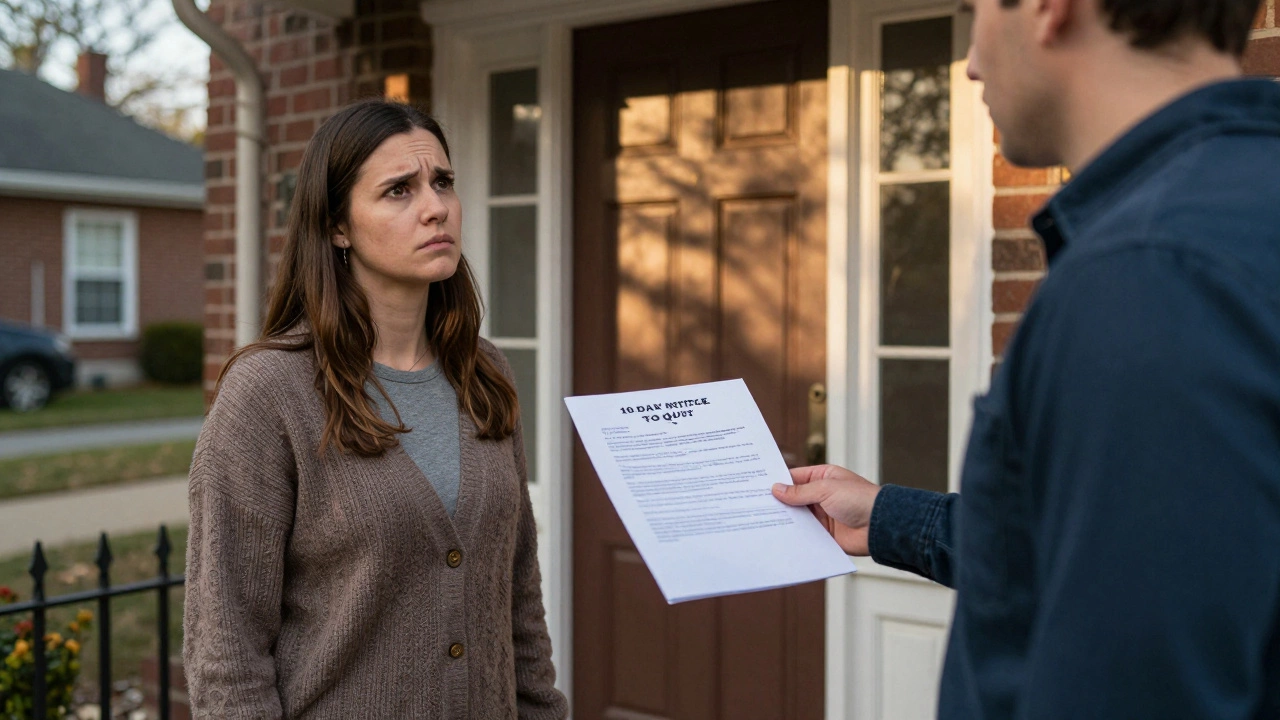
- Give written notice. For nonpayment, you must give a 10-day Notice to Quit. For lease violations, it’s a 30-day Notice to Quit. For month-to-month tenancies without cause, it’s a 30-day Notice to Terminate. The notice must be delivered in person, by certified mail, or posted on the door with a copy mailed.
- File a complaint in District Court. After the notice period ends, you file a Complaint for Possession in the District Court where the property is located. You’ll pay a filing fee (around $60).
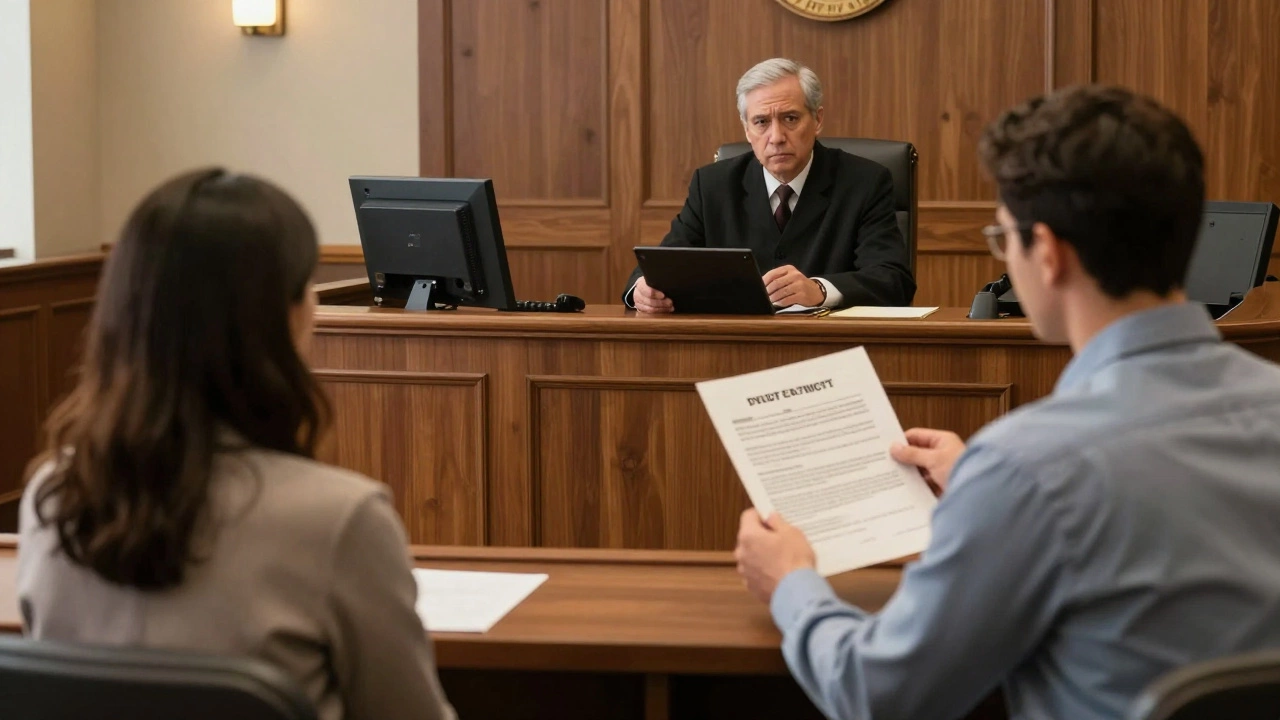
- Attend the court hearing. Both you and the tenant get a date, usually within 10-20 days. You must bring your lease, payment records, notices, and any photos or witness statements. The tenant can present defenses like proof of payment or retaliation claims.
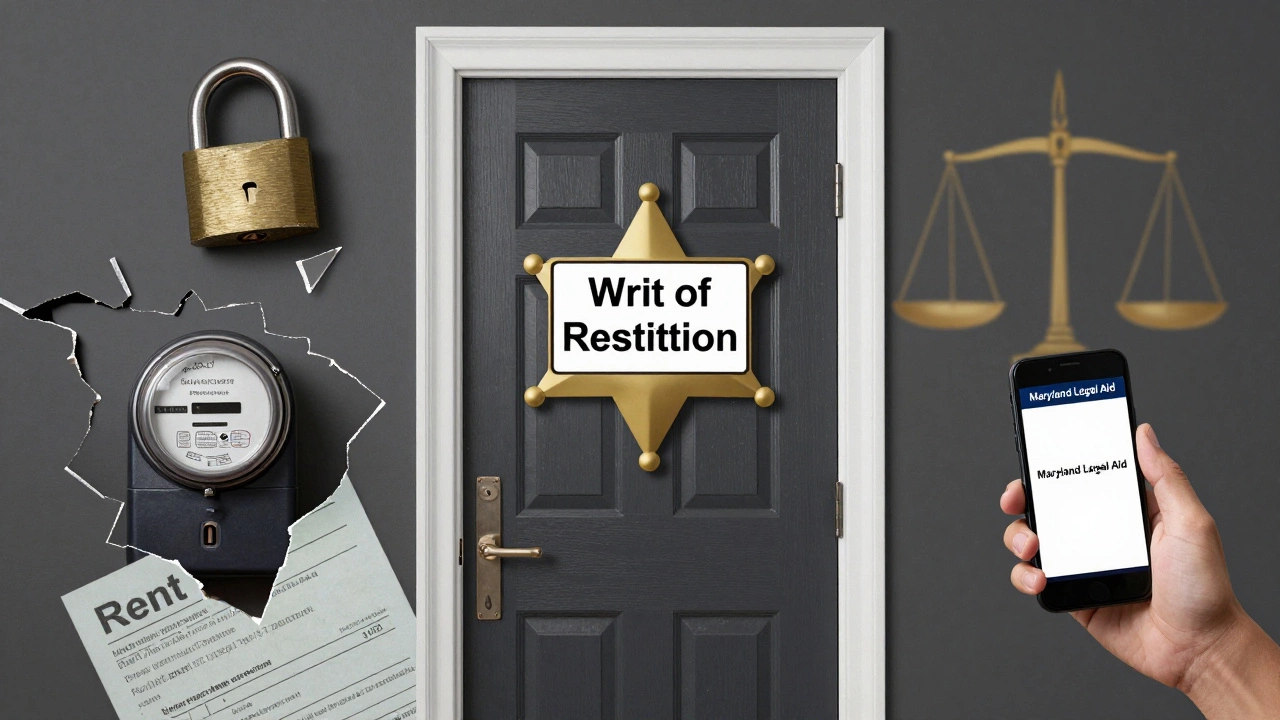
- Wait for the judgment. If you win, the court gives you a Writ of Restitution. This doesn’t mean you can change the locks. You must wait for the sheriff to enforce it.
- Let the sheriff handle removal. Only the sheriff can physically remove a tenant. Landlords who try to lock out tenants, turn off utilities, or remove belongings can be sued for illegal eviction-and fined up to $5,000.
Skipping any step invalidates the entire case. Courts see this often. A landlord files for eviction after a 3-day notice. The tenant shows up with proof they paid two weeks ago. The case gets dismissed. The landlord loses time, money, and the right to try again for 60 days.
What Tenants Can Do to Fight Eviction
Tenants in Maryland have legal tools to delay or stop evictions-even if they owe rent.
- Pay the rent before the court date. If they pay all back rent, late fees, and court costs before the hearing, the case must be dismissed. This is called cure of default.
- Request a payment plan. Judges can order a payment schedule over 3-6 months. If the tenant sticks to it, they can stay.
- Claim retaliation. If a tenant complained about mold, broken heat, or unsafe wiring and then got an eviction notice, they can argue the landlord is punishing them. The burden shifts to the landlord to prove the eviction isn’t retaliatory.
- Ask for legal help. Maryland Legal Aid and the Maryland Tenant’s Rights Hotline (1-800-492-2114) offer free help. Many tenants don’t know this exists.
In 2024, over 38% of eviction cases in Baltimore were dismissed or settled because tenants showed up with documentation or legal support. That’s not luck-it’s the law working.
What Landlords Should Never Do
Even frustrated landlords sometimes cross the line. Here’s what’s illegal:
- Changing locks without a court order
- Turning off heat, water, or electricity
- Removing the tenant’s belongings
- Harassing the tenant with repeated visits or threats
- Accepting partial rent and then trying to evict anyway
These are called “self-help evictions.” They’re not just unethical-they’re criminal. In 2023, a landlord in Prince George’s County was fined $7,500 and ordered to pay $12,000 in damages after shutting off power to force out a tenant. The tenant sued, won, and stayed in the unit.
Special Protections for Certain Tenants
Some tenants have extra layers of protection:
- Section 8 voucher holders. Landlords must follow HUD rules and can’t evict without cause tied to the voucher program.
- Senior citizens or disabled tenants. Courts may grant longer timelines or require mediation.
- Victims of domestic violence. Under Maryland law, a tenant can terminate their lease early without penalty if they provide documentation. Landlords can’t evict them for it.
- COVID-19 hardship cases. While the federal emergency ended, some local programs still offer rental assistance. Tenants can use this to delay eviction.
If you’re a landlord, don’t assume someone doesn’t qualify. Ask. Document. Don’t guess.
How to Avoid Eviction Altogether
The best eviction is the one that never happens.
- Use clear, written leases with rent due dates and late fee policies.
- Keep detailed records of payments, notices, and communications.
- Respond quickly to repair requests-delayed fixes lead to rent strikes.
- Offer payment plans early, before the 10-day notice.
- Know your local housing authority’s rental assistance programs. Many have funds for landlords who work with tenants.
In Montgomery County, a pilot program gave landlords $3,000 to cover arrears if they agreed to a repayment plan. Over 80% of tenants stayed housed. It cost less than one court filing.
Where to Get Help
For landlords:
- Maryland Landlord-Tenant Law Handbook (free PDF from Maryland Courts)
- Maryland Attorney General’s Office - Landlord Resources
- Local Housing Authorities - Check for rental assistance grants
For tenants:
- Maryland Tenant’s Rights Hotline - 1-800-492-2114
- Maryland Legal Aid - Free legal advice
- 211 Maryland - Connects to emergency housing aid
Both sides can get help. The system is designed to give you time to fix things-before it goes to court.
What’s Changing in 2026?
Legislators in Annapolis are considering a bill that would extend the notice period for nonpayment from 10 days to 15 days. It’s not law yet, but if it passes, landlords will need to update their forms. Also, courts are rolling out a new online portal for filing eviction cases-so expect faster processing but stricter document requirements.
Don’t wait for the law to change. Right now, the rules are clear. Follow them. Or pay the price.
Can a landlord evict someone without a lease in Maryland?
Yes. Even without a written lease, a tenant is protected under Maryland’s oral tenancy laws. If there’s no lease, it’s considered a month-to-month tenancy. The landlord must give a 30-day Notice to Terminate before filing for eviction. The process is the same as with a written lease.
How long does an eviction take in Maryland?
Typically 30 to 60 days from the first notice to the sheriff’s removal. The timeline depends on court schedules, whether the tenant responds, and if they request a payment plan. In busy counties like Baltimore or Prince George’s, delays are common. In rural areas, it can be faster.
Can I evict a tenant for having a pet if my lease says no pets?
Yes, but you must give a 30-day Notice to Quit for lease violation. You can’t just demand they get rid of the pet-you have to start the formal eviction process. If the tenant removes the pet within 30 days, you must drop the case. If they don’t, you can proceed to court.
What happens if I win the eviction case but the tenant still won’t leave?
You must request a Writ of Restitution from the court. Then, you take it to the sheriff’s office. The sheriff will post a notice and remove the tenant and their belongings after 5 days. You cannot do this yourself. If you try, you risk being sued for trespassing or illegal eviction.
Can I raise rent and then evict if they refuse to pay the new amount?
No. You can raise rent with proper notice (30 days for month-to-month, or as stated in the lease), but if the tenant pays the original amount, you cannot evict them for refusing the increase. You must wait until the lease expires or give them notice to vacate without cause-then proceed with a 30-day termination notice.
Final Advice
If you’re a landlord, treat the eviction process like a legal contract-not a power move. Every step is documented for a reason. If you’re a tenant, don’t ignore a notice. Even if you think you have no defense, show up to court. You might be surprised what help is available.
The system isn’t perfect. But it’s designed to prevent chaos. Follow the rules. Document everything. And remember: the cheapest eviction is the one you never start.