
Homesteading Cost Estimator
Estimate Your Homesteading Startup Costs
Based on data from the article "Can I Still Homestead in the US? Here's What Actually Works Today"
Total Estimated Cost
Cost Breakdown
Tips for your homesteading journey
Remember: Homesteading isn't about complete self-sufficiency but reducing dependence on external systems. Consider starting small and expanding over time.
Many successful homesteaders combine land work with remote jobs or small businesses to manage costs.
People still ask if you can homestead in the US like they did in the 1800s-claim a patch of land, build a cabin, grow your own food, and live off the grid. The old Homestead Act is long gone, repealed in 1976. But that doesn’t mean homesteading is dead. It just changed shape. Today, you don’t get free land from the federal government, but you can still find places where land is cheap, rules are loose, and self-reliance isn’t just a dream-it’s a daily reality.
There’s no free land anymore, but some towns give it away
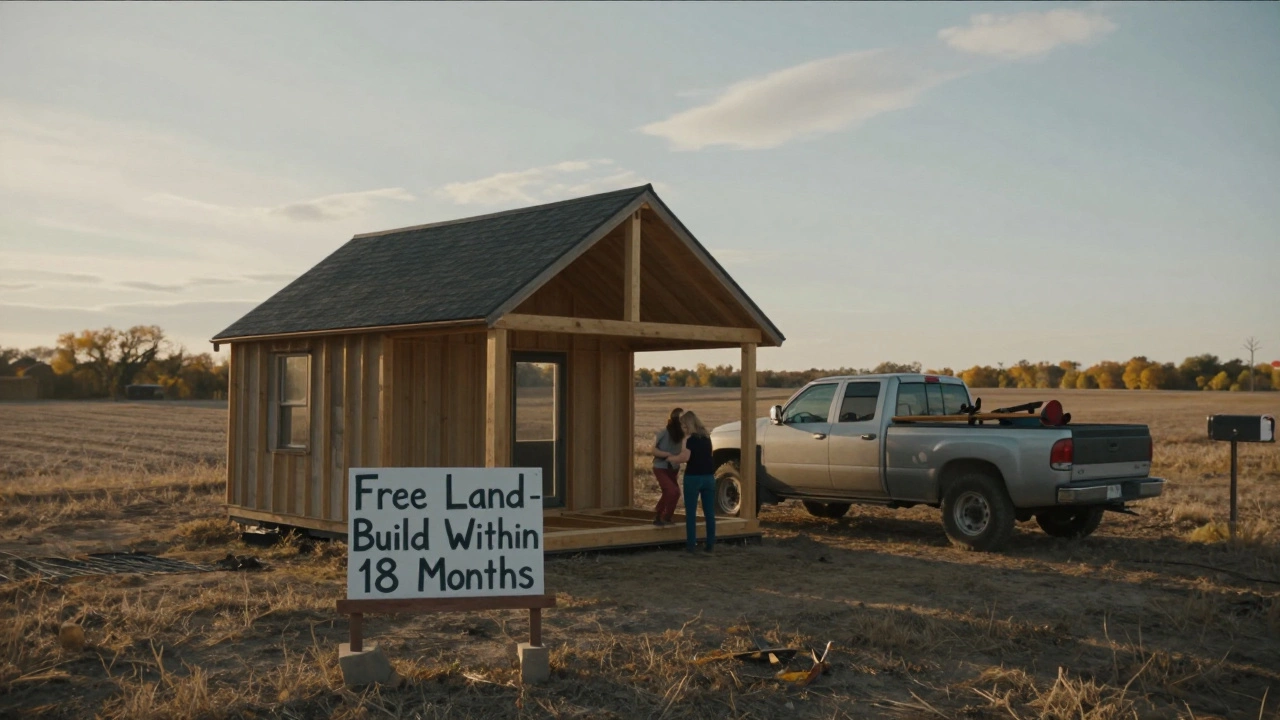
The Homestead Act of 1862 gave away 160 acres of public land to anyone willing to farm it for five years. That ended decades ago. But in the last 10 years, a handful of towns in Kansas, Nebraska, Minnesota, and Iowa have started offering land for free-or nearly free-to attract new residents. These aren’t scams. They’re desperate attempts to revive shrinking communities.
For example, in Beatrice, Nebraska, you can get a 1-acre lot with no cost if you build a home within 18 months and live there for at least five years. The catch? You have to pay property taxes, follow zoning rules, and connect to utilities. It’s not wild frontier living-it’s more like a city incentive program with dirt under your nails.
Other towns like Marquette, Kansas and Lincoln, Minnesota do the same. They don’t hand out land to adventurers. They hand it out to people who will fix up houses, start small businesses, or raise kids. If you’re looking for isolation, you’ll be disappointed. If you want a fresh start with a low cost of living, these places are real options.
Buying cheap land is the new homesteading
Most modern homesteaders don’t wait for free land. They buy it. And they find it-not in the Rockies or the deep woods-but in places nobody else wants: rural counties in Oklahoma, West Virginia, Idaho, and Eastern Oregon.
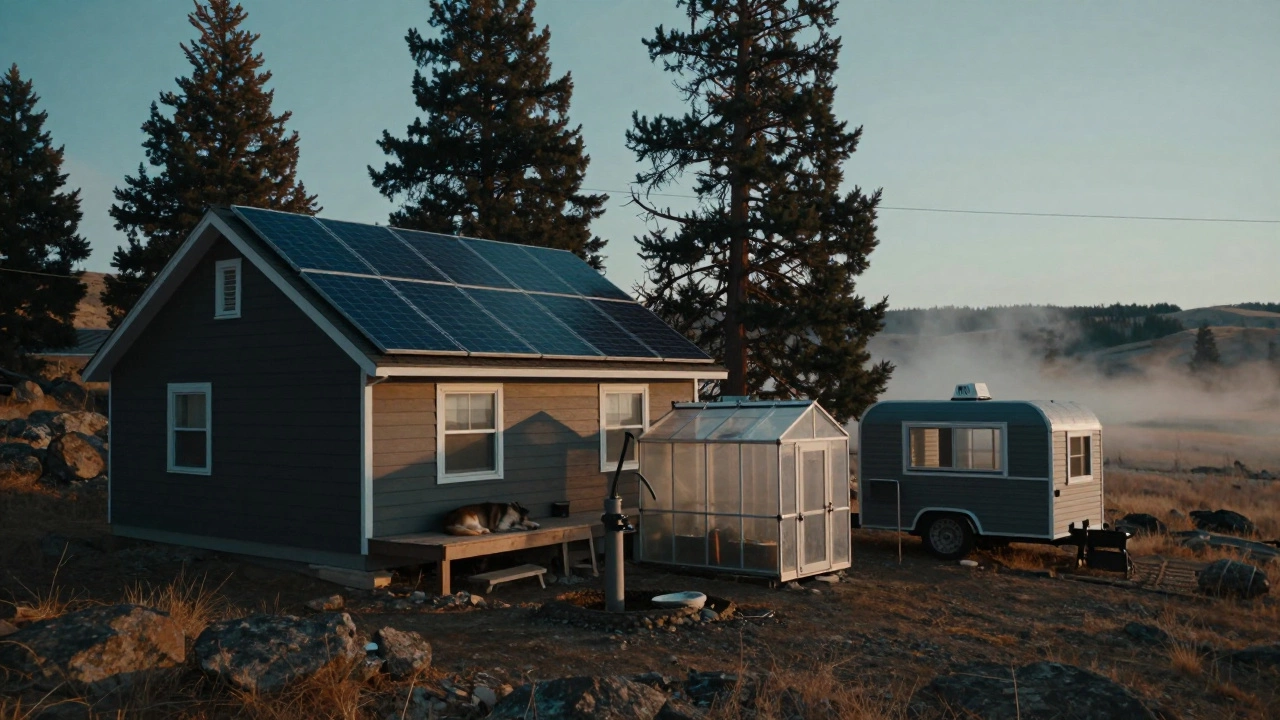
Land there can go for as little as $500 an acre. For under $10,000, you can own 10-20 acres with no neighbors for miles. You won’t find a paved road, running water, or cell service. But you won’t find zoning laws either. In many rural areas, you can build a cabin without permits, dig a well, install a septic system, and run solar panels without asking anyone’s permission.
That’s the real key: land with few regulations. States like Texas, Missouri, and Montana have some of the least restrictive building codes. Counties with low population density often don’t enforce rules unless someone complains. That’s why so many off-grid homesteaders end up there.
Don’t expect a fairy tale. The land is often rocky, dry, or flood-prone. You’ll need to test soil, check water rights, and learn how to handle wildfires or snow drifts. But if you’re willing to work, you can live completely off the grid for less than the rent of a one-bedroom apartment in most cities.
Water rights matter more than you think
You can’t just dig a hole and call it a well in every state. In the western US, water is controlled by complex legal systems called prior appropriation. That means the first person to use the water has the right to it-even if you’re downstream. In Colorado, Nevada, and California, you can’t legally drill a well without a permit and proof that your use won’t harm someone else’s supply.
Some homesteaders buy land with existing wells or water rights. Others lease water from local farmers. A few lucky ones find land with natural springs that have been legally documented. But if you’re planning to grow food or raise animals, water access isn’t optional. It’s your first investment.
Always check with the state’s water resources department before buying. A $200 records search can save you from a $50,000 mistake.
Building codes and permits are still a thing
Just because a place is rural doesn’t mean you can build a shack out of scrap metal and call it home. In many states, you need a permit for any structure over 120 square feet. Some counties require septic inspections, well certifications, and electrical safety checks-even for solar setups.
But here’s the trick: tiny homes on wheels often fall under RV rules, not building codes. If you park a mobile home on your land and don’t connect it to permanent utilities, you might avoid inspections entirely. That’s how many homesteaders get around red tape.
Still, if you plan to live there full-time, most counties will eventually catch on. Your best bet is to talk to the local planning office before you buy. Ask: “What’s the easiest way to build a home here without getting fined?” Most officials will tell you the truth-if you show you’re serious, not just looking for a loophole.
Electricity? You’ll need solar or a generator
Most homesteads don’t have power lines. That means you’re on your own for electricity. Grid-tied solar is expensive. Off-grid solar systems with battery storage can cost $15,000-$30,000. But you don’t need a full system right away.
Start small: one solar panel, a deep-cycle battery, and a charge controller. That’s enough to run LED lights, a small fridge, and charge phones. Add more panels each year. Many homesteaders live this way for years before upgrading. It’s slow, but it’s sustainable.
Generators are cheaper upfront but cost more long-term. Diesel or propane generators need fuel deliveries, maintenance, and noise tolerance. Solar wins in the long run if you’re patient.
It’s not just about land-it’s about community
Homesteading alone is hard. Homesteading with neighbors who understand your goals? That’s how you survive.
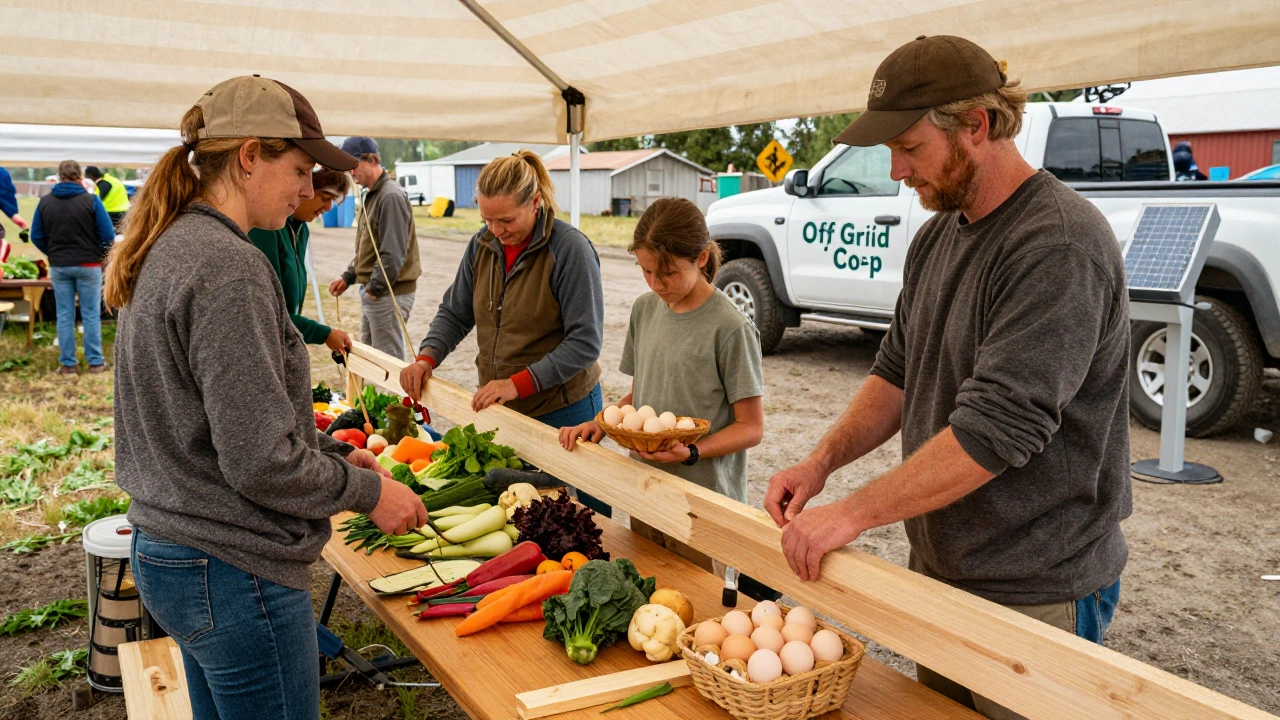
The best homesteaders aren’t lone wolves. They’re part of local networks: co-ops for buying bulk feed, barter groups for tools, shared well drills, and emergency response teams during snowstorms. In places like Wallowa County, Oregon or Clay County, Kentucky, you’ll find groups of people who’ve been doing this for decades. They’ll show you how to fix a fence with scrap wood, store winter food, and deal with wildlife.
Join local Facebook groups. Attend county fairs. Talk to the librarian. These are the people who know the real rules-not the ones on paper, but the ones that keep people alive.
Can you really live off the land?
Yes-but not like the movies. You won’t grow all your food in one season. You won’t hunt your own meat every week. You’ll need to work a part-time job, sell handmade goods, or do remote work just to cover taxes and fuel.
Most successful homesteaders don’t quit their jobs. They reduce them. They work four days a week and spend three days on the land. They trade skills: fixing a roof for fresh eggs, teaching carpentry for a year’s worth of firewood.
It’s not about total self-sufficiency. It’s about reducing dependence. Less grocery bills. Less utility bills. Less stress. That’s the real win.
Where to look next
If you’re serious, start here:
- LandWatch.com - Filter for land under $5,000/acre in rural counties
- FreeLandUSA.com - Lists towns offering free land with conditions
- Local county assessor websites - Search for tax delinquent parcels (land owners who didn’t pay taxes-often sold at auction for pennies)
- Facebook groups - Search “Off Grid Homesteaders [State]”
Don’t rush. Visit the land at least twice-once in summer, once in winter. Talk to the neighbors. Ask about water, wildlife, and power outages. Check the soil with a simple test kit from a farm supply store.
Homesteading today isn’t about freedom from rules. It’s about choosing the right rules to live by.
Is homesteading legal in all 50 states?
Yes, homesteading as a lifestyle is legal everywhere. But what you can do on your land isn’t. Zoning laws, building codes, water rights, and environmental regulations vary by state and county. Some places ban outdoor composting, require permits for rainwater collection, or forbid keeping chickens. Always check local ordinances before buying land.
Can I get free land from the government?
The federal government no longer gives away land. The Homestead Act was repealed in 1976. However, some small towns in rural states offer free land to attract residents. These are not federal programs-they’re local initiatives with strict conditions like building a home within a set time and living there full-time.
How much money do I need to start homesteading?
You can start with as little as $5,000 if you buy cheap land ($1,000-$3,000) and build a simple shelter ($2,000-$5,000). But that’s barebones. For a livable off-grid setup with water, solar, and storage, plan for $15,000-$30,000. Most people spend 1-3 years saving before they make the move.
Do I need to be self-sufficient to homestead?
No. Most homesteaders today work remotely, freelance, or run small businesses. The goal isn’t to grow every single thing you eat. It’s to reduce your reliance on outside systems-like grocery stores, power companies, and rental agreements. Many homesteaders still use smartphones, pay taxes, and visit the dentist.
What’s the biggest mistake new homesteaders make?
Buying land without checking water rights, soil quality, or access roads. Too many people fall for cheap land listings and later find out the well is dry, the driveway is a mud path in winter, or the county requires a $12,000 septic system. Always visit the property in person, talk to locals, and get a professional inspection before signing anything.